


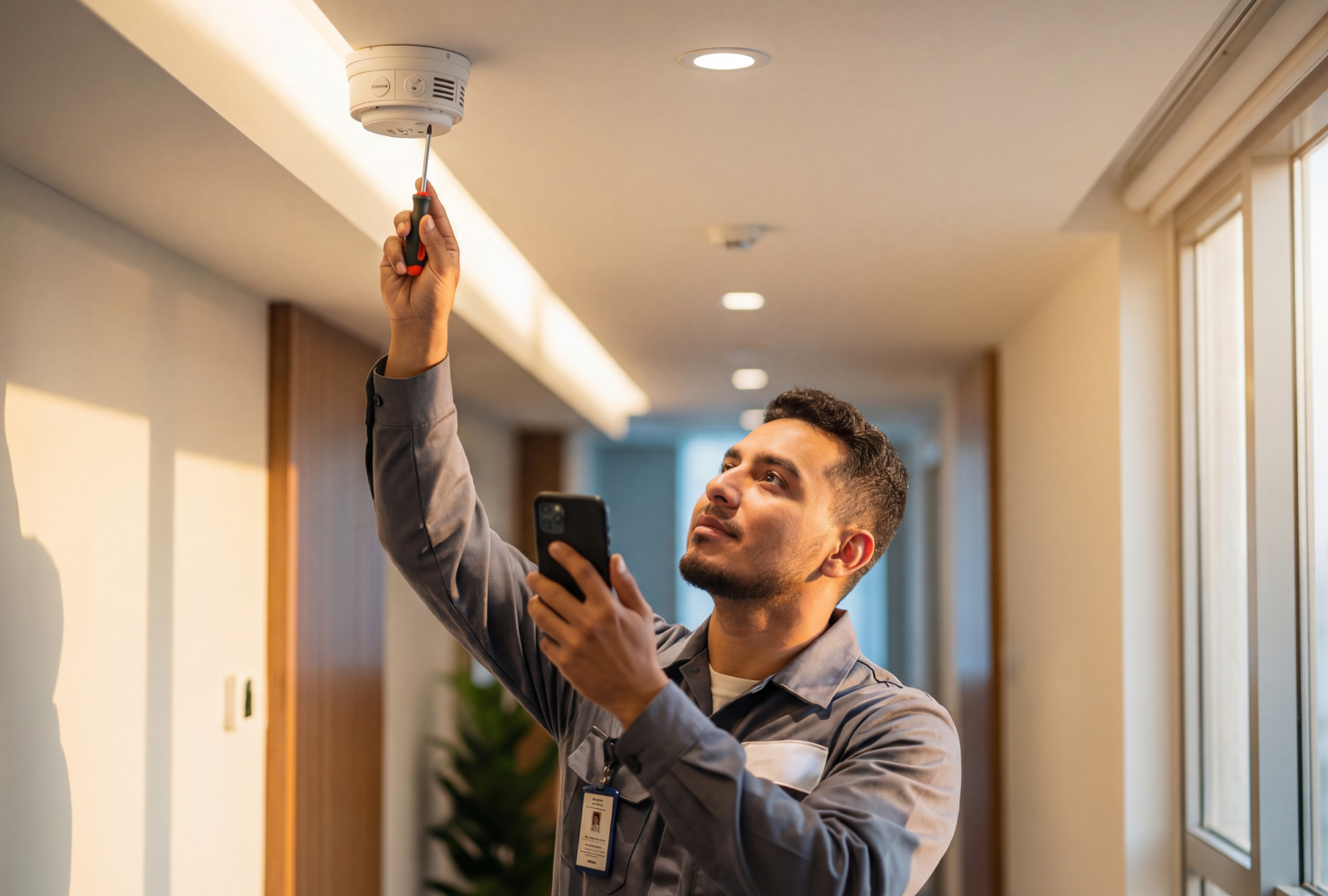



What Is Preventive Maintenance?
Preventive maintenance refers to any routine, scheduled maintenance activity performed to reduce the likelihood of asset failure or deterioration.
In multifamily property management, preventive maintenance in property management applies to both individual apartment units and shared building infrastructure.
Common examples of preventive maintenance include:
- Replacing HVAC air filters
- Inspecting smoke and carbon monoxide detectors
- Flushing water heaters
- Cleaning dryer vents
- Inspecting roofs and gutters
- Testing emergency lighting and exit signs
- Checking plumbing fixtures for leaks
The defining characteristic of preventive maintenance is that it’s planned — not triggered by a breakdown or resident complaint. Tasks are scheduled based on time intervals, usage thresholds, or seasonal factors, ensuring that your assets stay in optimal condition and your residents rarely experience the disruption of unexpected failures.
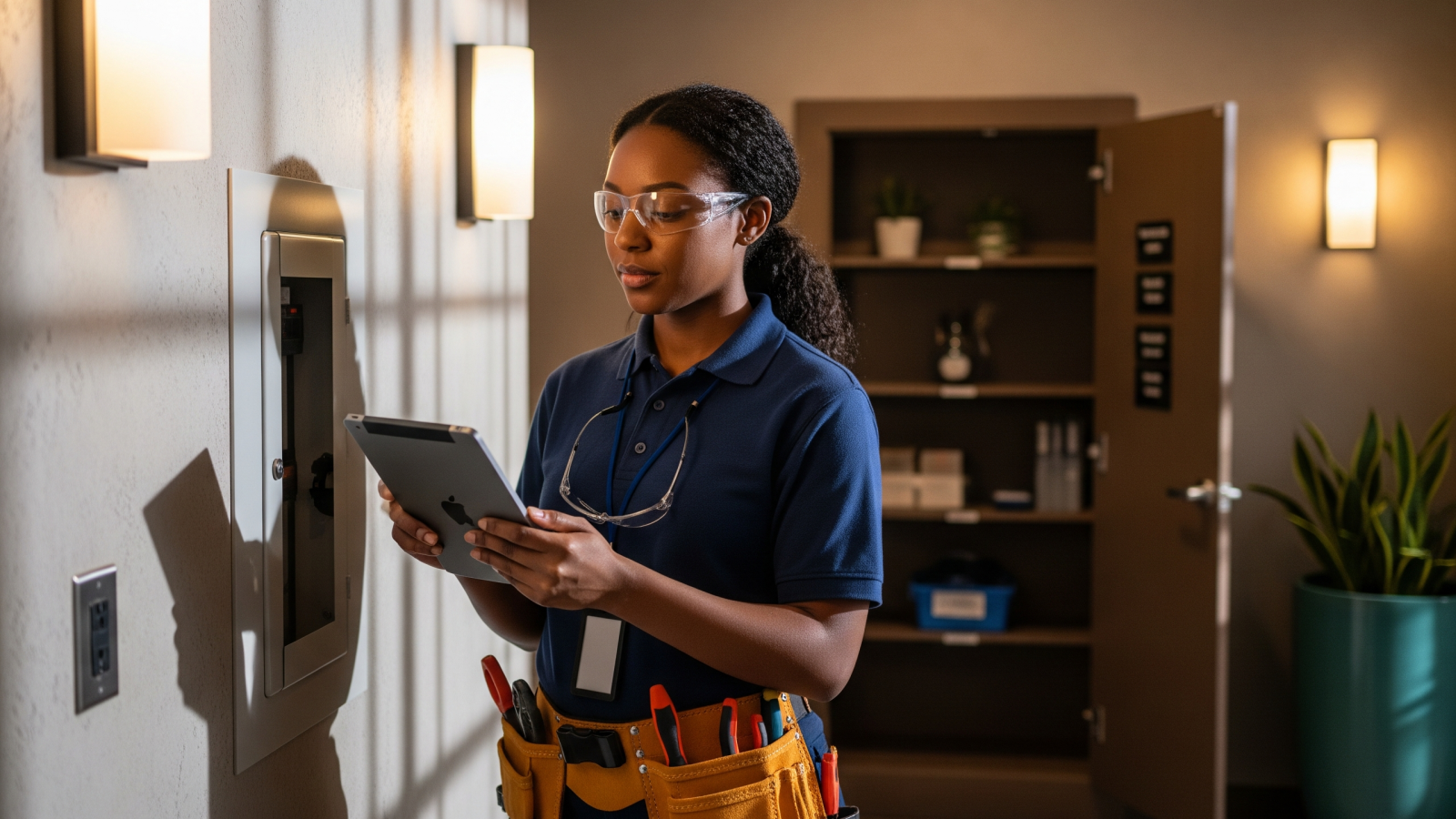
Why Preventive Maintenance Is Important
Preventive maintenance isn’t just a maintenance strategy — it’s a financial and operational strategy. Here’s why it matters for multifamily operators:
1. Extends Asset Lifespan
Regular servicing of HVAC systems, appliances, and other building components is crucial for extending their operational lifespan. By performing routine maintenance, you can catch minor issues before they escalate into major failures, significantly delaying the need for costly capital replacements and ensuring everything runs more efficiently.
2. Reduces emergency repair costs
Emergency repairs are costly, not just in terms of materials and labor, but also in their significant impact on residents. Unexpected breakdowns can lead to tenant dissatisfaction and costly after-hours call-outs. On the other hand, preventive maintenance allows you to identify and address potential issues before they escalate, catching problems while they are still small and inexpensive to fix.
3. Protects NOI
Unplanned maintenance expenses can significantly erode your net operating income, leading to financial instability and unpredictable cash flow. On the other hand, implementing a scheduled maintenance program creates cost predictability, allowing for more accurate budgeting and better long-term financial planning.
4. Improves Resident Satisfaction & Retention
Residents who rarely experience maintenance issues are not only more satisfied with their living situation, but they are also more inclined to renew their leases. This higher retention rate translates to lower turnover costs and a more stable rental income for your community. Furthermore, these happy residents are more likely to become brand ambassadors, recommending your community to friends and family, which can be a powerful and cost-effective marketing tool.
5. Supports Compliance
Many preventive maintenance tasks, such as elevator certifications, fire suppression system testing, and boiler inspections, aren’t just good practice — they’re often legally required to ensure the safety and compliance of a building. Failing to keep up with these mandatory checks can lead to significant fines, legal liabilities, or even operational shutdowns. A structured preventive maintenance program helps you stay on top of these crucial deadlines, ensuring that nothing is missed and your facility remains compliant.
6. Enables Portfolio-Level Visibility
When preventive maintenance work orders are consistently tracked in a centralized system, operators gain a comprehensive view of their entire portfolio. This allows them to effectively benchmark community performance against established standards, quickly identify underperforming assets that may require attention or replacement, and ultimately make more informed, data-driven capital decisions for future investments.

Preventive Maintenance in Property Management
Preventive maintenance in property management takes on additional complexity compared to single-asset maintenance. A portfolio operator isn’t just maintaining one building — they’re managing dozens or hundreds of communities simultaneously, each with its own asset inventory, maintenance schedules, and compliance requirements.
Maintenance teams must regularly inspect:
- Apartment units
- Common areas
- Building systems
- Exterior grounds
- Safety infrastructure
Effective preventative property maintenance in this context requires standardized processes that can be deployed consistently across all communities, tracked against uniform KPIs, and reported up to regional and executive leadership. This is where technology becomes essential: manual spreadsheets and paper-based PM schedules don’t scale. Operators integrated with a PMS can connect maintenance workflows to unit, asset, and lease data — eliminating silos and enabling automation at scale.

Types of Preventive Maintenance
Understanding the different types of preventive maintenance helps operators design a PM program that matches their portfolio’s needs.
Time-Based Preventive Maintenance
Time-based preventive maintenance tasks are triggered on a fixed calendar schedule — monthly, quarterly, semi-annually, or annually — regardless of how much the asset has been used. This is the most common approach in multifamily because it’s easy to schedule and automate.
Think:
- Quarterly HVAC servicing
- Annual fire alarm inspections
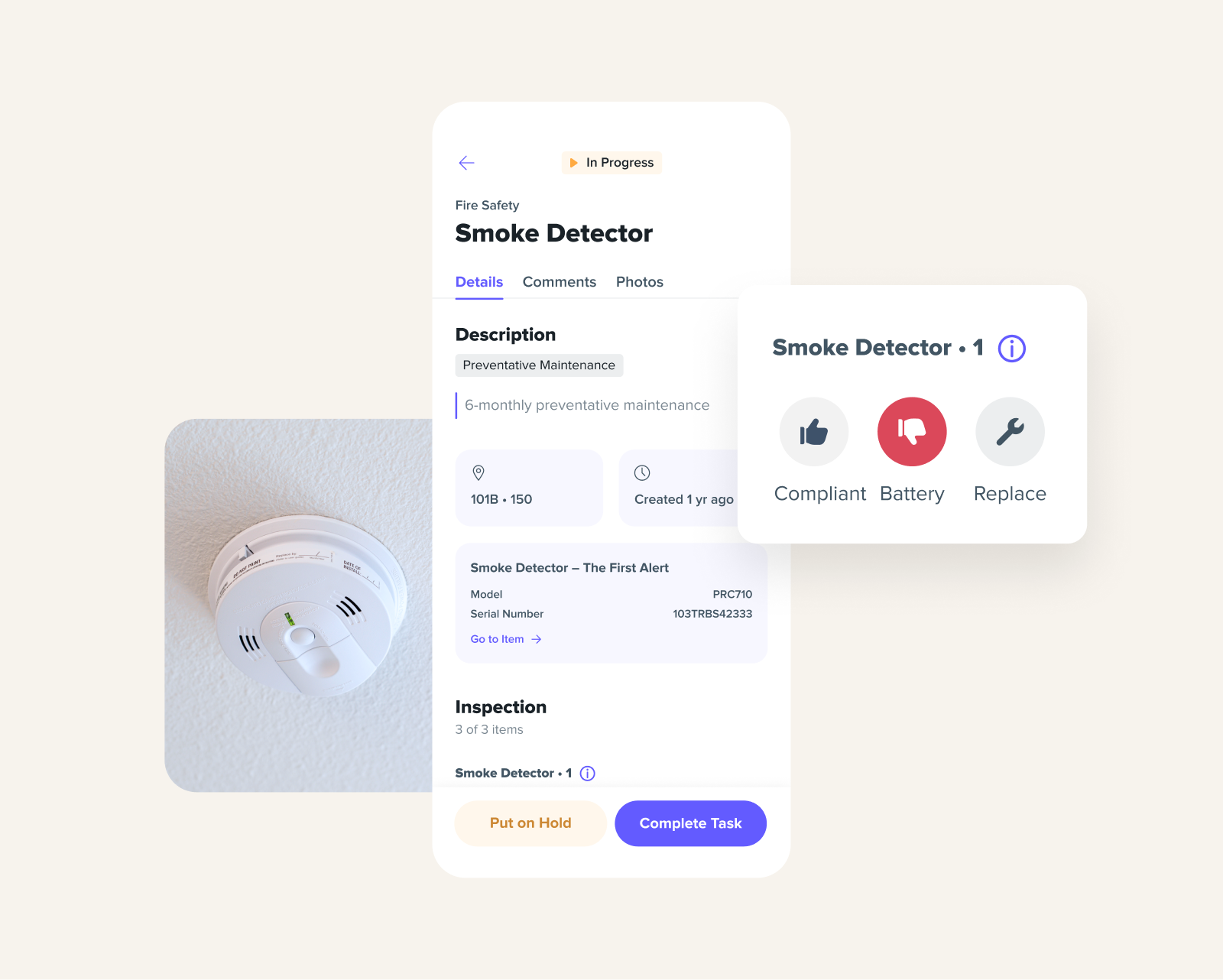
- Monthly smoke detector testing
- Seasonal roof inspections
- Monthly pool chemical checks
Usage-Based Preventive Maintenance
Usage-based preventive maintenance is triggered when an asset reaches a defined usage threshold — miles driven, cycles completed, or hours of operation. More common in commercial or industrial settings, but applicable to elevators, boilers, and commercial laundry equipment in multifamily.
Think:
- Servicing elevators after a set number of cycles
- Replacing filters after operating hours
- Equipment inspections after defined workloads
Condition-Based Maintenance
Rather than following a fixed schedule, condition-based maintenance uses monitoring data — temperature readings, vibration sensors, pressure gauges — to trigger maintenance when an asset’s condition warrants it. This approach reduces unnecessary maintenance on assets that are performing well.
Think:
- Monitoring HVAC efficiency
- Inspecting plumbing systems for pressure changes
- Monitoring mechanical equipment performance
Predictive Maintenance
An advanced form of condition-based maintenance, predictive maintenance uses data analytics and machine learning to forecast when failures are likely to occur. While still emerging in multifamily, predictive capabilities are increasingly available in modern property maintenance platforms.
Think:
- Sensor-based monitoring
- Equipment performance analytics
- Automated maintenance alerts
The Benefits of Preventive Maintenance
The benefits of preventive maintenance extend well beyond avoiding breakdowns. For multifamily operators, a disciplined PM program delivers:
1. Cost Savings
Studies across facility management consistently show that preventive maintenance costs significantly less per task than reactive repairs for the same asset. According to the U.S. Department of Energy, a well-run PM program can reduce maintenance costs by up to 18%.
2. Fewer Emergency Work Orders
Fewer surprise equipment failures mean fewer disruptive after-hours calls that pull your team away from their personal time. It also means avoiding those costly emergency vendor markups for urgent, last-minute repairs. Ultimately, this leads to more predictable and manageable workloads for your maintenance staff, reducing stress and improving overall efficiency.
3. Higher Asset Reliability
Residents in well-maintained communities experience fewer frustrating HVAC failures on hot summer days, unexpected appliance breakdowns during meal times, and disruptive plumbing issues like leaks or clogs. This reliability in essential home systems means fewer service calls and a more comfortable, predictable living environment, which translates directly to higher resident satisfaction scores.
4. Reduced Liability
Documented maintenance records serve as crucial evidence that can protect operators in the event of a liability claim or a regulatory inspection. Keeping a thorough and accurate log demonstrates a commitment to safety and compliance, providing tangible proof that all required maintenance was performed correctly and on schedule. This documentation can be invaluable for mitigating legal risks and verifying adherence to industry standards.
5. Stronger NOI Performance
By minimizing unexpected equipment failures and the costly emergency repairs that come with them, and by extending the operational life of your assets, preventive maintenance directly supports and can significantly increase your NOI.
6. Scalability
Standardized PM programs are designed to be uniform, meaning they can be easily and quickly replicated across any new properties you acquire. This consistency eliminates the need to create new maintenance plans from scratch for each acquisition, making the process of expanding your portfolio significantly smoother and faster.
How to Build an Effective Preventive Maintenance Strategy
A strong preventive maintenance strategy doesn’t happen by accident. Here’s a step-by-step approach for multifamily operators:
Step 1: Audit Your Asset Inventory
You can’t maintain what you don’t know you have. Start with a comprehensive asset inventory across every community — HVAC units, appliances, elevators, fire systems, roofing, plumbing, electrical, common area equipment, and more. Document make, model, age, and last service date.
Step 2: Define Maintenance Schedules
For each asset category, establish maintenance intervals based on manufacturer recommendations, code requirements, and your operational experience. Document the specific tasks to be performed at each interval.
Step 3: Build Your PM Calendar
Map your maintenance schedules onto a portfolio-wide calendar, balancing workloads across seasons and ensuring that high-impact tasks (e.g., pre-winter HVAC checks) are completed before the relevant season.
Step 4: Assign Ownership and Accountability
Every PM task should have a clear owner — whether that’s an in-house technician or a vendor — and a defined completion standard. Accountability requires clarity.
Step 5: Automate Work Order Generation
Manually creating recurring work orders is inefficient and error-prone. Use a maintenance management platform to auto-generate and assign PM work orders based on your defined schedules.
Step 6: Track, Measure, and Refine
Monitor PM completion rates, on-time performance, and the downstream impact on corrective and emergency work orders. Use that data to continuously improve your program.
Solutions like HappyCo allow property teams to schedule inspections, capture documentation, and automatically generate work orders when maintenance issues are discovered.
Preventive Maintenance Checklist
A solid preventive maintenance checklist ensures nothing is missed during inspections and scheduled service visits. Typical checklist items include:
HVAC Systems
- Replace air filters (monthly to quarterly)
- Inspect and clean coils (annually)
- Check refrigerant levels (annually)
- Test thermostats and controls (semi-annually)
- Inspect ductwork for leaks (annually)
Plumbing
- Inspect water heaters for sediment buildup (annually)
- Check for slow drains or leaks under sinks (quarterly)
- Test sump pumps before rainy season (semi-annually)
- Flush irrigation systems before winter (annually)
Electrical
- Test GFCI outlets (semi-annually)
- Inspect smoke and carbon monoxide detectors (monthly/annually)
- Check exterior lighting and common area lighting (monthly)
- Inspect electrical panels for signs of wear or overload (annually)
Exterior & Structure
- Inspect roofing for damage or wear (semi-annually)
- Clean gutters and downspouts (spring and fall)
- Inspect caulking and weatherstripping around windows and doors (annually)
- Check parking lots and walkways for cracks or hazards (quarterly)
Common Areas & Amenities
- Inspect and service elevators per local code
- Test fire suppression systems (semi-annually or per code)
- Inspect pool and spa equipment (per season)
- Check fitness equipment for wear and safety (monthly)
Preventive Maintenance Example
Consider a 250-unit apartment community entering fall. A well-run preventive maintenance program would automatically generate work orders in September for: furnace inspections across all units, filter replacements, irrigation winterization, gutter cleaning, and a fire system annual test.
Each work order is pre-assigned to the appropriate technician or vendor, staggered across available days in October, and tracked to completion in the maintenance platform. When winter arrives, the community’s systems are fully prepared — and residents never know the work even took place.
Contrast that with a reactive approach: the first cold snap hits, residents start calling about heat, emergency HVAC techs charge premium rates, and your maintenance team spends two weeks in crisis mode. The difference is a few hundred dollars of planned PM versus thousands in emergency labor and parts — plus resident complaints and potential renewal risk.
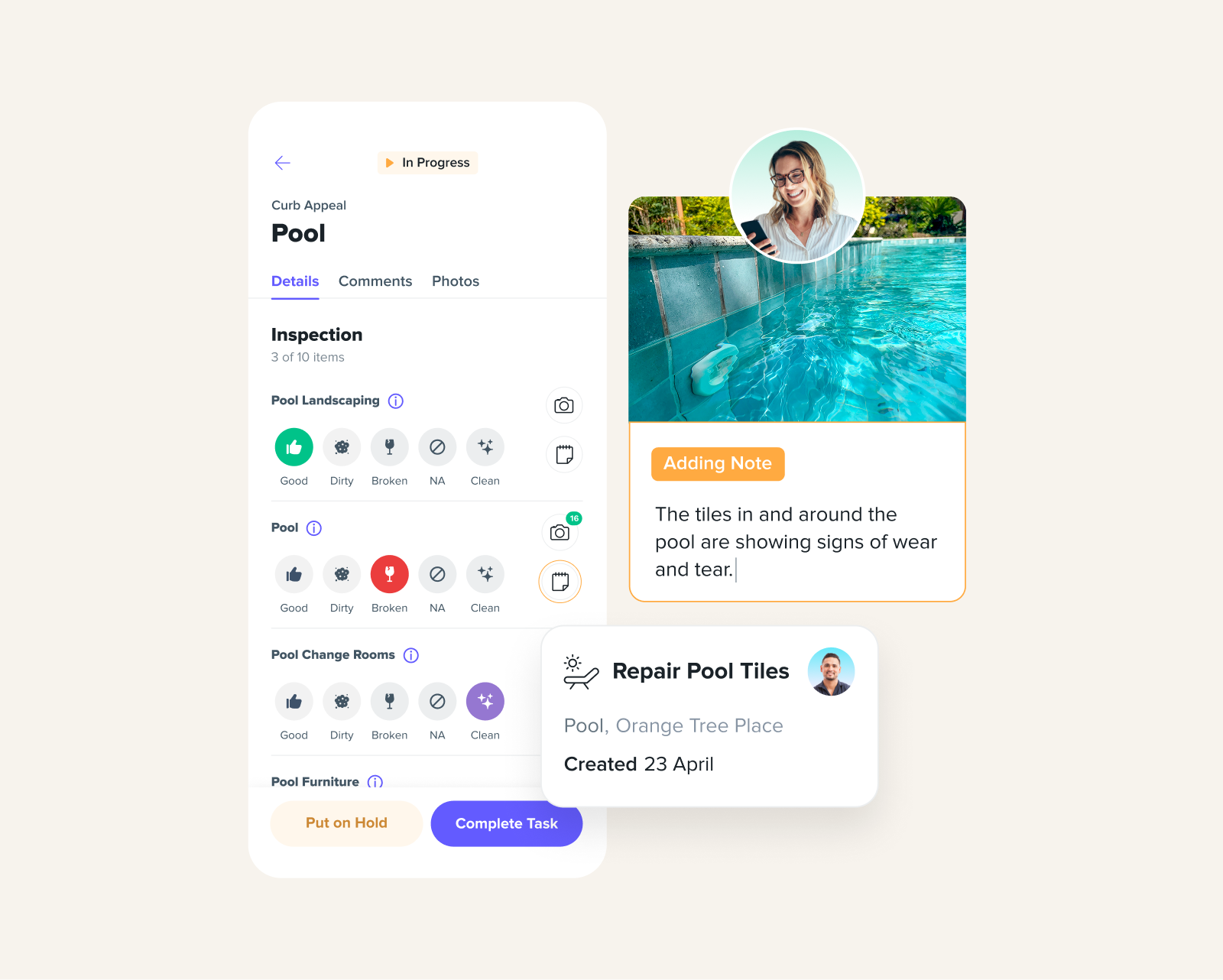
Inspection platforms such as HappyCo allow technicians to complete the necessary inspections on mobile devices and automatically create work orders for repairs so teams can be on top of their preventive maintenance care.
Common Preventive Maintenance Mistakes to Avoid
Even well-intentioned PM programs fail when these mistakes creep in:
1. Failing to Maintain an Accurate Asset Inventory
If your list of assets is incomplete or contains outdated information, your preventive maintenance schedule will inevitably have blind spots, leading to missed maintenance tasks and potential equipment failures.
2. Scheduling Without Workload Balancing
Front-loading preventive maintenance tasks, which involves scheduling a large volume of work at the beginning of a cycle, creates an unsustainable workload for maintenance teams. This initial surge often overwhelms staff, leading to deferred tasks, rushed jobs, or incomplete work orders that get pushed to later dates.
3. Not Documenting Completion
Without proper documentation for preventative maintenance, there’s no way to hold anyone accountable for completing the work. This lack of records also leaves you with no protection or proof of due diligence in a liability scenario, such as an equipment failure that leads to an accident.
4. Ignoring Data from the Field
Technicians are your eyes and ears on the ground, often uncovering valuable insights about an asset’s condition that aren’t captured in standard reports. This firsthand knowledge is crucial for refining and improving your preventive maintenance schedules. To ensure this information isn’t lost, it’s essential to create formal feedback loops that allow technicians to easily share their observations, helping you make data-driven adjustments to your maintenance strategy.
5. Treating Preventive Maintenance as a Cost, Not an Investment
Getting leadership on board is essential for a successful PM program. While cutting PM programs might seem like an easy way to save money during budget crunches, this short-term gain often leads to long-term pain. In fact, organizations that cut their PM programs typically see a significant increase in emergency repair costs within just 12 to 18 months, ultimately costing them far more than the initial savings.
6. Manual Processes at Scale
Using spreadsheets for project management tracking can be effective for individual projects, but it becomes inefficient and error-prone when managing a large portfolio. At scale, manual data entry and a lack of real-time updates can lead to significant bottlenecks and inconsistencies. To maintain visibility, ensure consistency across projects, and adhere to compliance standards, automation is essential. Automated systems streamline workflows, reduce human error, and provide reliable, up-to-date information for better decision-making.
Preventive Maintenance vs. Reactive Maintenance
Understanding the difference between preventive maintenance and reactive maintenance helps operators manage maintenance resources effectively.
A mature multifamily maintenance operation balances preventive maintenance as the foundation with a clear, efficient process for handling reactive and emergency work when it inevitably arises.
The Ultimate Guide to Preventive Maintenance for Property Managers
Preventive maintenance is one of the highest-ROI investments a multifamily operator can make. By shifting from reactive to planned maintenance, operators reduce costs, extend asset life, improve resident satisfaction, and gain the operational predictability needed to run a high-performing portfolio. The challenge — especially at scale — is building a program that’s consistent, measurable, and continuously improving. That requires the right strategy, the right team, and the right technology.
Managing maintenance across multiple buildings and units can quickly become complex. HappyCo helps property teams streamline preventive maintenance in property management by digitizing inspections, maintenance workflows, and reporting.
With HappyCo, property teams can:
- Digitize inspections, maintenance workflows, and reporting
- Create standardized preventive maintenance checklists
- Schedule recurring maintenance inspections
- Capture photos and documentation during inspections
- Automatically generate work orders from inspection findings
- Track maintenance performance across properties
By centralizing maintenance workflows, HappyCo helps property teams stay proactive and maintain high-performing communities.
FAQs
How Often Should Preventive Maintenance Be Performed?
Frequency depends on the asset type, manufacturer recommendations, local code requirements, and environmental factors. HVAC filters may need monthly attention; roof inspections may only be needed twice a year. A good preventive maintenance strategy documents intervals for every major asset category and uses automation to ensure schedules are followed.
Is Preventive Maintenance Worth the Investment?
Consistently, yes. Research across facility management shows that preventive maintenance reduces overall maintenance costs compared to purely reactive approaches, extends asset lifespan, and reduces emergency spend. The ROI is especially strong for HVAC systems, plumbing infrastructure, and building envelope components.
What Are the Financial Benefits of Preventive Maintenance?
The financial benefits of preventive maintenance include lower emergency repair costs, reduced capital replacement frequency, improved energy efficiency (from well-maintained HVAC and building systems), better vendor pricing (scheduled work vs. emergency callouts), and stronger NOI performance through cost predictability.
What Does Preventive Maintenance Cost?
PM costs vary by portfolio size, asset mix, and whether work is performed in-house or by vendors. However, the relevant comparison isn’t just the cost of PM — it’s the cost of PM versus the cost of reactive and emergency maintenance. Most operators find that investing in PM reduces total maintenance spend over time.
Lauren Seagren is the Content Marketing Specialist at HappyCo, where she leads the company’s content strategy and storytelling across channels. She develops and optimizes campaigns, blogs, case studies, and enablement materials, while building the systems that help content scale and align across teams. Prior to HappyCo, Lauren led content and brand strategy across SaaS startups, creative agencies, and growth-stage companies, bringing more than a decade of experience driving measurable growth across B2B and B2C organizations.


