




Budget Season, Under Pressure
Budget season rarely arrives at a convenient time, and for many operators heading into 2027, it's arriving in a tight spot. Rent growth is flat in some markets, costs keep climbing, and owners want to know exactly where every maintenance dollar goes.
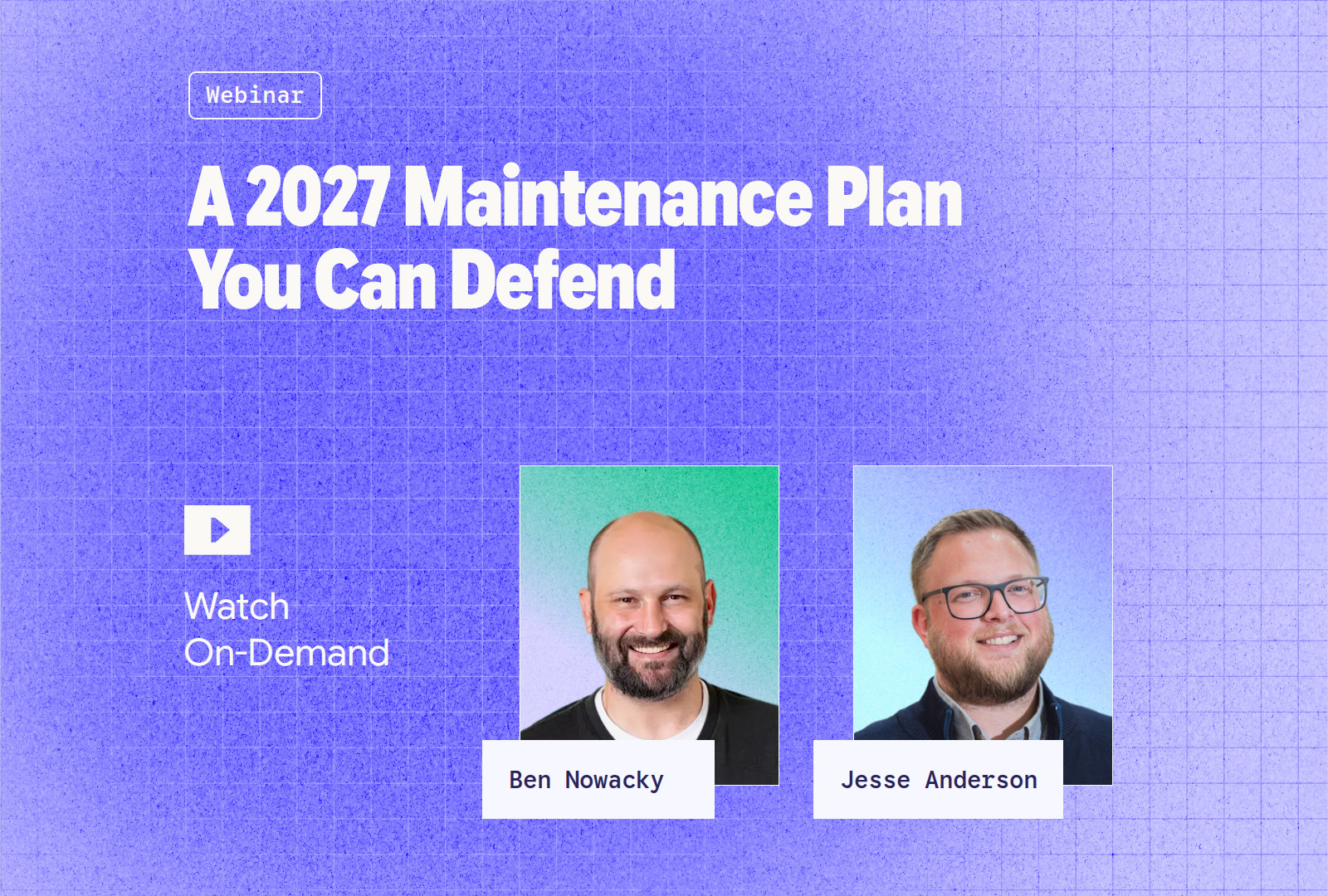
In a recent Looking Ahead to 2027 conversation, HappyCo President Ben Nowacky sat down with Jesse Anderson, Director of Systems and Sustainability at Blanton Turner, to talk about building a maintenance plan you can defend. Blanton Turner is a third-party property management company operating across Washington and Oregon, and Jesse oversees the technology behind its site teams and corporate operations, along with its sustainability work. His answers kept coming back to the same few ideas: protect what works, get specific about what changes, and bring owners the data.
A Tight Market Puts Every Line Item on the Table
Jesse described 2026 in Seattle as a softening market: low rent growth, heavy concessions, higher interest rates, and continued layoffs at some of the region's biggest employers. Blanton Turner's answer was to focus on renewals, because a resident who leaves puts that unit back onto a very competitive market.
Costs moved the other way. State approvals sent benefit insurance premiums sharply higher, and new legislation added fee restrictions that limit what properties can earn. Jesse called it “a perfect storm” of rising costs and shrinking revenue, and it means protecting NOI in 2027 takes creativity.
There's one silver lining. Fewer new buildings are being delivered in his market, which is helping soften vacancy and rent declines. But that only helps operators whose residents are getting competitive service.
What Stays the Same
Not everything is up for debate. Blanton Turner's larger properties, where unit count supports traditional staffing, will run largely as they do today, backed by technology that tracks equipment, fixed assets, and preventive maintenance.
Preventive maintenance is the other constant. Jesse would rather see it get more priority, not less.
Making the Case Against Deferral
The pressure usually comes from owners who'd rather defer maintenance now and deal with it once conditions improve. Jesse's team treats that as a conversation to win with data, showing what deferral does to how a building looks, how it runs, and what it can charge.
In his market, the impact shows up fast. Prospects make up their minds online before they ever visit, leaning heavily on Google and Reddit. As Ben put it, changing a filter won't earn you a good Google review, but skipping it can earn you a bad one. A building kept at its best supports higher market rents. One that slides takes rents with it. (For a deeper look at how a program comes together, see HappyCo's guide to preventive maintenance.)
“Our goal is to not back off of preventative maintenance ever.”
— Jesse Anderson, Director of Systems and Sustainability, Blanton Turner
Matching Staffing to Each Property's Real Demand
The biggest change for 2027 is at Blanton Turner's boutique properties, those under 100 units, where the scale isn't there to support dedicated maintenance staff. The team already centralized administration for those properties, which freed managers to focus on the building and its residents. Now they're turning to maintenance, with the goal of moving from a fixed carrying cost at each property to an on-demand cost.
That isn't simple. Some properties have recurring minor issues; others need little beyond their preventive work. Age, resident demographics, and wear all play a part.
Through all of it, keeping people comes first. Blanton Turner holds about 85% employee retention, which Jesse noted is hard to do in this industry. With benefit costs rising, the team is rethinking how labor gets used rather than cutting it. Entry-level staff can take on repetitive work so skilled techs can focus on what they do best. Jesse knows who on his team is strongest with appliances, who can paint a unit in a day, and who wants to move toward HVAC, and he wants work routed to match, even if that means a tech helps at more than one property.
Deciding which work belongs to in-house teams and which goes to vendor labor is part of the same exercise. Ben suggested vendors could handle resident work so in-house teams focus on turns. Jesse said Blanton Turner leans the other way: its people's interactions with residents are where the relationship lives, so work orders stay in-house, while vendors are more likely to handle turns and painting. The opportunity there is tighter make-ready coordination and more automated vendor scheduling.
“When you lose a good maintenance person, the impact that it has on your ability to keep a property running is significant.”
— Jesse Anderson, Director of Systems and Sustainability, Blanton Turner
Bring Owners Options, Not a Single Number
“For me it always comes down to data,” Jesse said. Working alongside Blanton Turner's directors of finance and facilities, he pulls years of work order history to see a property's typical yearly volume and when the spikes hit. From there, the team models an hourly approach against the cost of a static on-site hire.
What goes to the client is a set of options:
- Option A: A dedicated on-site person. Owners know who it is and that they're good, usually at a higher cost.
- Option B: A flexible, shared team. Still skilled people, though not always the same person, with more control over rising costs.
- Option C: Vendors only. It rarely pencils out, since coordination still carries a cost and vendor quality can be harder to hold to the same standard.
The Hidden Costs in Service Contracts
Waste, elevator, and HVAC contracts are getting much closer scrutiny. Blanton Turner can't bring those services in-house, so the questions are whether each provider is delivering the best value and whether extra charges are already covered by the original contract.
A contract signed three years ago and never rebid is easy to miss when generalist site teams are stretched thin. That's why Blanton Turner is moving contract review to a central team and looking for better volume pricing through smarter vendor sourcing.
Owners are raising the bar, too. The standard three bids is turning into requests for two more. Every recommendation has to show either the best price in the market or the repair costs a provider will help avoid down the road.
Where AI Fits
Jesse's AI strategy is about responsiveness, not replacement. Residents and prospects expect answers almost around the clock, and few teams can staff that way. AI helps acknowledge requests quickly, answer simple questions like amenity policies or thermostat settings, and triage and route work to the tech with the right skills. Quality control still matters. “You still have to have a human in the loop,” Jesse said.
Looking ahead, he's most interested in automation that takes administrative work off his teams' plates, like tools that automatically reschedule a resident when a work order changes. “I don't think people are going away,” he said. The bigger shift is in what those roles get to focus on.
No Surprises
Budgets rarely survive the year untouched. Jesse's rule is simple: “Nothing should be a surprise to our client.” His team flags cost issues early, looks for savings elsewhere or new revenue to offset them, and reviews financials with clients at least monthly, sometimes twice a month or weekly, often with the company's facilities and finance leaders in the room.
How HappyCo Helps Build a Defensible Plan
A maintenance budget holds up when it's built on data your team trusts. HappyCo brings that data and the support behind it into one place:
- Asset Management, which brings CapEx budgets, renovation projects, and condition data into one view for long-term capital planning.
- Happy Force, 24/7 remote maintenance that supports local teams when they reach capacity.
Plan for 2027 With the Data You Already Have
Jesse's approach comes down to a few habits: protect preventive maintenance, fit staffing to each property's real demand, rebid what's gone stale, and keep owners informed before costs surprise them. A defensible budget starts with knowing what your properties actually need.
Lauren Seagren is the Content Marketing Specialist at HappyCo, where she leads the company’s content strategy and storytelling across channels. She develops and optimizes campaigns, blogs, case studies, and enablement materials, while building the systems that help content scale and align across teams. Prior to HappyCo, Lauren led content and brand strategy across SaaS startups, creative agencies, and growth-stage companies, bringing more than a decade of experience driving measurable growth across B2B and B2C organizations.


