


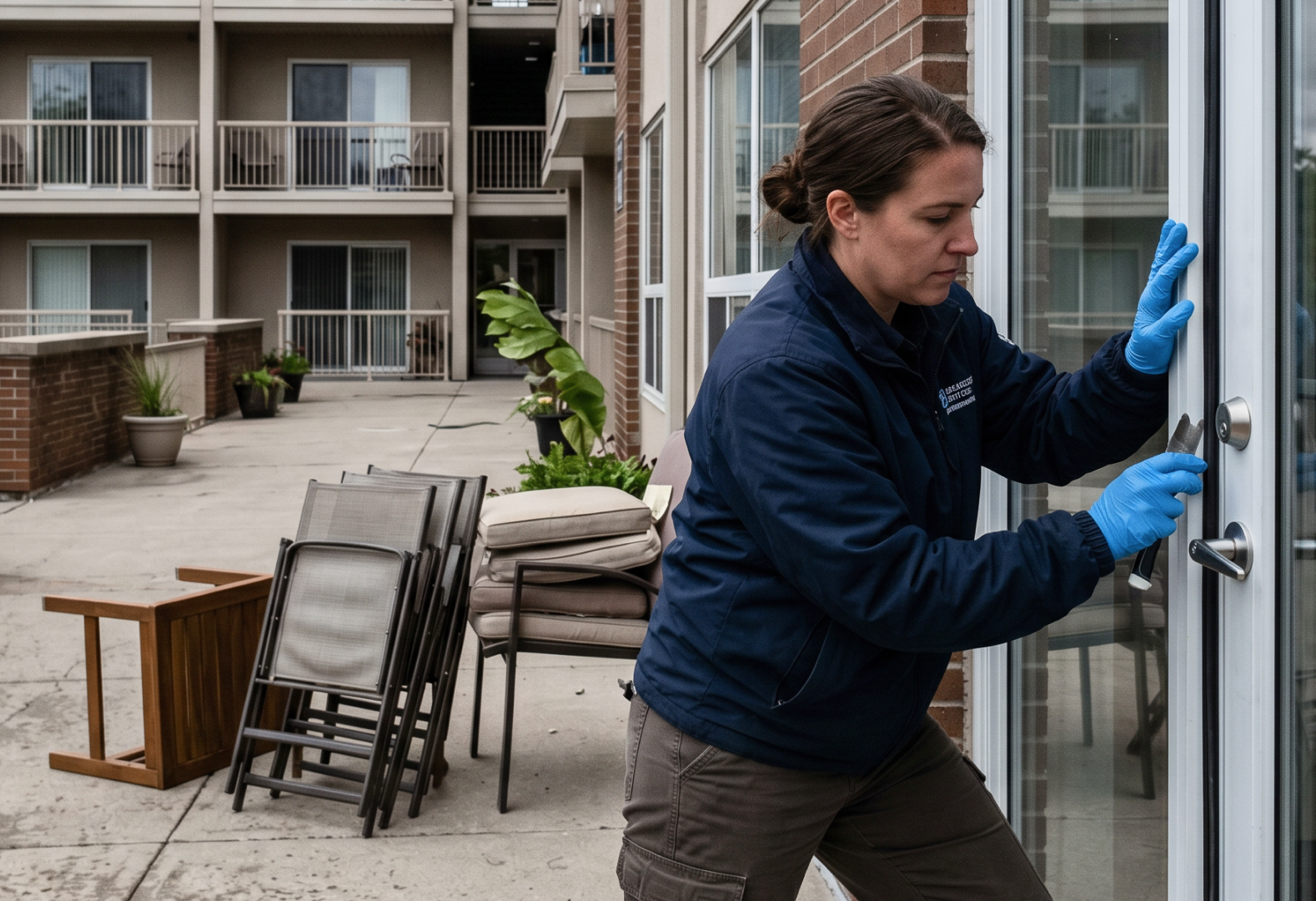


Hurricane season doesn’t wait for your team to be ready. For multifamily property managers and operators, preparedness isn’t just about keeping residents safe during a storm — it’s about protecting assets, maintaining operations, and recovering faster when it’s over.
A solid hurricane preparedness plan means fewer emergency calls in the middle of the night, less unplanned repair spend, and a clearer path to getting your communities back to normal after a major weather event.
This guide covers everything you need: a comprehensive hurricane preparedness checklist, a property risk assessment framework, and practical guidance for keeping your team, residents, and buildings ready year-round.
What Is Hurricane Preparedness?
Hurricane preparedness is the process of planning, organizing, and taking action before a storm to reduce risk to people, property, and operations. For multifamily operators, it involves coordinating across maintenance teams, property management staff, vendors, and residents — and doing it well before a storm is in the forecast.
The core components of effective hurricane preparedness include:
- Structural inspections and preventive repairs to reduce physical vulnerability.
- Emergency supply staging and backup power planning.
- Resident communication plans and evacuation protocols.
- Vendor coordination for post-storm recovery.
- Documentation and insurance readiness.
Why Hurricane Preparedness Matters for Apartments & Properties
The financial and operational case for hurricane preparedness is straightforward. Properties that invest in preparation consistently recover faster, spend less on emergency repairs, and file stronger insurance claims than those that don’t.
- Repair costs are dramatically higher without preparation. Emergency repairs following a hurricane cost significantly more than preventive maintenance completed in advance — not just because of material and labor inflation during storm season, but because damage that could have been contained spreads when nothing is in place to stop it.
- Resident safety is a legal and ethical obligation. Property managers have a duty to provide habitable, safe living conditions. Failure to prepare adequately for foreseeable weather events creates liability exposure.
- Insurance claims depend on documentation. Insurers require evidence of reasonable preparation and pre-existing property conditions to process claims. Operators who can’t document what they did before a storm often find their claims disputed or reduced.
- Recovery time directly impacts revenue. Every day a unit sits uninhabitable after a storm is a day of lost rent. Properties with strong preparedness plans minimize that window significantly.
- Resident retention is tied to how you respond. How an operator handles a major weather event — before, during, and after — has a direct impact on whether residents renew. The communities that communicate clearly and act quickly tend to see meaningfully better retention.
Hurricane Preparedness Checklist
A property-level hurricane preparedness checklist gives your team a consistent, repeatable process that doesn’t rely on anyone remembering everything under pressure.
Pre-Storm Preparation Checklist
Complete these tasks as soon as a storm watch or warning is issued — ideally before.
- Inspect roofs, windows, and exterior doors for existing vulnerabilities and seal or repair as needed.
- Secure or remove outdoor items from balconies, common areas, and parking lots — furniture, signage, trash receptacles, and equipment that can become projectiles in high winds.
- Confirm backup power readiness — generators should be tested, fueled, and ready to operate critical systems including emergency lighting, elevators, and sump pumps.
- Stage emergency supplies: flashlights, batteries, first aid kits, and communication equipment for your maintenance team.
- Clear drainage systems, gutters, and downspouts to reduce flooding risk.
- Document current property conditions with photos or video — this is essential for insurance claims.
- Notify all vendors and contractors of the pending storm and confirm availability for post-storm response.
- Distribute written emergency instructions and contact information to all residents.
Property Maintenance Checklist
These are the preparedness tasks that reduce structural vulnerability before a storm.
- Inspect and clear all drainage systems — roof drains, area drains, catch basins — to prevent backup flooding.
- Check HVAC units and rooftop equipment to confirm they’re properly secured and not vulnerable to wind damage.
- Inspect electrical systems for exposed or vulnerable components, particularly in below-grade or exterior locations.
- Review structural vulnerabilities: loose siding, aging caulk around windows and doors, and any previously noted deferred repairs that could worsen under storm conditions.
- Complete any scheduled preventive maintenance on building systems that would be difficult or dangerous to address mid-storm.
- Test sump pumps and ensure backup power for them is in place.
Safety Checklist for Residents & Staff
- Distribute emergency contact information — building management, local emergency services, and your after-hours maintenance line.
- Share written evacuation routes for the community, including designated assembly points.
- Establish communication protocols: how will you notify residents of updates before and during the storm? Text alerts, email, posted notices, or all three.
- Ensure staff know their specific roles during a weather event — who’s on property, who’s monitoring remotely, and who’s coordinating vendor response.
- Confirm any residents with mobility limitations have been contacted and have a plan.
During the Hurricane Checklist
- Monitor weather conditions continuously — local emergency management channels and the National Hurricane Center are your most reliable sources.
- Restrict access to unsafe areas: roofs, parking structures, exterior common areas, and any space with known structural vulnerability.
- Coordinate emergency response actions as conditions develop — keep communication lines open between onsite staff and your central operations team.
- Document anything that happens during the storm that may be relevant to insurance or resident communications afterward.
- Do not send maintenance staff into dangerous conditions — safety takes priority over property concerns.
Post-Storm Checklist
- Conduct an initial safety walkthrough before allowing residents back into any affected areas.
- Photograph and document all damage thoroughly before any cleanup or repairs begin.
- Complete a full damage inspection — roof, exterior walls, windows, mechanical systems, and common areas.
- Prioritize repairs by safety and habitability — anything that makes a unit or common area unsafe to occupy is the first priority.
- Contact your insurance carrier and begin the claims process as soon as you have documentation in hand.
- Communicate with residents about timeline and status — clear, frequent updates reduce anxiety and protect your reputation as an operator.
- Coordinate with vendors for remediation, cleanup, and repair — and document all work for insurance purposes.
Apartment Hurricane Preparedness Guide
Multifamily communities have unique preparedness considerations that go beyond what a single-family property needs.
Preparing Individual Units
- Notify residents in advance to secure balcony furniture and remove any items that could become projectiles.
- Encourage residents to apply window film or storm shutters to vulnerable windows where applicable.
- Remind residents to have personal emergency kits — water, food, medication, documents — independent of what the building provides.
- Share guidance on what to do with personal vehicles before a storm.
Preparing Common Areas
- Clear and secure lobbies, pool decks, and outdoor amenity areas — furniture, umbrellas, and decorative items should be stored or tied down.
- Confirm elevator operation plans — in many markets, elevators should be manually returned to the ground floor and taken offline before a storm.
- Secure parking structure access points and assess flood risk for below-grade parking.
- Check that emergency lighting in hallways, stairwells, and parking areas is functional.
Resident Communication & Coordination
- Send an initial storm notification as soon as a watch or warning is issued for your area — don’t wait for a mandatory evacuation order.
- Provide residents with a written summary of building preparation steps, safety protocols, and how to reach property management during the storm.
- Confirm contact information for all residents, particularly any who have not been recently updated in your system.
- After the storm, communicate proactively about damage, timelines, and any units or areas that are temporarily inaccessible.
Hurricane Safety Checklist
These personal safety measures apply to both residents and property staff.
- Know your local evacuation zones and routes before the season starts — not when a storm is approaching.
- Prepare an emergency kit that includes at least 72 hours of water, food, medications, important documents, and a phone charger.
- Identify shelter options: designated community storm shelters, hotels outside the affected area, or family and friends in a safer location.
- Have a household communication plan — know how you’ll reach family members if cell service is disrupted.
- Follow local emergency management orders. If evacuation is ordered, leave early.
Storm Preparedness Checklist for Property Managers
Property managers carry coordination responsibilities that go beyond the physical building.
- Emergency planning: Confirm your emergency response plan is documented, current, and accessible to all relevant staff. If you don’t have one, create one before the season starts — not during a storm watch.
- Vendor coordination: Maintain updated contact information for every vendor you’d need post-storm: roofing, water remediation, electrical, HVAC, and general contractors. Confirm their storm-season availability in advance.
- Resource allocation: Confirm you have emergency supplies staged, maintenance staff roles assigned, and a process for prioritizing repairs after the storm.
- Backup systems: Verify that all backup power systems are tested and operational. Confirm digital access to critical documents — insurance policies, vendor contracts, resident contact lists — from locations outside the property.
- Communication chain: Know who you’re reporting to and how during a weather event. Make sure your leadership team has a way to reach you and vice versa.
Property Risk Assessment Checklist for Hurricanes
A risk assessment gives you an honest picture of your property’s vulnerability before storm season, so you can prioritize mitigation investments where they matter most.
Structural Risk Assessment
- Evaluate roof condition and age — roofing is typically the highest-risk component in a hurricane and the most expensive to repair post-storm.
- Assess window and door integrity, including frame condition and seal quality.
- Inspect siding, cladding, and exterior facades for loose or deteriorating components.
- Review building age and construction type — concrete construction behaves differently under wind load than wood-frame or metal panel.
Environmental Risk Factors
- Determine whether your properties fall within a FEMA flood zone and what that means for your insurance requirements and coverage.
- Assess proximity to water — coastal or riverine exposure significantly increases storm surge and flooding risk.
- Evaluate drainage adequacy — properties in low-lying areas with insufficient drainage are disproportionately vulnerable to flood damage.
- Review local evacuation zone status for each community in your portfolio.
Operational Risk Assessment
- Evaluate maintenance staff capacity to respond during and immediately after a storm.
- Confirm vendor relationships and availability — do you have backup options if your primary vendor is overextended post-storm?
- Assess your team’s familiarity with emergency protocols — when did you last walk through the plan?
Financial Risk Assessment
- Review current insurance coverage for adequacy — is your coverage limit appropriate given current replacement costs? Do you have flood coverage if required?
- Identify your deductible obligations and confirm you have access to the capital to cover them.
- Estimate potential revenue loss from unit unavailability during a major storm scenario and confirm your financial exposure.
How to Conduct a Hurricane Risk Assessment
A systematic risk assessment gives you something to act on — not just a general sense of risk.
- Start with a portfolio inventory. List every community, its location, age, construction type, and flood zone status. This is your baseline.
- Walk each property with a defined checklist. Document condition by category: structural, mechanical, drainage, and exterior. Be specific — “roof is aging” is less useful than “roof is 18 years old with documented soft spots in sections B and C.”
- Score risk by category. Assign a simple low/medium/high risk rating to each category for each property. This helps you prioritize without getting into paralysis.
- Identify high-priority actions. For every high or medium-risk item, define what mitigation looks like and what it costs. Some items are quick fixes; others go into your CapEx plan.
- Document and archive. Keep your risk assessment on file — it supports your insurance position and demonstrates reasonable preparation if a claim is disputed.
How to Streamline Hurricane Preparedness for Properties
Consistency is the biggest challenge for operators with large or geographically dispersed portfolios. Here’s how to make preparedness scalable:
- Standardize your checklists. Every property should be working from the same template — customized for local risk factors but built on a consistent structure. Ad hoc preparedness isn’t reproducible.
- Use real-time tracking tools. Know which properties have completed pre-storm preparation tasks and which haven’t — before a storm is 48 hours out.
- Centralize communication. A single source of truth for resident notifications, staff instructions, and vendor coordination reduces errors and delays during a high-stress event.
- Conduct digital inspections. Pre- and post-storm inspections completed with a digital tool — with photos attached and conditions documented — give you an audit trail that’s invaluable for insurance claims and demonstrates operational rigor to ownership.
- Review and update annually. Your preparedness plan should be reviewed before every hurricane season. Vendor lists, staff rosters, insurance policies, and contact information all change. Make sure your plan reflects reality.
Stay Prepared With Smarter Property Operations
Hurricane preparedness is one of those things where the investment you make before the season starts pays off exponentially when a storm actually hits. Maintenance Operations by HappyCo gives multifamily operators the inspection workflows, documentation tools, and portfolio-wide visibility they need to prepare systematically — not reactively.
From pre-season condition assessments to post-storm damage documentation, HappyCo helps your team move faster, stay coordinated, and protect your assets when it counts.
FAQs
What Should Be Included In A Hurricane Preparedness Checklist?
A comprehensive hurricane preparedness checklist should cover pre-storm structural and mechanical preparation, outdoor item securing, backup power readiness, resident and staff communication, during-storm safety protocols, and post-storm damage documentation and recovery steps. For multifamily operators specifically, it should also include vendor coordination, insurance documentation, and a property risk assessment completed before the season starts.
How Do Apartments Prepare For Hurricanes?
Apartment preparation involves both building-level and resident-level action. On the building side: secure outdoor areas, inspect roofing and drainage, confirm backup power, and brief your maintenance team on roles and protocols. On the resident side: communicate early and clearly, provide written instructions, encourage personal preparedness kits, and confirm evacuation routes and contacts. The earlier you start, the more orderly the process.
What Is A Hurricane Safety Checklist?
A hurricane safety checklist covers the personal and property-level steps needed to keep people safe during a storm — knowing evacuation zones, having emergency supplies ready, following local authority guidance, restricting access to unsafe areas during the storm, and having a communication plan for residents and staff. It’s the human-facing complement to your physical property preparation checklist.
How Do You Conduct A Property Risk Assessment For Storms?
Start with a full inventory of your properties and their physical and environmental characteristics — location, age, construction type, flood zone status, and known vulnerabilities. Then walk each property with a structured inspection checklist covering structural, mechanical, drainage, and operational categories. Assign risk ratings, identify priority mitigation actions, document everything, and update annually before the season begins.
Lauren Seagren is the Content Marketing Specialist at HappyCo, where she leads the company’s content strategy and storytelling across channels. She develops and optimizes campaigns, blogs, case studies, and enablement materials, while building the systems that help content scale and align across teams. Prior to HappyCo, Lauren led content and brand strategy across SaaS startups, creative agencies, and growth-stage companies, bringing more than a decade of experience driving measurable growth across B2B and B2C organizations.


