


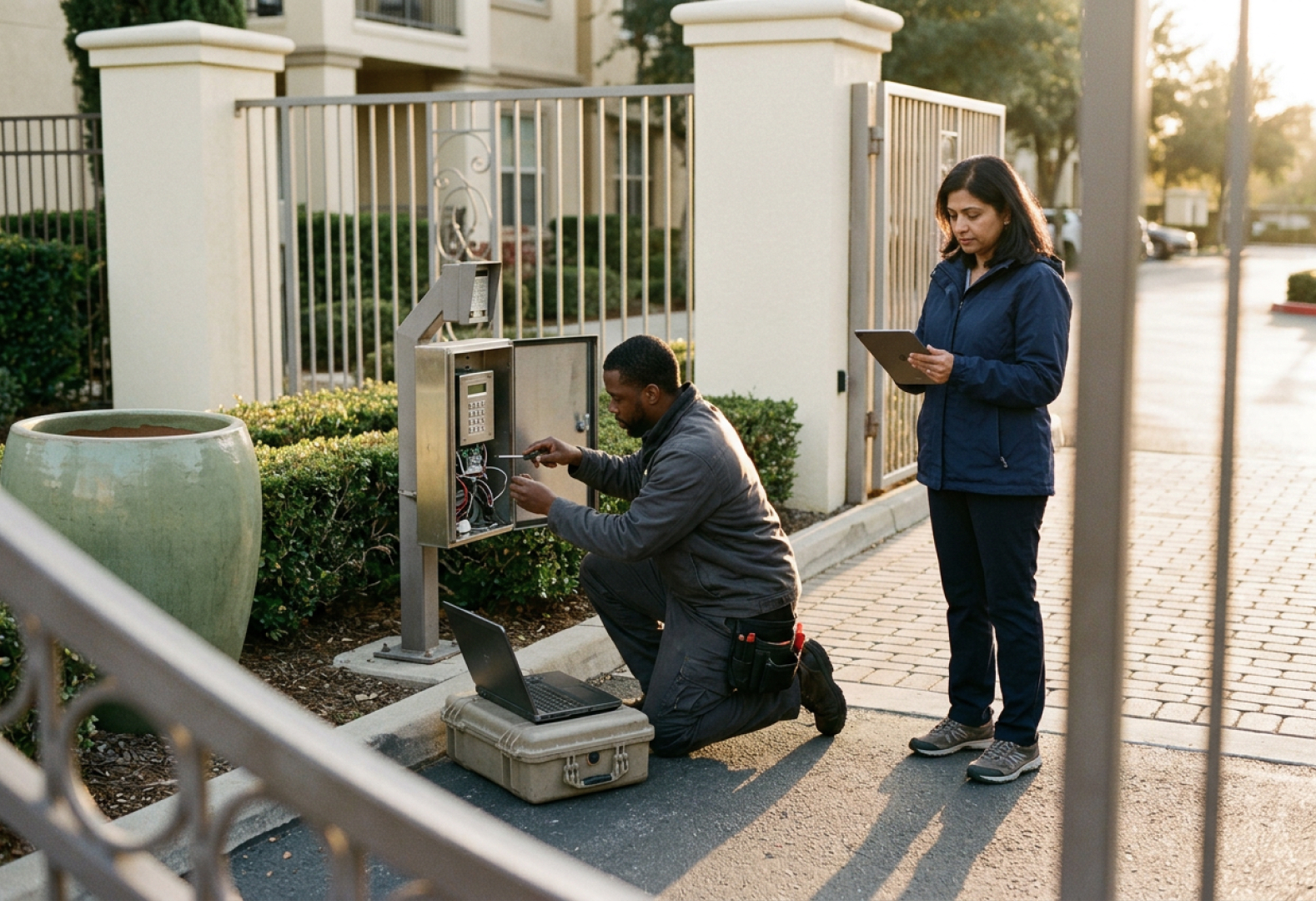


Every outside vendor working on your property is also a source of risk you don't fully control — and the bigger the vendor network, the harder that risk is to see all at once. Third-party vendor risk management is the discipline property managers use to identify, assess, and reduce the operational, compliance, financial, and safety risks that come with relying on outside contractors and service providers.
For multifamily portfolios juggling dozens of vendors across dozens of properties, third-party vendor management isn't a compliance checkbox — it's what keeps one bad vendor relationship from becoming a portfolio-wide liability. Here's what it actually involves and how to build a program that holds up.
What Is a Third-Party Vendor?
A third-party vendor is any outside company or individual contracted to perform work or provide services on behalf of a property — plumbers, HVAC technicians, landscapers, security providers, and any other trade a property doesn't staff directly.
What Is Third-Party Vendor Risk Management?
Third-party vendor risk management is the process of identifying, assessing, and mitigating the risks introduced by outside vendors and contractors working on a property.
For property managers, effective third-party vendor risk management means running consistent risk assessments, tracking compliance and performance data centrally, and monitoring vendors continuously rather than only at onboarding.
The Difference Between Between TPRM & VRM
Third-party risk management (TPRM) and vendor risk management (VRM) are often used interchangeably, and in most property management contexts they are. Where a distinction exists, TPRM sometimes covers a broader set of third parties beyond just vendors — partners, contractors, and data processors — while VRM specifically focuses on vendor relationships.
Why Third-Party Vendor Risk Management Is Important
- Reduces the odds of a compliance or insurance gap turning into a lawsuit
- Protects resident safety when vendors have direct property access
- Prevents financial exposure from unreliable or underinsured vendors
- Preserves the property's reputation when vendor incidents become public
Why Property Managers Need Vendor Risk Management
- Portfolios rely on dozens of vendors across multiple trades and properties
- Vendor-caused incidents create direct liability for the property, not just the vendor
- Inconsistent vendor oversight is one of the most common gaps auditors and insurers flag
Types of Third-Party Vendor Risks
Operational Risks
Missed appointments, inconsistent quality, and unreliable availability that disrupt day-to-day property operations.
Compliance Risks
Expired insurance, lapsed licensing, or non-compliance with property-specific requirements.
Financial Risks
Vendor instability that leads to sudden unavailability, price volatility, or unfinished work.
Legal Risks
Contract disputes, liability exposure from vendor negligence, and regulatory violations tied to a vendor's work.
Safety Risks
Injuries to residents, staff, or the vendor's own workers caused by unsafe practices on-site.
Reputational Risks
A vendor incident that becomes public can damage resident trust in the property long after the issue is resolved.
Cybersecurity & Data Privacy Risks (if vendors handle resident data)
Vendors with access to resident information — leasing software integrations, for example — introduce data privacy exposure that needs its own review.
Environmental Risks
Improper disposal practices or environmental violations tied to a vendor's work, particularly for trades like landscaping or waste management.
How to Perform a Third-Party Vendor Risk Assessment
Start by categorizing the vendor's level of property access and scope of work, then evaluate insurance and licensing status, review past performance and references, and assign a risk tier that determines how closely the vendor needs to be monitored going forward.
Third-Party Vendor Risk Management Lifecycle
The lifecycle runs from initial risk assessment at onboarding, through ongoing compliance monitoring and performance review, to periodic reassessment and, eventually, offboarding or renewal — with risk evaluated at every stage, not just the first one.
Vendor Due Diligence Checklist
- Verify current insurance and licensing
- Review references and past performance
- Confirm financial stability where relevant to the scope of work
- Assess safety record and training documentation
- Evaluate data access and privacy exposure, if applicable
- Assign a risk tier based on scope and property access
Third-Party Vendor Compliance
Vendor compliance is the documentation layer underneath vendor risk management — insurance certificates, licensing, and safety records that need to stay current for the life of the relationship, not just at signing.
How to Monitor Third-Party Vendors
Ongoing monitoring means tracking compliance expiration dates, reviewing performance data on a regular cadence, and reassessing risk tier whenever a vendor's scope of work changes.
What Are the Top Third-Party Vendor Risk Management Best Practices?
- Tier vendors by risk level based on access and scope
- Automate compliance expiration tracking
- Review vendor performance data on a recurring schedule
- Reassess risk when a vendor relationship changes scope
- Centralize vendor risk data instead of managing it property by property
Benefits of Third-Party Vendor Risk Management
- Reduced liability exposure across the portfolio
- Fewer compliance gaps caught after the fact
- More consistent vendor performance
- Better data for renewal and vendor selection decisions
Technology & Software for TPRM
Purpose-built vendor management software centralizes compliance tracking, risk tiering, and performance data across a portfolio, replacing the spreadsheets and email threads that make risk visibility inconsistent property to property.
KPIs to Measure Vendor Risk
Compliance document currency rate, incident frequency by vendor, average time to resolve a compliance gap, and vendor performance scores are the core metrics worth tracking.
What Are the Challenges of Vendor Management?
Inconsistent risk assessment across properties, compliance tracking that depends on manual follow-up, and a lack of centralized data that would otherwise flag a problem vendor before it affects multiple properties.
Why Should I Invest in Third-Party Vendor Management?
Because the cost of an uninsured vendor causing an incident, or a compliance gap surfacing during an audit, is almost always higher than the cost of the process that would have prevented it.
Common Myths About Third-Party Vendor Risk Management
A common myth is that risk management is only necessary for large, high-spend vendors — in reality, a small vendor with regular unit access can carry just as much risk as a major contractor. Another is that a one-time onboarding check is sufficient; risk changes over the life of a vendor relationship, not just at the start.
Third-Party Vendor Risk Management Checklist
- Risk-tier every vendor based on scope and access
- Confirm compliance documentation before work begins
- Track expirations with automated alerts
- Review performance data on a recurring schedule
- Reassess risk whenever scope of work changes
FAQs
How Do You Perform Vendor Risk Assessments Without Creating Unnecessary Paperwork?
Scale the assessment to the vendor's risk tier — a low-access, low-scope vendor needs a lighter review than one with regular access to occupied units.
Should Every Vendor Go Through the Same Level of Risk Assessment?
No. Risk assessment depth should match the vendor's scope of work and level of property access, not apply uniformly across every vendor regardless of exposure.
How Do You Manage Dozens of Third-Party Vendors Without Relying on Spreadsheets?
Centralized vendor management software that tracks compliance, risk tier, and performance in one system is what makes vendor risk management scalable beyond a handful of properties.
What Should You Prioritize Before an Audit if Your Vendor Risk Process Is Incomplete?
Start with compliance documentation — insurance and licensing — since that's typically what an audit or insurer checks first, then work backward into performance and risk-tier documentation.
What Are the Biggest Gaps Organizations Have in Vendor Management Today?
Inconsistent risk assessment across properties, compliance tracking that depends on manual follow-up rather than automated alerts, and a lack of centralized visibility that would otherwise flag a risky vendor before it affects the whole portfolio.
Lauren Seagren is the Content Marketing Specialist at HappyCo, where she leads the company’s content strategy and storytelling across channels. She develops and optimizes campaigns, blogs, case studies, and enablement materials, while building the systems that help content scale and align across teams. Prior to HappyCo, Lauren led content and brand strategy across SaaS startups, creative agencies, and growth-stage companies, bringing more than a decade of experience driving measurable growth across B2B and B2C organizations.


