


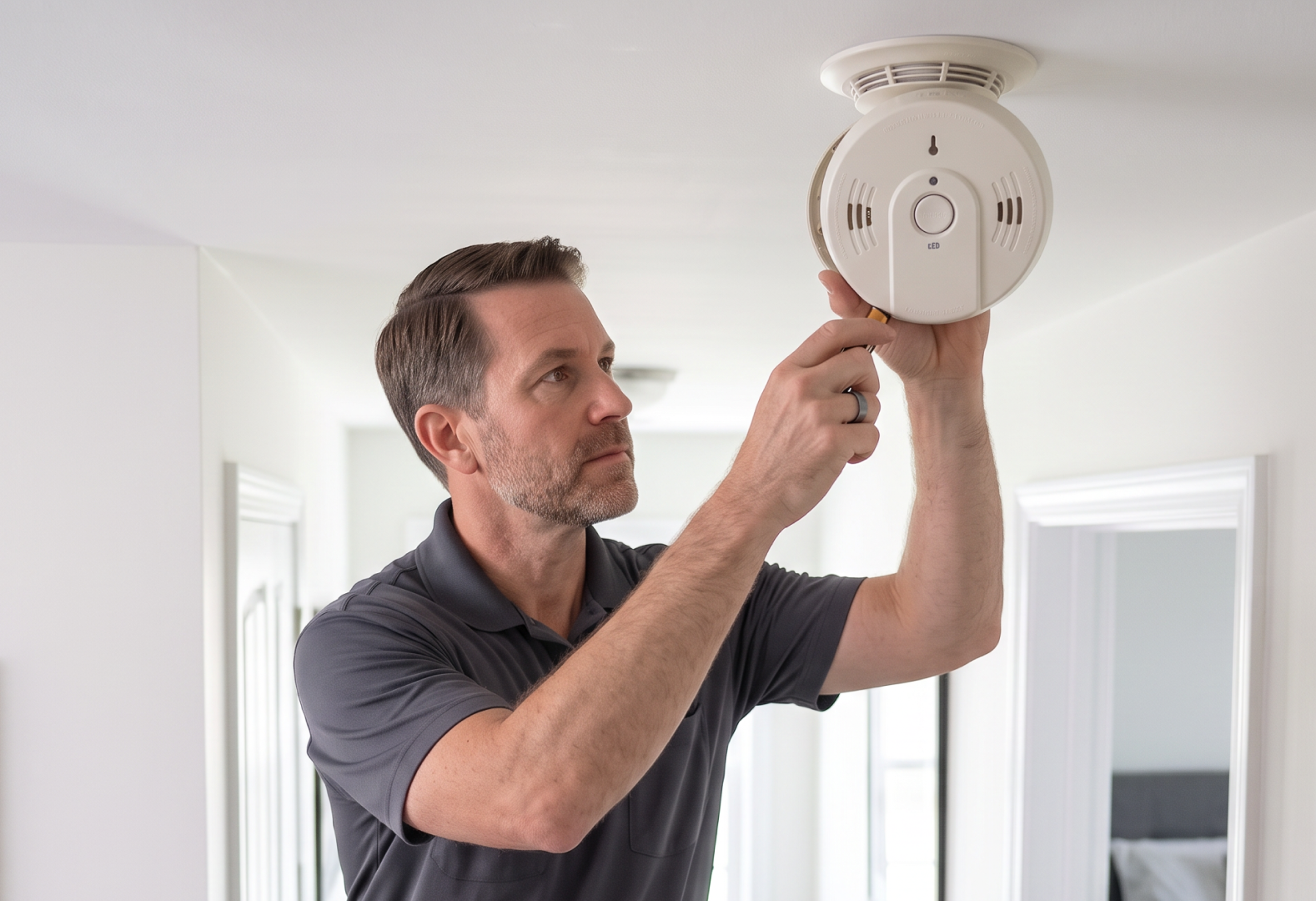


A Q&A with Bret Gundersen, National Account Manager for BRK/First Alert.
Q: Most people think a smoke or CO alarm is “working” as long as the test button beeps. What's actually happening inside the unit that makes that assumption wrong after 10 years?
A: Smoke and carbon monoxide (CO) alarms are electronic devices, and like any electronics, their components weaken over time. Consider the electronics you use every day: Is your cell phone 10 years old? Your laptop? Your TV? Most of us replace those devices every few years, yet some people assume a smoke or CO alarm will work forever – which is working 24 hours a day, 365 days a year.
“I trust alarms from BRK® in my own home because I know they're well within their service life. Replacing alarms after 10 years is a simple, effective way to help ensure residents have reliable, early warning in the event of a fire or CO emergency.” – Bret Gundersen, National Account Manager, BRK/First Alert
Q: Where does the 10-year lifespan come from? Is that an industry-wide standard?
A: The 10-year replacement recommendation is based on years of research, testing, and real-world data showing that smoke and CO alarms can become less reliable as they age. Organizations like the National Fire Protection Association (NFPA) use that information to develop recommendations, while standards organizations such as Underwriters Laboratories (UL) establish the performance requirements manufacturers must meet.
One important change is that new smoke alarms now include an end-of-life signal at 10 years. It's another reminder that these devices aren't meant to last forever and should be replaced at the end of their service life.
Q: For alarms made before the end-of-life chirp requirement, how would a maintenance tech even know an alarm has expired, short of pulling it down and reading the date code?
A: There are a few visual clues that can help. Smoke and CO alarms are designed with white housings to blend into the ceiling, so if an alarm has turned yellow over time, that's often a sign the plastic has aged, and the unit may be well past its service life. I like to say, “If it's gold, it's old.”
That said, the best way to determine an alarm's age is to check the manufacture date on the back of the unit. If your team tracks those dates, it becomes easy to plan replacement cycles, budget for future purchases, and avoid surprises.
Q: In your experience, how common is it to find alarms 5, 7, even 10+ years past expiration in occupied multifamily units?
A: It's a lot more common than people realize. I met someone at the Apartmentalize show whose smoke alarms were original to the house, which was built in 1998! That's nearly a 30-year-old alarm system!
I hear stories like that pretty regularly, unfortunately.
A big challenge is that people assume an alarm is fine as long as it isn't going off, or the test button still works. Most people aren't thinking about taking the alarm down to check the manufacture date, while others simply don't realize smoke and CO alarms should be replaced after 10 years.
That's why it's important for property managers to track manufacture dates and not just test alarms. Knowing the age of every alarm helps take the guesswork out of replacement planning and helps ensure residents remain safe.
Q: Why is carbon monoxide arguably the more dangerous of the two risks, especially for sleeping residents?
A: CO is dangerous because you can't see it, smell it, or taste it. If you're awake and exposed to it, you might recognize symptoms like a headache, dizziness, or fatigue and realize something is wrong. But if you're asleep, you're less likely to recognize those warning signs. In many cases, a working CO alarm may be the only thing that alerts you to a problem.
“I'm still surprised by how many people underestimate the risk of CO. Many assume they don't need a CO alarm if they live in an all-electric building, but power outages can quickly change that. People may bring portable generators too close to a building or use propane or charcoal cooking devices indoors, creating dangerous levels of CO.”– Bret Gundersen, National Account Manager, BRK/First Alert
Think of CO alarms as an essential layer of safety, regardless of the type of building you live in. Just as importantly, make sure any alarm you install has been tested and certified to applicable safety standards, so you know it has met nationally recognized performance requirements.
Q: What does an expired alarm mean for a property owner's liability if there's ever an incident and the alarm is later found to be past its effective life?
A: Documentation and proactive maintenance matter. If an incident ever occurs, property owners want to be able to demonstrate they've taken reasonable steps to help keep residents safe, and maintaining up-to-date smoke and CO alarms is part of that responsibility.
Replacing alarms at the end of their service life is a simple and cost-effective safety measure. Maintenance teams care about the residents they serve, so when they're aware that alarms have a finite lifespan – and a process for tracking and replacing them – they become strong advocates for building safety.
Q: Even property teams with a testing protocol often don't log date codes or replacement history — why does that documentation gap matter so much if there's ever a claim or investigation?
A: Good documentation breeds confidence. Think about the last time your team prepared for an inspection. Questions always come up: Was that issue addressed? Did we complete that repair? Having clear records shows what was done and when.
The same applies to smoke and CO alarms. Recording manufacture dates, inspections, and replacement history demonstrates that your team has been proactive about maintaining these life safety devices. It also makes day-to-day operations easy by helping you plan replacement cycles, manage inventory, and ensure alarms don't age out without anyone noticing.
Q: What should a basic alarm inspection protocol look like for a multifamily maintenance team — what should they actually check, and how often?
A: Every property is different, but the first step is knowing exactly what you have. Start by creating an inventory of every alarm in every unit and common area. Record the alarm type, location, manufacture date, and power source, whether it's battery-operated, hardwired with battery backup, or equipped with a sealed 10-year battery.
From there, establish a regular testing and inspection schedule. Make alarm inspections part of your routine maintenance process, and don't let too much time pass between them, especially if the alarms use replaceable batteries.
“When you know where every alarm is, how it's powered, and when it reaches the end of its service life, replacing them becomes a planned maintenance activity instead of a last-minute emergency.”– Bret Gundersen, National Account Manager, BRK/First Alert
Q: If you were advising a property management company starting from zero on this, what's the first thing they should do this month?
A: Identify every smoke and CO alarm in every unit, record the model number, manufacture date, location, and power source, and test each one to confirm it's working properly. Once you have that information, you'll know which alarms are approaching the end of their service life and can begin planning replacements.
Property managers should also verify that every installed alarm has been tested and certified by a nationally recognized laboratory. Looking for a recognized certification mark, such as UL or ETL, helps ensure the alarm has been evaluated to the applicable safety standards.
It's a mistake to assume everything is fine because “no one reported a problem.” By taking inventory now, you have a clear picture of where you stand and what still needs to be done.
What role should tracking, inspections, and inventory systems play in staying ahead of alarm expiration, rather than finding out after the fact?
“In fire safety: An ounce of prevention is worth a pound of cure.”
Tracking alarms and planning replacements ahead of time helps property managers stay organized. It allows you to budget for replacements, order the products you need, and schedule the work instead of scrambling to respond to unexpected issues.
Planning ahead also gives you flexibility if products become hard to source, or demand increases unexpectedly. At the end of the day, the goal is simple: stay ahead of alarm expiration instead of reacting after the fact. A good tracking and inspection program helps support your maintenance team and makes managing properties predictable.
Lauren Seagren is the Content Marketing Specialist at HappyCo, where she leads the company’s content strategy and storytelling across channels. She develops and optimizes campaigns, blogs, case studies, and enablement materials, while building the systems that help content scale and align across teams. Prior to HappyCo, Lauren led content and brand strategy across SaaS startups, creative agencies, and growth-stage companies, bringing more than a decade of experience driving measurable growth across B2B and B2C organizations.


