




Retention Isn't Won at Renewal
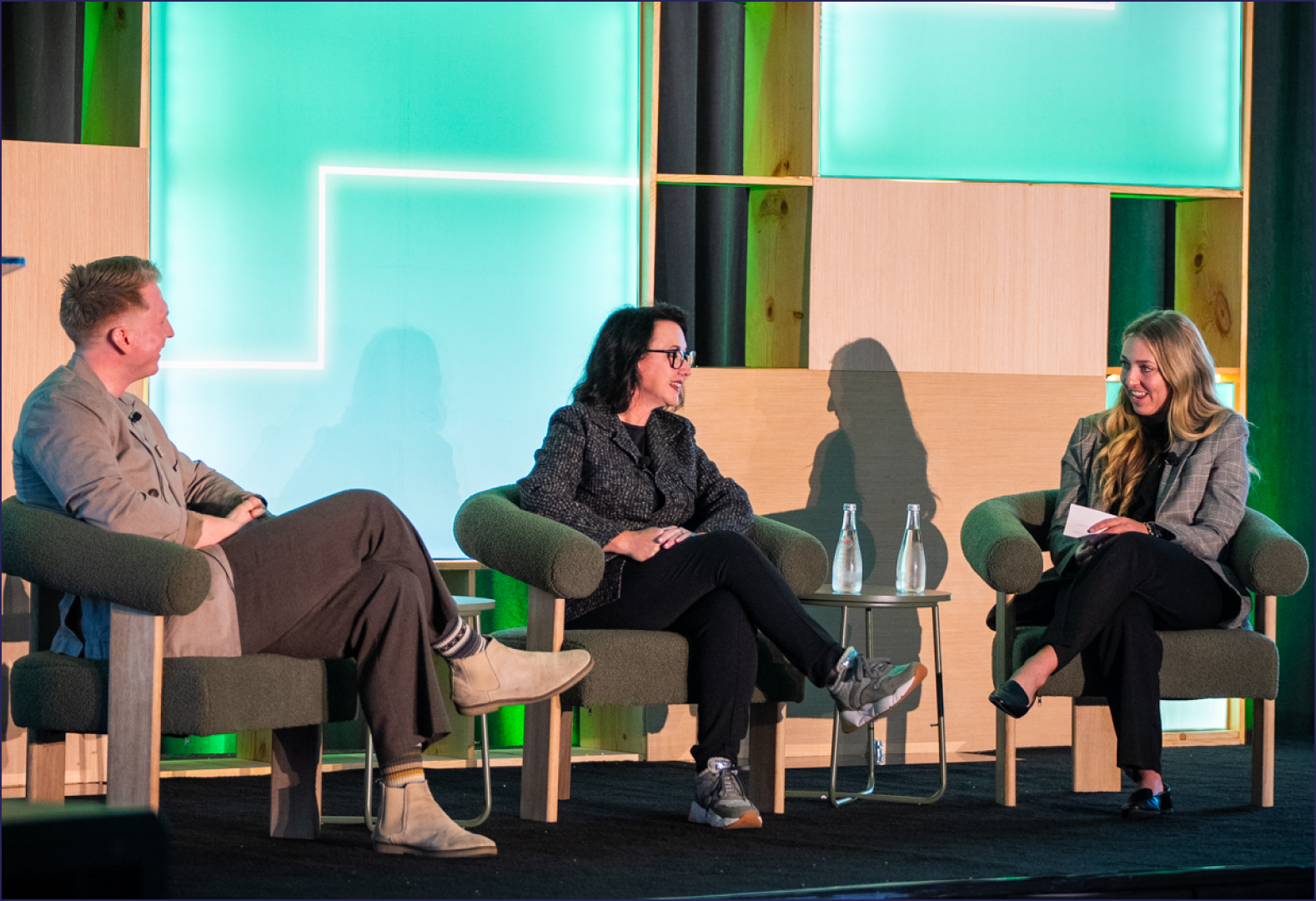
Resident satisfaction isn't a single metric — it's the sum of hundreds of daily interactions between your team and the people who call your properties home. At Happy Summit 2026, Jeff Derricott of Thomas Safran & Associates (TSA) and Heidi Turner of Blanton Turner joined HappyCo to share what they've learned from tens of thousands of work orders, community events, and hard conversations about what it actually takes to keep residents happy and staff motivated.
Their message: retention isn't won at lease renewal. It's won at every maintenance visit, every text acknowledgment, every birthday party, and every late-night call handled with care.
How TSA is Rethinking Speed vs. Preparation
The industry obsesses over two metrics: response time and completion time. Google it. Ask AI. Everyone has a benchmark. But Jeff’s first week at TSA taught him something that no benchmark captures: a fast technician who shows up unprepared costs more time than a slower, well-prepared one.
“We went into that unit three times. It got me thinking — you can have a really knowledgeable technician, but if you're not adequately preparing them before they enter the unit, your response time and completion time just go up.” — Jeff Derricott | Director, Operations - IT & Process Strategy, TSA
The culprit: a work order that simply said "faucet broken." The technician showed up, discovered it was actually a clogged drain, went back to the shop, returned to fix it, noticed a secondary leak, and went back a third time. Three trips — all preventable with better intake.
TSA’s Preparation-First Philosophy
TSA does not pressure maintenance technicians to close work orders within a set time window. Instead, they invest in three things upfront: creating a culture where technicians feel supported, providing thorough training, and gathering as much detail as possible about each work order before anyone steps into a unit. HappyCo's maintenance tool became central to this — giving technicians visibility and information at their fingertips before they arrive.
Their philosophy results in a natural lift in both speed and completion metrics. Not because technicians are rushing, but because they're entering the unit fully prepared to resolve the issue in a single visit.
51,000 Messages Don't Lie: What Blanton Turner Found
Heidi and her team at Blanton Turner did something most operators haven't: they went through every single resident work order survey they'd received since March 2024. All 51,000 of them. What they found reshaped how they think about satisfaction.

“All of our scores were coming back either a five or a one — almost nothing in between. The ones were like: somebody came right away, they were really nice and friendly, but my dishwasher is still broken.” — Heidi Turner | Principal & Co-Founder, Blanton Turner
The finding was counterintuitive: speed of response was not the primary driver of low scores. Residents were happy to wait a few days — as long as the problem was actually fixed completely the first time. Incomplete repairs were the primary culprit for 1-star ratings, even when the technician was friendly and fast.
Residents don't give 1-star ratings because the repair took long. They give them because the repair wasn't finished.
The fix was practical: improving parts availability and technician thoroughness. By ensuring technicians had common parts on hand and weren't limited by supply chain gaps, Blanton Turner raised their average satisfaction score from 4.0 to 4.6. They also saw far fewer 1-star ratings — and more 5-star reviews specifically mentioning technicians who noticed and fixed additional issues they weren't even initially called for.

Going Beyond the Benchmark
HappyCo's data across nearly 3,000 properties mirrors Heidi's findings: scores cluster at the extremes (1s and 5s), but recovery is always possible. Even properties with a string of low scores can trend upward. The key is getting granular — looking at first-time fix rates, tracking repeat work orders for the same issue, and understanding what's driving each extreme. Aggregate benchmarks won't tell you this. Property-level analysis will.
Heidi also flagged something worth planning for: seasonal score dips. Her student housing properties see a predictable drop in August during mass turnover, when temporary staff who aren't fully trained fill in. Identifying these patterns and addressing their root causes, rather than averaging them away, is where continuous improvement actually happens.
The Human Behind the Rating: Ask Your Technicians Why
Data tells you where the problem is. Your technicians tell you why. Both Jeff and Heidi emphasized that the most valuable feedback loop in their organizations runs not just from residents to managers, but from managers to technicians. Asking directly about low scores, removing barriers, and treating follow-up as a learning moment rather than a blame session.
“Taking the time to talk to the techs and say, why did this work order only get one star? They'll tell you. They'll tell you exactly why — I didn't have everything I needed, or whatever. Taking the time to understand that is super important.” — Heidi Turner | Principal & Co-Founder, Blanton Turner
This kind of qualitative follow-up is what separates operators who improve over time from those who plateau. A 1-star rating isn't a failure — it's data for next time. The question is whether you do something with it.
“Just because something isn't fixed the first time doesn't mean you can't go back and say: I realized I made a mistake. And people appreciate that. Open communication — let me see if I can fix this for you.” — Heidi Turner | Principal & Co-Founder, Blanton Turner
Staff Retention IS Resident Retention
One of the most striking statistics from this session: TSA operates with a 7% annual staff turnover rate in an industry where 40% is the norm. That number isn't an accident. It's the result of deliberate investment in staff wellbeing, and it pays dividends directly in resident trust and satisfaction.

“One of our main technicians at our most challenging property just had his retirement party after 33 years with us. He was the most chill guy. Everyone loved him — even the most challenging residents. Caring for your staff is one of the best ways to gain trust.” — Jeff Derricott | Director, Operations - IT & Process Strategy, TSA
Long-tenured staff build something no onboarding checklist can create: personal relationships with residents. At TSA — a 100% affordable housing operator — those relationships are the fabric of the community. Residents in affordable housing often have fewer social anchors; knowing the maintenance technician by name, having someone who shows up consistently and treats them with dignity, matters enormously.
The CEO's North Star: Would Your Parents Live Here?
In Jeff's first week at TSA, the CEO shared a single question that frames every operational decision: are we creating communities where we'd feel comfortable having our own parents live? It's not a marketing tagline — a number of TSA staff members' parents actually do live at their properties. That level of accountability changes how everyone shows up.
“Just because someone's in an affordable unit doesn't mean they don't deserve our kindness and respect. Income is not a corollary with quality of person. They're living their lives.”— Jeff Derricott | Director, Operations - IT & Process Strategy, TSA
After-Hours: The Hidden Burnout Driver
After-hours maintenance calls are one of the most significant and least discussed drivers of staff burnout and resident dissatisfaction. The traditional model — outsourcing to a generic dispatch center staffed by agents with no property knowledge — fails both sides of the equation.
“Our residents end up having a bad experience because the person answering has never been in a unit or involved in property management. And the information gathered is often incorrect — so our technicians are showing up in the morning with bad data, and they're also getting calls at 2 a.m. for things that weren't actually emergencies.”— Jeff Derricott | Director, Operations - IT & Process Strategy, TSA
TSA is actively rolling out HappyCo's Happy Force platform to address this. Instead of generic dispatch agents, Happy Force puts trained maintenance technicians on after-hours calls. Real humans who understand property operations, can accurately triage issues, and often resolve problems remotely before an emergency visit is actually needed.
What Happy Force Actually Changes
The impact operates on two levels simultaneously. For residents: faster, more accurate triage by someone who actually understands their issue. For technicians: dramatically fewer unnecessary overnight call-outs, less burnout, and a sense that the company is protecting their time and wellbeing. Jeff reported individual calls with 10 of his properties ahead of the pilot launch — all of them were excited. That's not a typical reaction to new technology rollout.
“Our staff was dying. They were getting calls at 2 a.m. to unclog a toilet. When HappyCo started talking to us about Happy Force, we knew we wanted it — having trained maintenance technicians triage after-hours calls and mitigate issues before they become emergencies. That changes everything.”— Jeff Derrick | Director, Operations - IT & Process Strategy, TSA
Heidi's team had a similar experience. Once they began piloting mobile-first after-hours management tools, they found they could handle significantly more issues remotely. The knock-on effect on staff turnover was immense. People getting their sleep back, feeling less like they're permanently on-call, and staying in their roles longer.
Three Minutes Can Change Everything
One of the simplest and most overlooked drivers of resident satisfaction surfaced in Heidi's data review: the speed of acknowledgment after a work order is submitted. Not resolution speed. Acknowledgment speed.
“Going through all those 51,000 reviews, I kept seeing: Larry texted me within three minutes. It was awesome. Even though it took a few more days to get fixed — the acknowledgement meant everything.”— Heidi Turner | Principal & Co-Founder, Blanton Turner
Residents don't expect instant repairs. They expect to be heard. A quick text — "We got your request, we're on it, and here's what to expect" — resets the emotional clock entirely. It signals professionalism, care, and competence before anyone's even picked up a wrench.
Community Building: The Retention Work That Doesn't Show Up in Work Orders
Both Jeff and Heidi were clear on one last thought: resident retention isn't just about operational excellence. It's about belonging. The communities that see the highest resident loyalty aren't just well-maintained — they're places where people feel connected to something larger than their apartment.
TSA throws birthday parties for residents who don't have family nearby. They organize tea parties, donation drives, and annual resident gift events. Their residents — many of whom are seniors — contribute back by donating to community initiatives and volunteering. The relationship runs both ways.
“They wouldn't show up to the events if we didn't have a good maintenance reputation or good customer service. Because they do show up, we're able to create economic mobility for our families and seniors in a place they feel safe.”— Jeff Derricott | Director, Operations - IT & Process Strategy, TSA
Heidi shared a story about her son describing her job to classmates. He couldn't quite articulate what she does, but he knew one thing for certain — the buildings always have the best snacks. It's a small detail that captures a larger truth: what residents and their families remember isn't the policy manual. It's the feeling. The thoughtfulness. The snacks.
“Those are the extra snacks and extra benefits that nobody else talks about — but they keep people in the building and keep your employees happy.”
— Heidi Turner | Principal & Co-Founder, Blanton Turner
The Resident Retention Toolbox: Six Tools That Work
1 | Preparation Over Speed
Invest in detailed work order intake and technician prep before anyone enters a unit. One prepared visit beats three rushed ones every time.
2 | Parts Availability
Stock common parts on-site. The biggest delay isn't technical difficulty — it's supply chain. Eliminate that bottleneck and scores jump.
3 | Fast Acknowledgment
Text within minutes of a work order submission. Residents don't need instant repairs — they need to know they've been heard.
4 | After-Hours Triage
Replace generic dispatch services with trained maintenance techs who can accurately triage and often resolve issues remotely.
5 | Staff Retention
Low technician turnover builds resident trust. Care for your staff through benefits, listening, and tools that respect their time.
6 | Community Events
Birthday parties, tea parties, gift drives — the human moments that make residents feel they belong somewhere, not just somewhere to live.
The Integrated Picture: Culture Matters
The through-line connecting every element of this session is simple, but it's worth stating directly: resident retention is the output of a system, and that system runs on people.
The data matters. The preparation protocols matter. The parts inventory matters. The acknowledgment speed matters. The after-hours service matters. How the interaction with a maintenance technician feels matters.
This means the real retention toolbox isn't a set of software features or operational procedures. It's a culture — one where staff are treated with the same respect you expect them to extend to residents, where the why behind every process is communicated and understood, where failures are investigated and learned from rather than papered over, and where the measure of success is not the speed at which work orders close, but whether the person in the unit feels cared for.
That culture, built consistently over years, is what produces seven percent turnover, 4.6 satisfaction scores, and residents who don't just stay — but show up to the birthday party.
"Just because someone's in an affordable unit doesn't mean they don't deserve our kindness and respect. Income is not a corollary with quality of person. They're living their lives." — Jeff Derricott | Director, Operations - IT & Process Strategy, TSA
After-Hours: The Hidden Burnout Driver
After-hours maintenance calls are one of the most significant and least discussed drivers of staff burnout and resident dissatisfaction. The traditional model — outsourcing to a generic dispatch center staffed by agents with no property knowledge — fails both sides of the equation.
"Our residents end up having a bad experience because the person answering has never been in a unit or involved in property management. And the information gathered is often incorrect — so our technicians are showing up in the morning with bad data, and they're also getting calls at 2 a.m. for things that weren't actually emergencies." — Jeff Derricott | Director, Operations - IT & Process Strategy, TSA
TSA is actively rolling out HappyCo's Happy Force platform to address this. Instead of generic dispatch agents, Happy Force puts trained maintenance technicians on after-hours calls. Real humans who understand property operations, can accurately triage issues, and often resolve problems remotely before an emergency visit is actually needed.
What Happy Force Actually Changes
The impact operates on two levels simultaneously. For residents: faster, more accurate triage by someone who actually understands their issue. For technicians: dramatically fewer unnecessary overnight call-outs, less burnout, and a sense that the company is protecting their time and wellbeing. Jeff reported individual calls with 10 of his properties ahead of the pilot launch — all of them excited. That's not a typical reaction to new technology rollout.
"Our staff was dying. They were getting calls at 2 a.m. to unclog a toilet. When HappyCo started talking to us about Happy Force, we knew we wanted it — having trained maintenance technicians triage after-hours calls and mitigate issues before they become emergencies. That changes everything." — Jeff Derrick | Director, Operations - IT & Process Strategy, TSA
Heidi's team had a similar experience. Once they began piloting mobile-first after-hours management tools, they found they could handle significantly more issues remotely. The knock-on effect on staff turnover was immense. People getting their sleep back, feeling less like they're permanently on-call, and staying in their roles longer.
Three Minutes Can Change Everything
One of the simplest and most overlooked drivers of resident satisfaction surfaced in Heidi's data review: the speed of acknowledgment after a work order is submitted. Not resolution speed. Acknowledgment speed.
"Going through all those 51,000 reviews, I kept seeing: Larry texted me within three minutes. It was awesome. Even though it took a few more days to get fixed — the acknowledgement meant everything." — Heidi Turner | Principal & Co-Founder, Blanton Turner
Residents don't expect instant repairs. They expect to be heard. A quick text — "We got your request, we're on it, and here's what to expect" — resets the emotional clock entirely. It signals professionalism, care, and competence before anyone's even picked up a wrench.
Community Building: The Retention Work That Doesn't Show Up in Work Orders
Both Jeff and Heidi were clear on one last thought: resident retention isn't just about operational excellence. It's about belonging. The communities that see the highest resident loyalty aren't just well-maintained — they're places where people feel connected to something larger than their apartment.
TSA throws birthday parties for residents who don't have family nearby. They organize tea parties, donation drives, and annual resident gift events. Their residents — many of whom are seniors — contribute back by donating to community initiatives and volunteering. The relationship runs both ways.
"They wouldn't show up to the events if we didn't have a good maintenance reputation or good customer service. Because they do show up, we're able to create economic mobility for our families and seniors in a place they feel safe." — Jeff Derricott | Director, Operations - IT & Process Strategy, TSA
Heidi shared a story about her son describing her job to classmates. He couldn't quite articulate what she does, but he knew one thing for certain — the buildings always have the best snacks. It's a small detail that captures a larger truth: what residents and their families remember isn't the policy manual. It's the feeling. The thoughtfulness. The snacks.
"Those are the extra snacks and extra benefits that nobody else talks about — but they keep people in the building and keep your employees happy." — Heidi Turner | Principal & Co-Founder, Blanton Turner
The Resident Retention Toolbox: Six Tools That Work
- Preparation Over Speed: Invest in detailed work order intake and technician prep before anyone enters a unit. One prepared visit beats three rushed ones every time.
- Parts Availability: Stock common parts on-site. The biggest delay isn't technical difficulty — it's supply chain. Eliminate that bottleneck and scores jump.
- Fast Acknowledgment: Text within minutes of a work order submission. Residents don't need instant repairs — they need to know they've been heard.
- After-Hours Triage: Replace generic dispatch services with trained maintenance techs who can accurately triage and often resolve issues remotely.
- Staff Retention: Low technician turnover builds resident trust. Care for your staff through benefits, listening, and tools that respect their time.
- Community Events: Birthday parties, tea parties, gift drives — the human moments that make residents feel they belong somewhere, not just somewhere to live.
The Integrated Picture: What This All Adds Up To
The through-line connecting every element of this session is simple, but it's worth stating directly: resident retention is the output of a system, and that system runs on people.
The data matters. The preparation protocols matter. The parts inventory matters. The acknowledgment speed matters. The after-hours service matters. How the interaction with a maintenance technician feels matters.
This means the real retention toolbox isn't a set of software features or operational procedures. It's a culture — one where staff are treated with the same respect you expect them to extend to residents, where the why behind every process is communicated and understood, where failures are investigated and learned from rather than papered over, and where the measure of success is not the speed at which work orders close, but whether the person in the unit feels cared for.
That culture, built consistently over years, is what produces 7% turnover, 4.6 satisfaction scores, and residents who don't just stay — but show up to the birthday party.
Lauren Seagren is the Content Marketing Specialist at HappyCo, where she leads the company’s content strategy and storytelling across channels. She develops and optimizes campaigns, blogs, case studies, and enablement materials, while building the systems that help content scale and align across teams. Prior to HappyCo, Lauren led content and brand strategy across SaaS startups, creative agencies, and growth-stage companies, bringing more than a decade of experience driving measurable growth across B2B and B2C organizations.


