




A single unit turn pulls in the office, maintenance, painters, vendors and two different residents, usually inside a few weeks. Every handoff is a chance for something to slip. Turns are also getting more expensive: apartment turnover costs rose 17.5% year over year in 2024, according to the National Apartment Association.
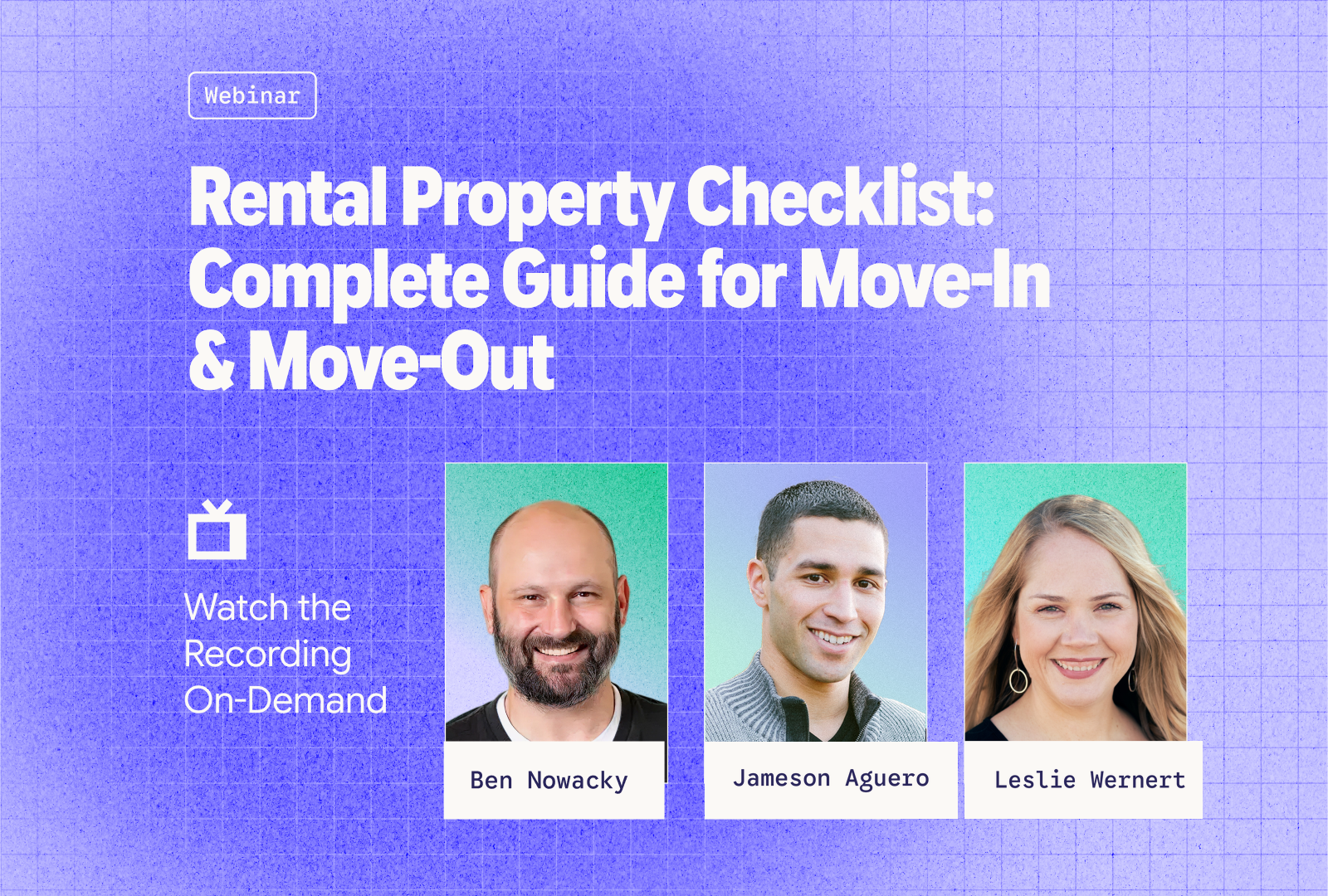
In a recent HappyCo webinar, President Ben Nowacky walked through the full move-in and move-out process with Senior Manager, Strategic Customer Programs Leslie Wernert, who has spent years training site teams, and Sr. Solution Engineer Jameson Aguero, who ran a live demo of the workflow. Their message was consistent: an inspection only matters if what it finds turns into work that gets done.
The full turn
Five Inspections, Five Different Questions
The process starts the moment a notice to vacate is logged, which should schedule every inspection that follows. Leslie treats each inspection as a checkpoint with its own job:
- Pre-move-out: What’s coming? Flag big-ticket items like appliances and flooring so they can be ordered early.
- Move-out: What happened? This is the official record of condition and the deposit documentation, so it should be thorough and photo-heavy.
- Maintenance: What needs fixing? HVAC, plumbing, smoke detectors and other technical items.
- Final: What is fixed? Make sure the unit is actually ready, not just probably ready.
- Move-in: What are we handing over? A friendly walkthrough that gets the resident’s sign-off on day one.
Her setup rule follows from that: each inspection needs its own template, not a copy of another one with a new title. For a room-by-room list of what each one should cover, see our rental property inspection checklist.
The full turn
Five inspections, five questions
01
Pre‑move‑out
What’s coming?
Big-ticket items to order early, if the resident is still there
02
Move-out
What happened?
Official record of condition, thorough and photo-heavy
03
Maintenance
What needs fixing?
HVAC, plumbing, smoke detectors
04
Final
What is fixed?
Actually ready, not just probably ready
05
Move-in
What are we handing over?
Resident sign-off on condition from day one
Notice to vacate → inspections and work scheduled → rent ready
Handoffs
Turns Break Between People
According to Leslie, the breakdown almost always happens in a handoff. The office knows the move-out date, but maintenance hears about it late. Maintenance finishes but doesn’t tell the painter, so the unit sits. Vendors work from different systems and phone calls. She also recommends spelling out what “broom clean” means for departing residents instead of assuming they know.
Common misses
The Checklist Items Teams Miss Most
The usual misses are things you don’t see at a glance: smoke and CO detectors, filters, leaks under the sink, ovens, dishwashers and cabinets. They tend to surface at the worst time, like a leak in a new resident’s first week, a deposit dispute with no photo to back it up, or a safety item that never got checked.
The fix is to make those items required, with a photo and a note, so they can’t be skipped. Jameson added that required photos and signatures can block an inspection from being completed, and a daily report can show managers any inspection that was started but never finished.
Deposits
Documentation That Holds Up in a Deposit Dispute
Ben noted that newer security deposit rules in some states have raised the stakes on move-out documentation. For Leslie, photos are where deposit money gets recovered or lost. Her priorities: photos first, with wide room shots and close-ups of damage taken from the same angles at move-in and move-out, backed by timestamps. Then specific notes. “2-inch scratch on the kitchen floor near the fridge” holds up. “Floor damaged” doesn’t. Then signatures. When all three live in one record, she said, deposit conversations get shorter and friendlier.
Al Angelo Company, which documents move-outs with photos in HappyCo, reports a 20% decrease in disputes during resident move-outs.
Portfolio consistency
Lock the Core Templates
Standardizing across a portfolio is hard when every property has done turns its own way. Leslie’s advice is to lock down core templates from the start and be deliberate about who can change them. When individual sites edit their own versions, consistency can be gone within six months, and the data no longer lines up across the portfolio.
Properties that truly need something different can get their own project type rather than unrestricted edits. Consistency also means site staff can help at another property without relearning the process. For more, see our guide to standardizing unit inspections across a multi-property portfolio.
Live demo
From Inspection Finding to Assigned Work
In the demo, Jameson completed a move-out in the HappyCo mobile app, logging a hole in the wall as a resident charge, a broken microwave and a pest issue, each with photos and notes. Only the tasks the turn needed were created. Resident charges went to a manager for approval, and the report was saved under the resident in the property management system.
On the turn board, each finding was ready to assign to a site tech or vendor with a due date. Updates show in real time, and when the turn is complete, the unit syncs back to the PMS as rent ready.
Getting started
Start With the Move-Out
For teams still on paper or spreadsheets, both panelists gave the same first step: digitize the move-out. A standard move-out gives every property the same data, which makes reporting possible. It also closes communication gaps. A tech in the field doesn’t have to call the office, and a regional manager can see progress without interrupting anyone.
Metrics
Measure Turn Time by Stage
Overall turn time is the starting metric, but Jameson recommends breaking it down by stage. In his example, a property averaging 17 days per turn might find that appliance repairs take 11 days while paint and cleaning take far less, pointing to exactly where to bring in a faster vendor or tech.
Illustrative example
Average days from move-out, one property
*Illustrative example from the live demo. Hypothetical numbers used in the webinar to show stage-level reporting. Not customer data.
For a yardstick, many apartment companies use seven working days as a guideline for turning a unit, and some expect five or as few as three, according to the National Apartment Association. Anchor NW Property Group shows what holding a tight standard looks like at volume: it tripled its monthly turns from 50 to 160 while maintaining a three-day standard.
Audience Q&A
Walk the Unit With New Residents
HappyCo supports guest inspections that residents complete on their own, but when staffing allows, Leslie prefers walking the unit together. It eases the stress of moving, confirms condition and starts good habits early, like knowing how to submit a work order.
Adoption
Expect Improvement, Not Perfection
On adoption, Leslie doesn’t expect 100% from a new team right away. She expects improvement, and her advice is to lead with the why. “Because management said so” won’t change habits. Showing techs they no longer need to call in, turn in paperwork or re-upload photos at the end of a long day will.
Lauren Seagren is the Content Marketing Specialist at HappyCo, where she leads the company’s content strategy and storytelling across channels. She develops and optimizes campaigns, blogs, case studies, and enablement materials, while building the systems that help content scale and align across teams. Prior to HappyCo, Lauren led content and brand strategy across SaaS startups, creative agencies, and growth-stage companies, bringing more than a decade of experience driving measurable growth across B2B and B2C organizations.


