




The basics
What a Lease File Audit Is For
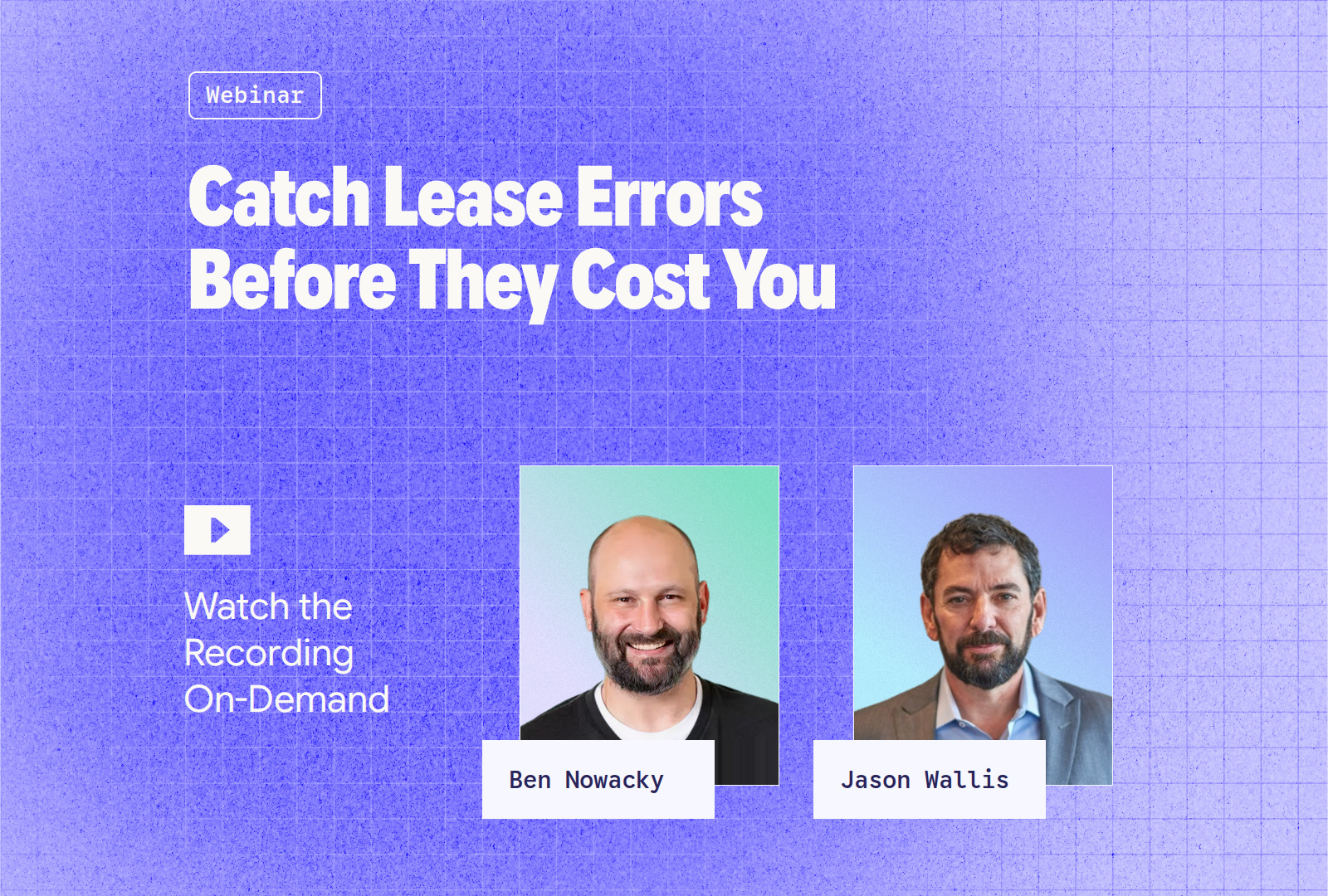
The leasing journey has a lot of moving parts, and most of the mess happens in the real world rather than in the software. A lease file audit checks that the process was done correctly: every required document is signed, every fee the resident agreed to is set up to be collected, and the resident's account matches the lease.
Historically, that check happened rarely. As Jason put it, the only time most operators truly understood the state of their lease files was when they took over a property or sold one. Some ran an annual review. In between, problems piled up quietly.
What changed
From a Rearview Mirror to a Running Check
Jason credits the last few years of progress in AI, from large language models to agent-based tools, with making a different model practical. Instead of looking back months later, SurfaceAI watches every change in the property management system and every operations document that gets uploaded, and runs an audit as soon as something changes.
That shrinks the gap between an error and its fix to almost nothing. It also changes the resident's experience. Jason described the familiar version of the problem: a resident signs up for a parking spot, isn't charged for three months, and then gets asked to pay all of it back. With a continuous audit, the charge gets corrected before the resident ever notices.
There is a process benefit too. When an audit flags an issue right after a lease is signed, the team learns what went wrong while the details are fresh and can fix the step that caused it.
Where the money goes
The Biggest Leaks Are the Ordinary Ones
Asked what operators most often find once audits run continuously, Jason didn't point to anything exotic. Lease modifications are where things tend to get messy, and parking and pet fees are the top two sources of missed revenue. The resident already agreed to the charge and it is written into the lease. It was simply never set up to be collected.
Concessions are the third, quieter source. Much of the detail of a concession lives in the lease agreement and never reaches the rent roll or the property management system, so its effect on an asset's revenue is hard to see. One owner used SurfaceAI to pull detailed concession data out of its lease agreements, then ran its own analysis to find where its portfolio had room to improve.
Revenue and risk
Compliance Can Matter as Much as Recovered Income
Ben noted that the two sides of an audit land differently depending on who is in the room. Owners respond to recovered revenue, which also helps justify paying for the program. Fee managers often care more about risk: a required addendum that every resident had to sign, and no easy way to confirm that they all did.
An unsigned mandated addendum is more than a paperwork gap. It can expose the operator to legal risk. Continuous audits catch it soon after the lease is executed rather than months later, and they make it possible to check a single compliance item, such as an insurance addendum, across a whole portfolio at once.
Why manual review falls short
160 Pages, Read by Someone With a Day Job
The usual alternative is to have the team review addenda, insurance and other items by hand. Jason's answer was practical. A lease packet can run 150 to 160 pages, and the longer a reviewer reads, the more likely a tired eye misses something. SurfaceAI has invested heavily in document understanding and abstraction to take that human error out of the process and make it faster.
The workload matters as much as the accuracy. Audit work usually lands on people who already have full-time jobs, and it peaks during due diligence, when a lot of files need review in a short window. Technology scales to that crunch in a way an already-busy team can't.
Ben added a broader point about AI. Chatbots are interesting at first, but their value drops off the more you use them. The value holds up when the technology is built into work a team already does on a regular basis, which is what a continuous audit is.
“All those follow-ups that help the operator actually get the value out of finding the issue are really as important as finding the issue in the first place.”
Jason Wallis, Founder and CEO, SurfaceAI
Closing the loop
Fixing the Issue Should Close It
Finding an error is only half the job. Jason described the follow-through as just as important as the finding, and as the reason a continuous program is lighter on site teams rather than heavier. When an issue turns up in a resident's lease, the team goes back into the property management system and corrects the lease or the rent roll. The system detects the change, reruns the audit and closes the item on its own.
There is no separate tracker to update and no duplicate data entry. The work the team was going to do anyway is the work that resolves the finding.
Beyond the audit
What Lease Data Says About the People Who Live There
Lease files also describe who lives at a property, and Ben sees that as one of the most useful side effects. On the affordable housing side, that includes demographic profiles. More broadly, it is a census of the property that helps an owner decide how to run it.
His example: if pet addenda show that a large share of residents have pets, that might justify converting an underused tennis court into a dog park, or highlighting a nearby dog park in the property's listings. Those decisions were hard to make before, because the data sat inside individual lease documents.
Put next to inspection, maintenance and asset data, that picture gets more complete. Ben noted that understanding how maintenance and operations run is only half the picture. The other half is understanding the residents, and that is the idea behind the HappyCo and SurfaceAI partnership: lease and resident data alongside what is happening physically at the property.
The owner's view
Preventative Maintenance for the Resident Side
With hold periods running longer, Ben said, owners are looking for ways to extend the life of a property and improve its trailing 12-month numbers before they are in a position to sell. Many owners already walk their properties and send notes back to their fee manager: the monument sign light is out, a sprinkler head is leaking.
A continuous lease audit gives owners the same kind of ongoing check on the resident side. Instead of finding problems once a year, they see them as they happen and can ask for a fix right away.
Acquisitions
Lease Audits During Due Diligence
The two companies have also built a joint due diligence workflow. HappyCo handles the property walk. The lease files and rent roll go to SurfaceAI, and within a few hours its AI returns a lease file audit built to the buyer's own specs, templates and rules, the kind of review that used to be done by hand.
Due diligence rarely goes cleanly. Documents are missing and someone has to chase prior management for them. SurfaceAI's tools and team stay involved through that follow-up, and the buyer gets refreshed reports as new files arrive, so they know what they need to know about the asset before takeover. After takeover, continuous audits carry the same view into daily operations.
Jason framed the underlying belief simply: one of a customer's most valuable assets is its data, and it belongs to the customer. SurfaceAI's aim is to enrich that data and make it easier to use, not to sit between the customer and it, from due diligence through takeover, operations and disposition.
Getting started
What Onboarding Looks Like
Ben raised the obvious concern for any multifamily team: change management. Jason described a hands-on onboarding process for small, mid-sized and large portfolios alike. It usually starts with a pilot on a small set of properties.
SurfaceAI's operations team, working with its own internal AI tools, connects to the property management system, runs an initial scan of those properties and an initial batch of audits, then walks through the findings and next steps with the customer. Depending on calendars, the first results arrive in about two to four weeks.
Before you buy
Questions to Ask Any Lease Audit Provider
Plenty of tools look like they do something similar. Jason's advice is to look past the first impressive moment, such as a chatbot pulling data out of a document, and dig into how the program works day to day. He suggested asking:
- What follow-up is needed once an audit finds an issue?
- How long does it take from lease execution or modification to a completed audit?
- What visibility do I get into the whole audit program?
- How are new addenda, property-specific rules and exceptions handled?
The last question is where most of the friction tends to live. If a property rolls out a new addendum, can the audit rules be changed so that a new set applies from that day forward, for that property alone? Exceptions and edge cases like that are the most important thing to check before a rollout.
What's next
Bringing Order to the Messy Middle
Looking 12 to 18 months ahead, Jason pointed to a visibility problem that cuts across organizations: between asset managers and management teams, and between the teams handling transitions. Clean handoffs and shared insight build trust, and the goal is to use new technology to remove waste, surprises and risk, on both the revenue and expense side, across the full life of an asset.
Ben described where he sees the opportunity: in the messy middle. Buying and selling a property are well-worn processes. Running a portfolio consistently at scale is the hard part. A hundred or a thousand units is manageable, but at 10,000 or 20,000 units, standardization, workflows and communication get much harder. The next step past the chatbot, in his view, is technology that shows where the inconsistencies are and helps teams bring one standard practice to every property.
Lauren Seagren is the Content Marketing Specialist at HappyCo, where she leads the company’s content strategy and storytelling across channels. She develops and optimizes campaigns, blogs, case studies, and enablement materials, while building the systems that help content scale and align across teams. Prior to HappyCo, Lauren led content and brand strategy across SaaS startups, creative agencies, and growth-stage companies, bringing more than a decade of experience driving measurable growth across B2B and B2C organizations.


