




Spring has sprung! And so have the property issues that were hibernating all winter. As residents throw open their windows and HVAC systems switch from “toasty” to “cool,” the problems hidden by snow and ice are starting to surface. Spring and summer represent the busiest and most important maintenance window of the year for multifamily operators — not because summer is inherently more demanding than winter, but because what you do between April and August determines how your properties look, perform, and hold up through the rest of the year.
A thorough summer home maintenance checklist for property managers covers a lot of ground: post-winter exterior repairs, cooling system readiness, pool and amenity season prep, grounds management, and the kind of unit-level inspections that catch small issues before they become expensive ones. At portfolio scale, that’s a significant coordination challenge — especially when maintenance teams are already stretched thin and resident expectations for quick turnaround are higher than ever.
This guide gives property managers and multifamily operators a complete summer maintenance checklist, a month-by-month planning framework from spring through August, and practical tips for running a proactive summer maintenance program across multiple properties.
Why Summer Property Maintenance Matters
It’s easy to treat summer as the low-stakes season with the lack of frozen pipes, ice dams, and heating failures. But summer has its own set of high-cost failure scenarios, and the window for addressing winter damage and preparing for the next cold season is shorter than it feels.
1. It Addresses Winter Damage Before it Compounds
Winter is hard on buildings. Freeze-thaw cycles open cracks in foundations and exterior masonry. Ice and snow load stress roofing systems. Salt and moisture corrode metal components. Drainage issues that were masked by frozen ground become visible in spring. If winter damage isn’t identified and addressed in spring and early summer, it compounds through the season — and what could have been a straightforward repair in May becomes a significant project by October.
2. It Prepares Cooling Systems Before Demand Peaks
An HVAC system that hasn’t been serviced since last cooling season is one of the biggest operational risks in summer. When temperatures spike and every unit in the building cranks the AC simultaneously, an overworked or under-maintained system fails — creating emergency dispatch situations, uncomfortable residents, and repair costs that are always higher under urgency. Cooling system service needs to happen in spring, before demand peaks. Once the heat arrives, HVAC vendors are fully booked and response times stretch.
3. It Protects Curb Appeal & Resident Satisfaction
Summer is when properties are most visible. Residents are outside, prospective residents are touring, and the condition of grounds, amenities, and exterior surfaces directly affects leasing performance. Properties that look well-maintained attract and retain better residents. The summer maintenance program isn’t just about systems and infrastructure — it’s about the lived experience of the people who call your communities home.
4. It Helps Manage Outdoor Amenity Risk
Pool season, outdoor fitness areas, playground equipment, grills, and common outdoor spaces all come with safety, liability, and maintenance requirements that are concentrated in summer. Getting ahead of amenity inspection and maintenance before the season opens protects residents and reduces the liability exposure that comes with deferred upkeep on high-traffic outdoor equipment.
Complete Summer Maintenance Checklist for Property Managers
This summer home maintenance checklist is organized by category and designed to be applied consistently across every property in your portfolio. Start exterior and HVAC work in spring — ideally April and May — and continue through August with ongoing grounds management and mid-season inspections.
Exterior Summer Maintenance Checklist
Winter reveals a lot about a building’s vulnerabilities. Spring is when you find them — and fix them before the next season cycle begins.
- Post-winter roof inspection: Walk or drone-inspect all roofs for winter damage — missing or cracked shingles, lifted flashings, damaged ridge caps, and debris accumulation. Address any vulnerabilities before summer rain season.
- Gutters and downspouts: Clear out winter and spring debris. Confirm gutters are properly pitched and downspouts are directing water away from foundations. Check for sections that pulled away from fascia under ice or snow load.
- Foundation and exterior masonry: Inspect for new cracks or widening of existing ones opened by freeze-thaw cycles. Check exterior masonry — brick, stucco, concrete — for spalling, cracking, or mortar deterioration.
- Exterior caulking and sealing: Inspect and re-caulk around all windows, doors, utility penetrations, and material transitions. Winter cycling degrades caulking faster than any other season.
- Exterior paint and siding: Identify peeling paint, damaged siding, and areas where moisture has begun to infiltrate behind the surface. Address before summer humidity worsens the condition.
- Walkways, parking areas, and common surfaces: Fill and seal cracks opened by winter freeze-thaw cycles. Repair trip hazards before they become liability issues in high-traffic summer months.
- Exterior lighting: Test all exterior and common area lighting. Summer means later sunsets, but exterior lighting still matters for safety, security, and curb appeal.
- Building entries and vestibules: Replace winter-worn door sweeps and weatherstripping. Inspect closers and hinges on all building entry doors.
- Balconies and decks: Inspect for loose boards, deteriorating railings, and drainage issues. Apply sealant to wood surfaces that need it. Check balcony drainage to prevent ponding that accelerates deterioration.
- Window screens: Install or inspect window screens across all units. Missing or damaged screens generate resident complaints quickly once temperatures rise.
- Fencing and gates: Inspect for winter damage, rust, and security concerns. Repair or replace hardware that didn’t survive the cold.
Interior Summer Maintenance Checklist for Property Managers
- Unit inspections: Schedule mid-year unit inspections to assess condition, identify unreported maintenance issues, and verify lease compliance. Spring and early summer is the right time — conditions are comfortable for inspections and there’s time to address findings before the heat of summer takes hold.
- Windows and doors: Inspect seals, weatherstripping, and operation across units. Address any gaps that will let conditioned air escape and drive up cooling costs through the summer.
- Smoke and carbon monoxide detectors: Test and document detector function across all units and common areas. Replace batteries and units over ten years old. With windows open in summer, CO risks can shift — don’t skip this.
- Attic and roof deck ventilation: Confirm attic ventilation is clear and functioning. Inadequate attic ventilation in summer drives up cooling loads and can overheat roofing systems, accelerating deterioration.
- Common area condition: Inspect lobbies, corridors, fitness centers, and community rooms for winter wear. Address flooring, lighting, and paint conditions before residents are spending more time in shared spaces.
- Laundry facilities: Clean dryer vents and lint traps. Inspect washers and dryers for leaks and operational issues. Laundry room demand increases in summer.
- Ceiling fans: Confirm all ceiling fans are set to counterclockwise rotation for summer — pushing air down to create a cooling effect. This is easy to communicate to residents and reduces cooling load.
HVAC & Cooling System Checklist
This is the highest-stakes category for summer. Get it done in April or May — before temperatures make it urgent.
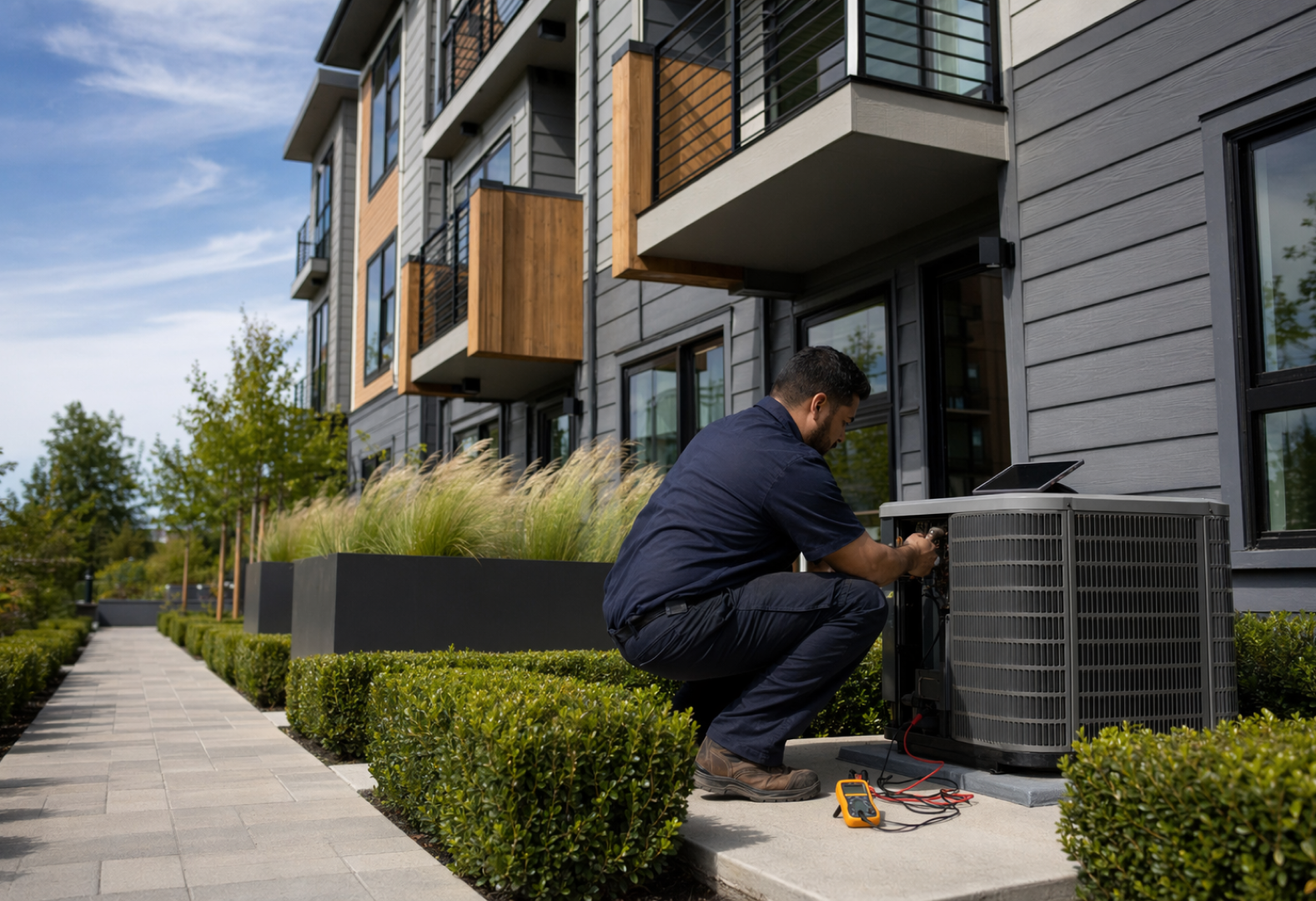
- Cooling system service: Schedule professional maintenance for all AC units, heat pumps, and central cooling systems before the season. A technician should clean coils, check refrigerant levels, inspect electrical connections, test capacitors, and confirm the system is ready for peak load. Be sure to book early! HVAC vendors fill up fast as temperatures rise.
- Filter replacement: Replace filters across all units at the start of cooling season. In individually controlled units, communicate with residents about ongoing filter maintenance.
- Condenser units: Clear debris, vegetation, and obstructions from all exterior condenser units. Confirm adequate clearance around each unit for airflow.
- Thermostat inspection: Test thermostat function across units. If properties still have outdated manual thermostats, evaluate the case for smart thermostat upgrades, particularly in utility-included buildings where cooling efficiency directly affects operating costs.
- Ductwork and airflow: Check for obvious duct issues in accessible areas. Confirm that supply and return vents are unobstructed in all units.
- Common area cooling: Inspect and service HVAC in lobbies, fitness centers, corridors, and amenity spaces. These systems run hard in summer and are often overlooked relative to in-unit equipment.
- Emergency cooling protocols: Confirm your team has a protocol for cooling system failures during heat events. Know which units house vulnerable residents — elderly, infants, or those with medical conditions — who need priority response.
Plumbing & Water System Checklist
- Outdoor faucets and irrigation: Restore outdoor faucets shut off for winter. Test all irrigation zones and inspect for damaged heads, leaks, and coverage gaps before summer watering season.
- Pool and water feature systems: Open and balance pool chemistry. Inspect pumps, filters, heaters, and safety equipment. Confirm all safety signage is posted and compliant with local regulations.
- Water heater inspection: Check all water heaters for corrosion, sediment buildup, and proper temperature settings. Demand on water heating systems increases in summer with higher occupancy and pool-related usage.
- Sump pumps: Test after spring rain season. Verify float switches and discharge lines are functional.
- Hose bibs and exterior connections: Confirm all exterior faucets restored for summer use are operating without leaks.
- Leak detection sweep: Walk mechanical rooms, laundry facilities, and any areas with known plumbing vulnerabilities. Catching a slow leak in May is far less disruptive than discovering water damage in July.
- Backflow preventer inspection: Test and document backflow preventer function on irrigation systems — required annually in most jurisdictions and easy to miss in a busy spring schedule.
Grounds & Outdoor Amenity Checklist
Summer grounds management is highly visible and directly tied to resident satisfaction and leasing performance.
- Lawn care program: Confirm mowing, edging, and fertilization schedules are in place for the season. Adjust irrigation schedules as temperatures rise.
- Pool and spa opening: Complete full pool opening checklist — chemistry balancing, equipment inspection, safety equipment check, drain covers, fencing integrity, and signage. Confirm lifeguard or supervision protocols if applicable.
- Outdoor fitness equipment: Inspect all outdoor fitness stations for rust, loose hardware, broken components, and safety hazards. Lubricate moving parts. Post usage guidelines.
- Playground equipment: Conduct a thorough safety inspection of all playground equipment — hardware, surfacing, structural integrity, and entrapment hazards. Document findings. Address any safety concerns immediately.
- Grills and outdoor cooking areas: Inspect and clean community grills. Check gas connections if applicable. Post safety guidelines.
- Outdoor seating and furniture: Inspect, clean, and confirm all outdoor furniture is in good condition for resident use. Replace damaged pieces before the season opens.
- Pest control: Summer brings increased pest pressure — ants, wasps, mosquitoes, and rodents seeking water and shelter. Confirm seasonal pest control contracts are in place and that common areas and building perimeters are treated.
- Trash and recycling areas: Increase trash service frequency if needed for summer occupancy. Inspect enclosures for damage and pest activity. Keep areas clean — summer heat accelerates odor and pest issues.
- Lighting for extended summer evenings: Test and replace bulbs in all outdoor and common area lighting. Longer summer evenings mean more resident activity after dark and higher safety expectations.
Monthly Summer Maintenance Plan for Property Managers (April – August)
April: Post-Winter Assessment & System Startup
April is your reset month. Winter is over, and the priority is assessing what it left behind and starting the systems that were shut down or dormant.
Follow these guidelines for the best maintenance outcomes:
- Begin post-winter roof and exterior inspections across all properties.
- Book HVAC vendors for cooling system service — early booking is critical.
- Restore outdoor faucets and begin irrigation system startup.
- Begin pool opening process for properties with aquatic amenities.
- Inspect exterior caulking, foundations, and masonry for winter damage.
- Test smoke and CO detectors across all units; document results.
- Inspect and repair winter-worn walkways, parking areas, and common surfaces.
- Communicate spring inspection schedule to residents.
May: Cooling System Readiness & Amenity Prep
May is when the operational focus shifts to cooling system readiness and getting outdoor amenities open for the season.
Follow these guidelines for the best maintenance outcomes:
- Complete all HVAC cooling system service before temperatures rise.
- Replace HVAC filters across all units.
- Inspect and clear all condenser units.
- Complete pool opening and safety compliance documentation.
- Inspect all outdoor amenity equipment — fitness stations, playgrounds, grills, furniture.
- Walk all property grounds for landscaping conditions and irrigation coverage.
- Confirm pest control contracts are active and initial treatments are scheduled.
- Replace window screens across all units.
June: Mid-Season Inspection & Resident Experience
June is when summer is in full swing and the focus shifts to mid-season inspections, ongoing grounds management, and proactive resident communication.
Follow these guidelines for the best maintenance management outcomes:
- Conduct mid-year unit inspections across the portfolio.
- Inspect common areas, lobbies, and amenity spaces for condition and wear.
- Check HVAC performance across units — follow up on any cooling complaints from May.
- Inspect and clean community grills and outdoor cooking areas.
- Review trash and recycling service frequency; adjust if needed for summer demand.
- Confirm all outdoor lighting is functional for extended summer evenings.
- Send residents a summer maintenance communication covering cooling tips and how to report issues.
July: Peak Season Monitoring & Proactive Response
July is peak demand — for HVAC systems, outdoor amenities, and your maintenance team. The priority is staying ahead of issues rather than reacting to them.
Follow these guidelines for the best maintenance outcomes:
- Monitor HVAC performance closely — July is when under-maintained systems fail.
- Inspect pool chemistry and equipment weekly; document results.
- Walk all exteriors for drainage issues during summer rain events.
- Check pest activity in common areas and building perimeters; adjust treatment if needed.
- Address any mid-season inspection findings that haven’t been resolved.
- Review open work orders — summer heat increases urgency on cooling-related requests.
- Check outdoor amenity equipment for wear from peak season use.
August: End-of-Season Assessment & Fall Planning
August is when summer maintenance wraps up and early fall planning begins. The window between summer and fall is short — use August to close the loop.
Follow these guidelines for the best maintenance outcomes:
- Complete any outstanding exterior repair work from the post-winter assessment.
- Inspect roofs and exterior surfaces after summer heat and storm season.
- Begin fall vendor outreach — book HVAC service and gutter cleaning for the fall.
- Assess pool and outdoor amenity conditions after peak season use; plan any repairs.
- Review summer maintenance performance — response times, open work orders, recurring issues.
- Identify assets and systems that struggled through summer and need fall attention.
- Begin drafting the fall maintenance schedule for each property in the portfolio.
Quick Summer Maintenance List for Property Managers
Need a fast reference for your team? Here are the essential tasks for summer:
- Service all AC units and heat pumps before peak season.
- Replace HVAC filters across all units.
- Clear and inspect all condenser units.
- Conduct post-winter roof and exterior inspections.
- Repair freeze-thaw damage to walkways, parking, and masonry.
- Re-caulk windows, doors, and exterior penetrations.
- Restore outdoor faucets and test irrigation systems.
- Open and balance pool systems; inspect all safety equipment.
- Inspect all outdoor amenity equipment.
- Install and inspect window screens across all units.
- Test smoke and CO detectors in all units.
- Inspect balconies and decks.
- Confirm pest control is active and scheduled.
- Inspect exterior lighting across all common areas.
- Conduct mid-year unit inspections.
- Document all inspections and findings.
Summer Property Maintenance Tips for Multifamily Operators
1. Book HVAC Service Before You Need It
The single most important timing decision in summer maintenance is getting cooling system service scheduled before temperatures rise. Once the first heat wave hits, HVAC vendors are fielding emergency calls around the clock and standard service appointments stretch by weeks. Properties that book service in April and complete it in May are protected. Properties that try to schedule in June are often left hoping their equipment holds up, and paying emergency rates when it doesn’t.
2. Make Unit Inspections Count
Mid-year unit inspections in spring or early summer are one of the highest-value touchpoints in the maintenance calendar. They surface unreported issues — slow leaks under sinks, damaged weatherstripping that’s been driving up energy costs, pest activity that a resident didn’t think to mention — while there’s still time to address them comfortably. They also give maintenance teams visibility into unit conditions that informs capital planning and turns the narrative from reactive to proactive. Build them into the summer schedule and do them consistently across every property.
3. Don’t Underestimate Outdoor Amenity Liability
Pool areas, playground equipment, and outdoor fitness stations carry real liability exposure when they’re not properly maintained. Summer is when these spaces see their highest use — and highest risk. A thorough amenity inspection before the season opens, with documented findings and confirmed repairs, is both the right operational practice and essential liability protection. Don’t open amenities that haven’t been inspected. Don’t delay repairs to equipment that’s been flagged as unsafe.
4. Use Summer to Get Ahead of Fall
August feels far from October, but the fall maintenance window is shorter than most operators plan for. Use the back half of summer to assess what needs to happen in fall like which HVAC units showed signs of strain, which roofs need attention before snow load arrives, and which properties have exterior repairs that didn’t get done in spring. The operators who start fall planning in August are the ones who get vendors booked early, complete maintenance before temperatures drop, and don’t end up in a reactive scramble when the first freeze arrives.
5. Communicate Proactively With Residents
Summer maintenance affects residents directly through avenues like HVAC service appointments, unit inspections, pool closures for equipment maintenance, and pest treatments. Proactive communication about what’s happening and when reduces complaints, builds trust, and makes residents more cooperative when access to their unit is needed. A simple seasonal communication — what to expect, who to contact for issues, cooling tips for summer — sets a professional tone that reflects well on the property management operation.
Common Summer Maintenance Mistakes to Avoid
1. Skipping the Post-Winter Exterior Inspection
Winter damage doesn’t announce itself. Cracks in masonry, lifted flashings, and compromised caulking all look fine until water finds its way through during a summer rainstorm. A systematic post-winter exterior inspection in April catches these before they become interior water damage events in July.
2. Delaying HVAC Service Until Residents Complain
By the time residents are filing cooling complaints, the problem already exists and the vendor availability window has often already closed. Cooling system service needs to happen in spring, on a proactive schedule — not in response to failure.
3. Opening Amenities Without Documentation
Opening a pool or playground without a documented inspection is an unnecessary liability exposure. Every amenity opening should be backed by a completed checklist, signed off by the responsible party, and stored in an accessible record.
4. Ignoring Condenser Units
Exterior AC condenser units are easy to overlook — they sit outside, they seem self-sufficient, and they’re often in low-visibility locations. But vegetation overgrowth, debris accumulation, and lack of clearance are among the most common causes of cooling system inefficiency and failure. Walk every condenser unit in spring and make sure it’s clear and serviceable.
5. Letting Summer Work Orders Stack Up
Summer brings a higher work order volume. Think cooling issues, screen replacements, pest reports, and outdoor maintenance requests. Letting that queue build without systematic tracking and prioritization means some things fall through the cracks entirely. Digital work order management with real-time visibility across the portfolio is what keeps the summer maintenance operation from becoming reactive.
6. Not Planning for Fall in August
The summer-to-fall transition is short. Operators who don’t start fall vendor outreach and planning in August often find themselves behind such as trying to book HVAC service and gutter cleaning during the same window that everyone else is scrambling for. Use August to get ahead.
How AI & Technology Simplify Summer Maintenance
Managing summer maintenance across a large multifamily portfolio — coordinating HVAC service scheduling, mid-year inspections, amenity opening compliance, grounds management, and ongoing work order volume — is a genuine operational challenge. Technology makes it significantly more manageable.
1. Automated Seasonal Scheduling
This ensures that summer maintenance tasks are assigned and tracked across every property automatically, not dependent on individual supervisors remembering what needs to happen at each site. HappyCo enables property teams to build seasonal maintenance programs that generate tasks, assign them to the right people, and track completion across the portfolio. When a mid-year unit inspection is due at property twelve, the system knows, even if the regional supervisor is focused on property three.
2. Digital Inspection Tools
Turn the post-winter exterior sweep and mid-year unit inspections from coordination headaches into standardized, documented processes. HappyCo’s inspection platform lets maintenance teams complete standardized summer checklists, capture timestamped photos of every finding, and automatically generate work orders from inspection results. Everything is stored in a searchable audit record — no paper, no lost checklists, and no gaps in documentation.
3. AI-Powered Maintenance Insights
This helps property teams identify which assets are most likely to struggle through peak summer demand, before they fail. By analyzing work order history, equipment age, and performance patterns, AI flags the HVAC units, pool systems, and building components that need attention first. That means resources go to the highest-risk assets, not just the loudest requests.
4. Portfolio-Wide Visibility
Give regional managers and leadership real-time insight into where summer maintenance stands across every property — what’s been completed, what’s open, and what’s at risk. Instead of relying on site-level reporting that may or may not be current, portfolio leaders can see the full picture and intervene where needed before small gaps become bigger problems.
Beat the Heat: Your Essential Summer Maintenance Checklist for Multifamily Properties
Summer is not the low-stakes season. For multifamily operators, it’s the window when winter damage gets addressed, cooling systems get stress-tested, outdoor amenities open to full resident use, and the foundation gets laid for how properties will perform through the rest of the year. A thorough summer home maintenance checklist executed consistently, documented carefully, and managed proactively across the portfolio is what separates operators who stay ahead of their properties from those who spend the season reacting to them.
The month-by-month framework in this guide gives your team a structure to work from: post-winter assessment in April, cooling system readiness in May, mid-season inspections in June, peak-demand monitoring in July, and fall planning in August. Work the process, document everything, and use the back half of summer to get ahead of what’s coming next.
Simplify Summer Property Maintenance With HappyCo
For property managers and multifamily operators coordinating summer maintenance across multiple properties, the challenge is less about knowing what to do and more about getting it done consistently — across every unit, every building, and every site — with documentation that holds up. That’s where HappyCo comes in.
With HappyCo, property teams can:
- Conduct standardized summer inspections across every unit and common area.
- Automatically generate work orders from inspection findings.
- Track seasonal maintenance tasks and completion across the portfolio.
- Use AI-powered insights to prioritize the assets and systems at highest risk before peak season.
- Store audit-ready documentation of all inspections, repairs, and amenity safety checks.
- Coordinate HVAC service, amenity openings, and exterior maintenance from a single platform.
FAQs
What is the Most Important Summer Maintenance Task for Property Managers?
Cooling system service is the clear priority — particularly in warm-climate markets or during heat events. An HVAC failure in an occupied unit during peak summer heat is a habitability issue in most jurisdictions, and emergency HVAC repair under urgency is significantly more expensive than planned service. Book cooling system maintenance in April and complete it in May, before demand peaks and vendor availability tightens. Post-winter exterior inspection runs a close second — catching and addressing winter damage in spring prevents it from compounding into more expensive repairs by fall.
How Long Does Summer Property Maintenance Take Across a Portfolio?
The active summer maintenance window runs from April through August — roughly five months of coordinated activity. The heaviest lift is concentrated in April and May, when post-winter inspections, HVAC service, and amenity openings need to happen before peak season. June through August shifts to ongoing monitoring, mid-season inspections, and grounds management. A standardized inspection and scheduling platform significantly reduces the coordination time versus managing it manually across multiple properties.
What Happens if Summer Maintenance Gets Skipped or Delayed?
Deferred summer maintenance tends to surface in predictable and expensive ways: HVAC failures during heat events, water infiltration through winter-damaged roofing or caulking discovered during summer rains, amenity safety incidents from uninspected equipment, and pest infestations that went unaddressed through the spring. The cost of emergency response in summer — when vendors are busy and residents’ patience is likely to melt in the heat — is consistently higher than the cost of prevention.
How Does Summer Maintenance Help Reduce Operating Costs?
Proactive HVAC service keeps systems running efficiently, reducing energy consumption in utility-included buildings and preventing the premium costs of emergency repairs. Post-winter exterior repairs addressed in spring are consistently less expensive than the same repairs deferred to fall or winter. Irrigation system optimization reduces water consumption through the peak watering season. And mid-year unit inspections catch developing maintenance issues like slow leaks, failing appliances, and air sealing gaps while they’re still inexpensive to fix.
What Are the Signs a Property Needs Summer Maintenance Attention?
Key indicators include residents reporting that cooling systems aren’t keeping up with demand, visible exterior damage from winter freeze-thaw cycles that hasn’t been addressed, pool or amenity equipment that hasn’t been inspected since last season, condenser units surrounded by overgrown vegetation, gutters still carrying winter debris into spring rain season, and any open work orders from fall or winter that were deferred and never resolved. Properties entering summer with a backlog of unaddressed maintenance items need to triage immediately. There’s no doubt that summer demand will expose every weakness.
Are Summer Maintenance Priorities Different in Hot vs. Mild Climates?
Yes, significantly. In hot-climate markets — the Southwest, Southeast, and similar regions — cooling system reliability is the dominant priority and carries genuine habitability and legal implications during heat events. Pool and outdoor amenity management also carries higher stakes in markets where outdoor living is a year-round expectation. In mild-climate markets, the post-winter repair focus may be more prominent than cooling system urgency, and grounds and exterior maintenance takes a more central role. The core principle holds everywhere: address what winter left behind, prepare systems for peak seasonal demand, and document everything.
Lauren Seagren is the Content Marketing Specialist at HappyCo, where she leads the company’s content strategy and storytelling across channels. She develops and optimizes campaigns, blogs, case studies, and enablement materials, while building the systems that help content scale and align across teams. Prior to HappyCo, Lauren led content and brand strategy across SaaS startups, creative agencies, and growth-stage companies, bringing more than a decade of experience driving measurable growth across B2B and B2C organizations.


