





Keith Nelson
Chief Customer Officer at HappyCo
With 20+ years driving operational performance, Keith Nelson has earned a reputation as someone who fixes what others overlook. As CCO at HappyCo, he leads Happy Force.
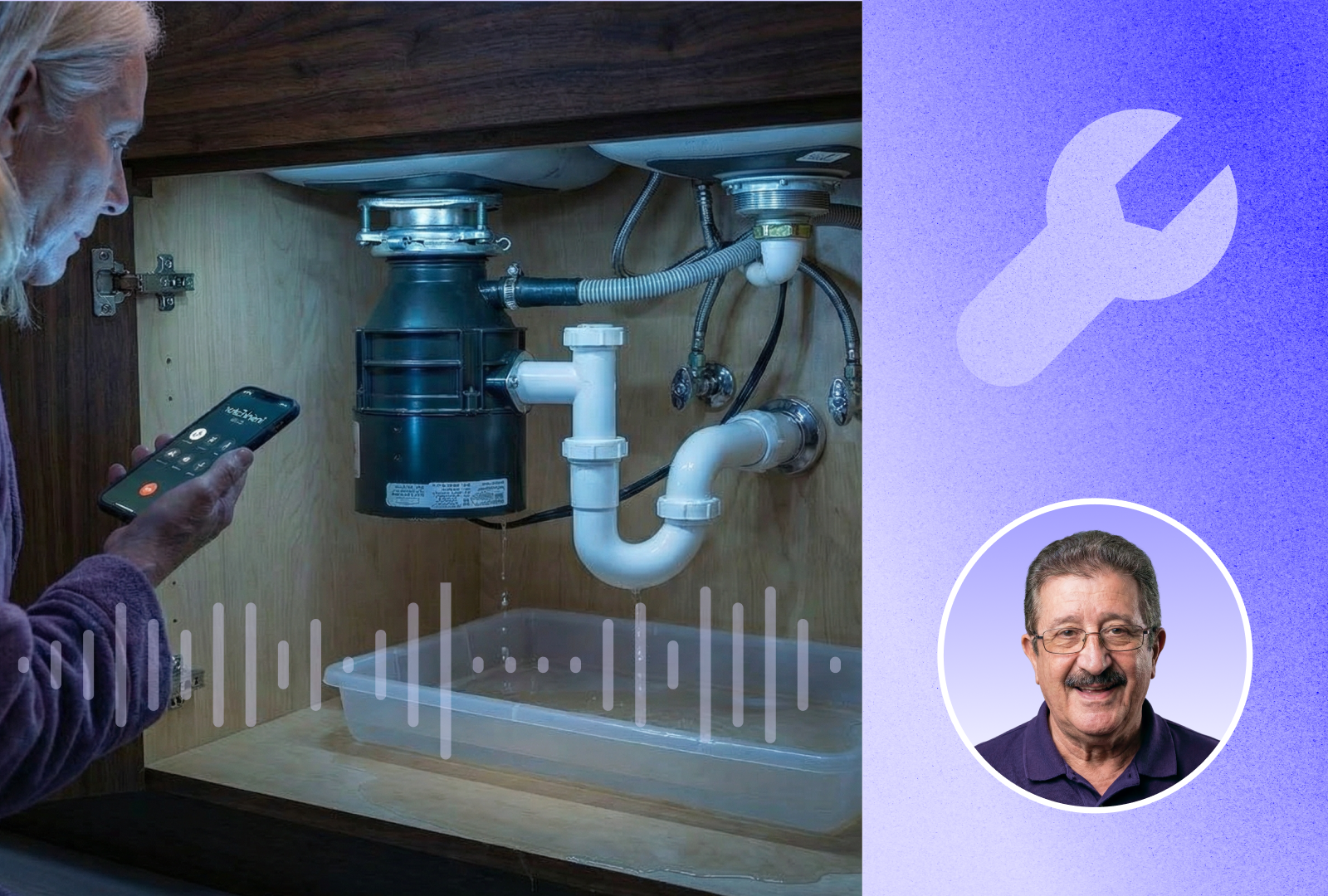
In multifamily operations, the real action rarely sticks to a 9-to-5 schedule. A burst pipe at midnight. An HVAC failure during a heatwave weekend. For residents, these aren’t just routine service requests — they’re high-stress moments that shape how they feel about where they live.
As Chief Customer Officer at HappyCo, Keith Nelson oversees Happy Force, designed to be your first line of maintenance support. In this exclusive Q&A, he’s spilling the tea on the most overlooked risk in property operations: after-hours maintenance. He knows firsthand that the way after-hours maintenance calls are handled can make or break resident happiness, retention rates, and even team morale. Learn firsthand why top operators are now treating it as a core customer experience strategy — not just a box to check — and how forward-thinking companies like HappyCo are leading the charge with property owners and managers.
Q: When you talk to property management leaders, what's the biggest blind spot you see when it comes to after-hours maintenance — and why does it keep getting overlooked?
A: Historically, maintenance has been the behind the scenes work of the multifamily industry. Everyone knows things need to get fixed and requests need to get handled — but after-hours? That's when the lights go out, figuratively speaking. Property managers and owners aren't lying awake at night listening to the calls coming in, so they're not really living the reality of what happens after 5 p.m.
The blind spot isn't ignorance, it's assumption. There's a general sense of "Yeah, somebody's taking care of it," but not a lot of rigor around how it's being taken care of, how long it's actually taking, or who's bearing the burden of it all. That's how after-hours maintenance becomes this quietly overlooked corner of operations that nobody's really paying any attention to, that is until something goes wrong.
Q: From your perspective as Chief Customer Officer, why is after-hours maintenance one of the most underestimated risks for multifamily property management companies today?
A: From where I sit, it comes down to pressure points that are already straining the industry. Open job requisitions for maintenance roles have been a significant challenge. A couple of years ago, we were seeing 25 to 30 percent of maintenance positions going unfilled across our customer base. That's being understaffed by nearly a third. We've seen that number come down to somewhere between 10 and 15 percent, which is progress, but it's still a real constraint.
Layer on top of that the fact that the maintenance workforce is aging, the pipeline of qualified talent isn't keeping pace, and you have a situation where after-hours demands are falling on fewer and fewer people. That's not just an operational risk — it's a people risk. At HappyCo, Happy Force was built specifically to address this understaffed, under-recognized, and undervalued area of property operations.
Q: Resident expectations around response times have shifted dramatically. What are residents actually experiencing after-hours today, and how is that shaping their renewal decisions?
A: We live in a world of instantaneous communication, instantaneous convenience, and instantaneous fulfillment. Residents have internalized that. They expect immediate responses, they expect things to get fixed now, and frankly, they expect things not to break in the first place, especially when they're new to a community. That's the bar that’s been set.
So when something does go wrong at 11 p.m. and they pick up the phone they want someone to be on the other end. Think about what the traditional workflow actually looks like. They call an 800 or central number, get routed to a general voicemail or a call center staffed by someone who isn't maintenance-trained and isn't used to handling after-hours emergencies. They may wait. They may not hear back for hours. That experience — or lack of one — sticks with them.
With Happy Force, someone always picks up the phone. And it's not just anyone, it's an experienced maintenance technician in multifamily who can actually assess the situation in real time. They can calm the resident down, ask the right diagnostic questions, triage the issue properly, and provide assurance that it's being handled. That shift, from silence or a generic callback to an immediate, knowledgeable response is a completely different resident experience.
Q: Where do traditional after-hours answering services fall short in protecting the resident experience?
A: The gap is in what happens — or doesn't happen — when that call comes in. A general answering service can take a message. What it can't do is meaningfully engage a stressed resident, ask the right technical and diagnostic questions, or make an informed judgment call about whether something truly needs emergency escalation.
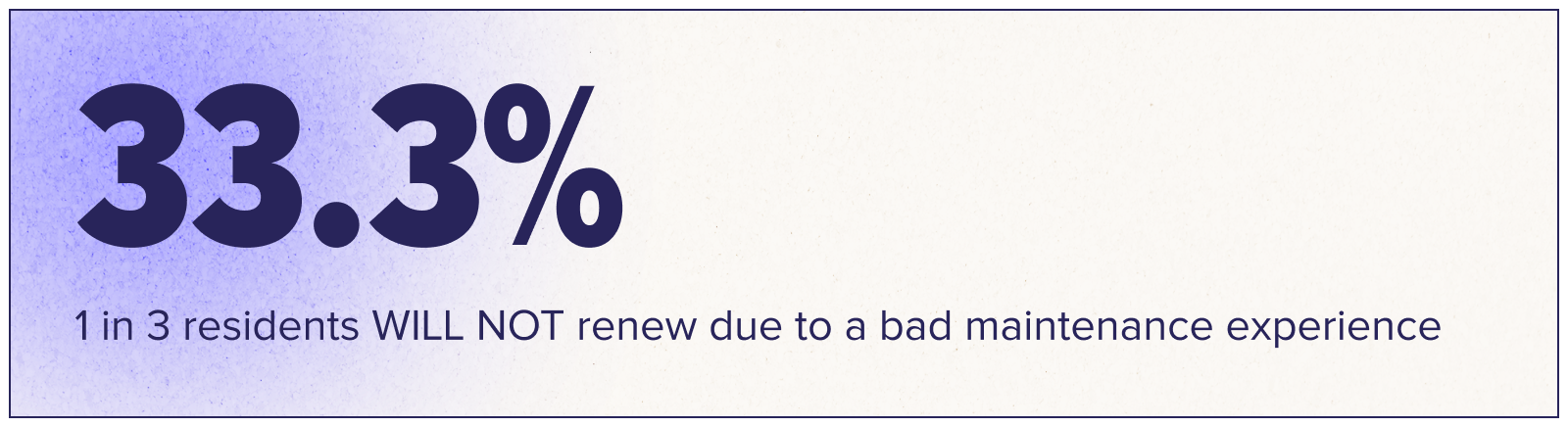
And the consequences of getting that wrong are significant. Research from the National Apartment Association shows that one-third of residents (33.3 percent) don't renew their lease because of a bad maintenance experience. One in three. Each unit that turns over due to poor maintenance costs property managers between $4,200 and $6,800. Those are not small numbers. If you can remove one of the major drivers of non-renewal from the equation like a mishandled after-hours emergency, that's an enormous win for ownership. It frees operators to focus on everything else: pricing strategy, amenities, and unit quality. Instead of constantly playing defense on the maintenance experience, they're playing offense on the things that actually differentiate their communities.
Q: We hear a lot about technician burnout and turnover in multifamily right now. How much of that is tied specifically to on-call and after-hours demands, and what's the downstream cost when a tech walks out the door?
A: Burnout from overnight and weekend work is very real — for anyone. Maintenance technicians already have a full day job. When you layer on-call and after-hours response on top of that, it's a second job. And it's one they didn't necessarily sign up for, and one that doesn't always come with the recognition or compensation it warrants.
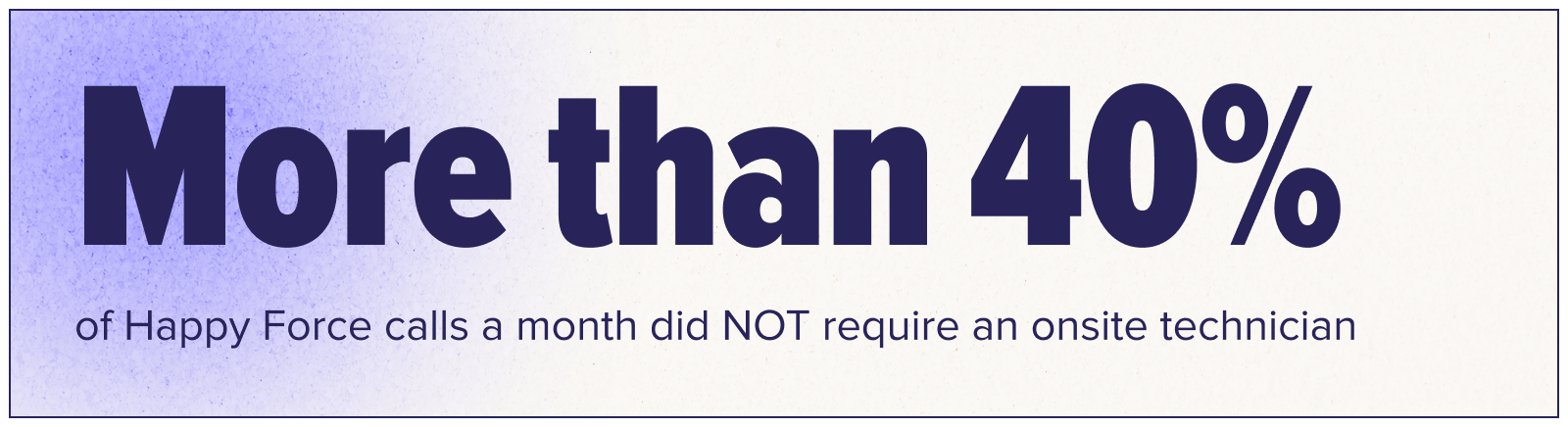
What Happy Force does is take a meaningful portion of that burden off their plate. Our triage process is sophisticated. When a call comes in, we're assessing whether it's a true emergency or something that can safely wait until the next business morning. Based on answering over 12,000 after-hours emergency calls a month, we've found that more than 40 percent can be de-escalated. That means roughly 5,000 calls a month do not require a technician to drive out at 2 a.m. for a dripping faucet. That's not a small thing. That's preserved sleep, preserved morale, and preserved longevity.
As for the downstream cost, when a tech walks out the door it doesn't just create a vacancy, it overburdens everyone who's still there. Someone's got to answer the calls, go fix the issues, and tend to the residents. The hidden cost of turnover is what it does to the team that has to keep showing up.
Q: Property managers often assume that after-hours coverage is "handled" because they have an on-call tech or an answering service. Why is that assumption dangerous, and what does "handled" actually need to look like in today's environment?
A: "Handled" is doing a lot of heavy lifting in that sentence and it's worth unpacking what it actually means. Having a number residents can call is not the same as having a system that works.
What "handled" actually looks like starts with timely pickup. Someone answers the phone — every time. From there, it means gathering all the relevant information about the issue: the right questions asked, the right details captured, sometimes photos or videos from the resident. It means making an informed triage decision. Does this require immediate escalation, or can it be de-escalated to the next morning's work order?
If it does need to be escalated, the on-call technician receives everything we've gathered — detailed notes, context, history — so they're walking into the situation with a running start. They may already know what tools or parts to bring. They're not starting from scratch at midnight.
That's what "handled" looks like. Not just a pickup, but a full system designed around protecting the resident, supporting the technician, and giving ownership the operational clarity they need.
Q: When you look at portfolios that have gotten after-hours maintenance right, what does that operational model look like — and what's the measurable impact on performance?
A: The common thread in portfolios that have gotten this right is that there's a real methodology behind how after-hours calls are assessed and triaged, not just a phone number and hoping for the best. Whether they're using Happy Force or building something internally, the operators who do this well are giving their maintenance teams better information, better tools, and better support to make good decisions quickly.
The measurable impact shows up in a few places. Overtime and call-out costs go down because fewer non-emergency situations are being escalated unnecessarily. Resolution time goes down because technicians arrive with the proper service context instead of starting cold. And resident satisfaction improves because the experience of calling after hours actually feels like something is being done, they’re not just leaving a voicemail into an unknown void. All of those things compound over time into real retention and cost-of-operations improvements.
Q: What do residents remember more: the emergency — or how your team responded?
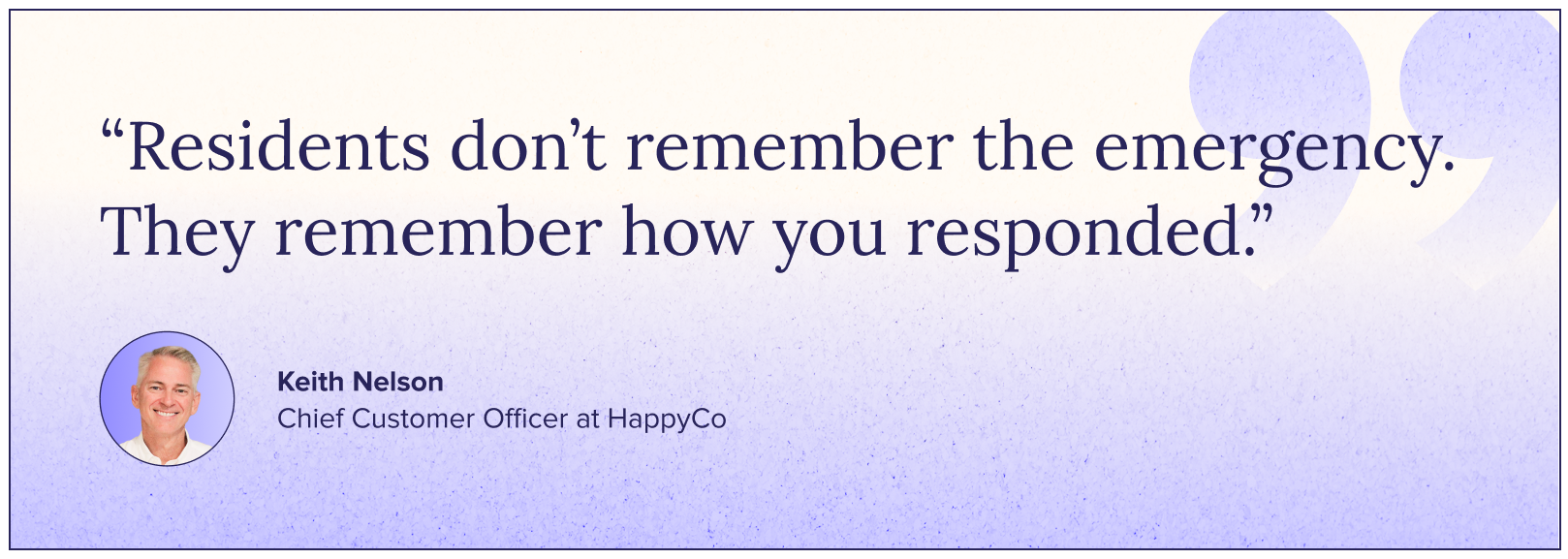
A: How you responded. Every time. Residents don’t remember the emergency. They remember how you responded.
Things break. Appliances fail. HVACs give out on the hottest weekend of the year. Residents fundamentally understand that — nobody expects perfection. What they don't forgive is being ignored, or left waiting, or made to feel like their emergency wasn't a priority.
Here's what I've seen time and again: a resident whose refrigerator broke and was fixed the next morning will tell that story very differently than one whose refrigerator broke and nobody came for three days. The first resident says, "Yeah, I had a problem. Maintenance took care of it fast, it was great." The second one leaves. And tells people why.
It's not how you start. It's how you finish. That's the experience that residents carry with them to lease renewal — and beyond.
Q: How does Happy Force redefine after-hours maintenance as a customer experience strategy rather than just a coverage solution?
A: A coverage solution answers the phone. A customer experience strategy answers the phone and makes the resident feel taken care of. Those are fundamentally different things.
Owners and managers are under enormous pressure right now to do more with less. Keep residents happy, keep them paying rent, keep them renewing, and turn them into advocates rather than detractors. After-hours maintenance is one of the highest-stakes touchpoints in that entire journey, and it's often the most neglected.
What Happy Force offers isn't just a safety net — it's a promise to residents that there's a real, live, U.S.-based maintenance professional available 24/7, 365 days a year, every time they need one. That's not coverage. That's a customer experience.
Q: For a property manager who's reading this and nodding along — they know they have a gap but don't know where to start — what's your single most important piece of advice, and how can they start quantifying what this risk is actually costing them?
A: Start by looking at what you're already spending. Most operators are already paying for some version of after-hours coverage like a call center, an answering service, or some other arrangement. That's line one. Line two is your actual overtime and call-out costs. What are you spending when a tech gets dispatched in the middle of the night? And line three is harder to quantify but just as important: what's the state of your maintenance team? Are people burning out? Are you consistently short-staffed? Is one person carrying the entire after-hours load?
When you add those three things up, the cost of the gap becomes a lot clearer, and so does the business case for addressing it. From there, the solution practically presents itself: you need proper triage, you need to eliminate duplicative or ineffective coverage, and you need a support structure that actually works for your technicians. That's exactly what Happy Force is designed to do.
What Happens After Dark Doesn't Stay After Dark
After-hours maintenance is more than just a chore; it’s where resident horror stories — or five-star reviews — are born. Operators who get this right aren't just staffing up; they're strategically protecting resident trust and saving their onsite teams from total burnout.
Curious what all this means for your bottom line? See how much you could save on unnecessary dispatches and boost after-hours efficiency with the Happy Force ROI Calculator. Because what happens after dark doesn't just impact tomorrow's to-do list — it shapes your renewals and reputation.

Lauren Seagren is the Content Marketing Specialist at HappyCo, where she leads the company’s content strategy and storytelling across channels. She develops and optimizes campaigns, blogs, case studies, and enablement materials, while building the systems that help content scale and align across teams. Prior to HappyCo, Lauren led content and brand strategy across SaaS startups, creative agencies, and growth-stage companies, bringing more than a decade of experience driving measurable growth across B2B and B2C organizations.


