


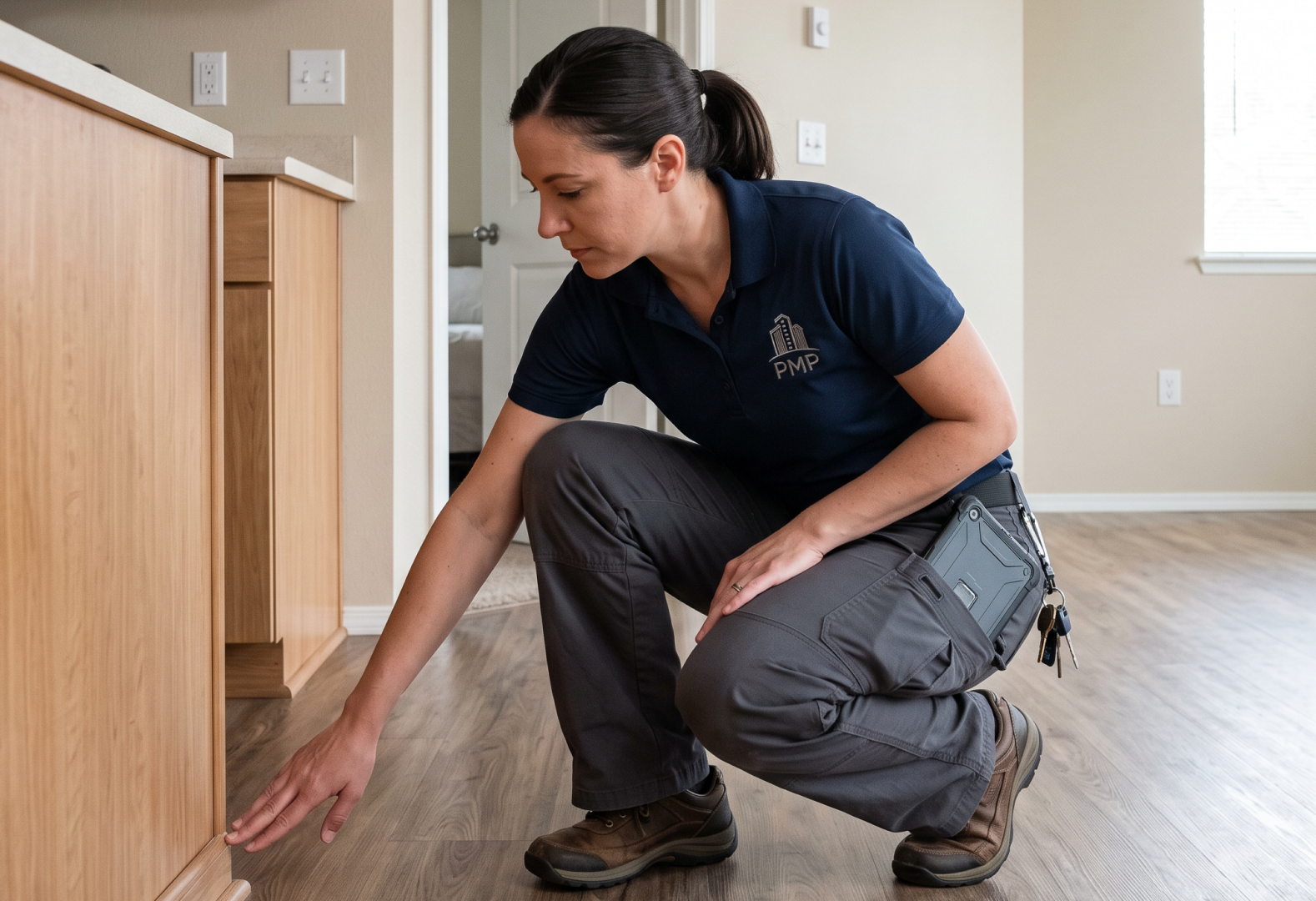


Understanding Rental Property Inspections
A rental property inspection is a documented review of a unit's condition, systems, and safety features at a specific point in time. The purpose shifts depending on when it happens: routine inspections catch issues before they escalate, move-in inspections establish a condition baseline, and move-out inspections compare current condition against that baseline to resolve deposit and repair questions fairly.
Why this matters at scale: each inspection is a data point. On its own, one inspection tells you about one unit on one day. Connected across a portfolio, inspections tell owners and operators where maintenance dollars are actually needed — which is a very different conversation than reacting to whichever resident happened to call first.
Types of Rental Property Inspections
Not every inspection serves the same purpose, and treating them all the same is where teams lose the value of running them at all.
Move-In Inspections
Establish the documented baseline condition of a unit the moment a resident takes possession — the reference point for every future comparison.
Move-Out Inspections
Compare current condition against the move-in baseline to fairly determine what's normal wear versus resident-caused damage, and what (if anything) should be deducted from the deposit.
Routine Property Inspections
Scheduled check-ins during an active lease to catch maintenance issues, lease violations, or safety concerns before they become bigger — and more expensive — problems.
Drive-By Inspections
A quick exterior review — curb appeal, visible damage, landscaping, parking areas — useful for spot-checking a large portfolio without a full interior walkthrough.
Safety & Compliance Inspections
Focused specifically on life-safety systems and code compliance: smoke and carbon monoxide detectors, egress, fire extinguishers, and anything tied to local housing code.
What to Include in a Rental Property Inspection Checklist
A rental property inspection check list needs to cover structure, systems, and safety — not just cosmetic conditions.
Structural & Exterior Components
- Roofing
- Gutters
- Exterior walls
- Entryways
Interior Property Condition
- Paint & drywall
- Flooring condition
- Doors & windows
- Lighting fixtures
Kitchen & Appliance Inspection
- Appliance functionality
- Cabinets & storage
- Sink condition
- Ventilation systems
Plumbing & Utility Systems
- Pipes & drains
- Water pressure
- Water heater inspection
- Utility connections
Electrical & Safety Checks
- Circuit breakers
- Smoke detectors
- Carbon monoxide alarms
- Outlet functionality
Every one of these categories is a potential CapEx conversation waiting to happen. Feeding inspection findings into a portfolio-level Asset Management view is what lets owners see a failing water heater as a budgeting decision instead of an emergency call.
How to Conduct a Rental Property Inspection
The checklist defines what to look at. The process determines whether the findings are usable afterward.
Prepare Inspection Forms & Templates
Standardize the template before the walkthrough starts, so every inspector — regardless of experience — is checking the same things in the same order.
Inspect Room-by-Room
Move through the unit systematically rather than spot-checking. Issues hiding in a rarely-used closet or under a sink don't surface unless someone's looking for them.
Record Damages & Maintenance Issues
Note condition, severity, and whether an item needs immediate attention or can be scheduled — vague notes create ambiguity later.
Capture Visual Documentation
Photos and video attached directly to each checklist item remove the guesswork from "what did that actually look like."
Share Inspection Reports
A completed inspection that sits unread accomplishes nothing. Route findings to the people who need to act on them — maintenance teams for repairs, ownership for capital items.
Rental Property Condition Checklist Best Practices
The strongest inspection programs share a few habits: they use the same checklist structure across every property, they treat photo documentation as non-negotiable, and they close the loop by turning findings into scheduled work rather than a static PDF. When inspections feed directly into Maintenance Operations, a flagged issue becomes an assigned work order instead of a note nobody follows up on.
Common Problems Found During Rental Inspections
Some issues show up often enough that they're worth watching for specifically on every walkthrough.
Water Damage & Leaks
Often first visible as discoloration or soft flooring long before a resident reports it — one of the most common findings that gets missed on a rushed inspection.
HVAC Performance Issues
Inconsistent airflow or unusual noise are early indicators that are easy to catch during an inspection and expensive to ignore until a full system failure.
Pest Infestations
Signs of pests are easiest to catch in the same spots every time — under sinks, behind appliances, along baseboards.
Electrical Safety Concerns
Outdated wiring, overloaded outlets, or non-functioning smoke detectors are safety issues that shouldn't wait for the next scheduled inspection cycle.
Unauthorized Tenant Damage
Distinguishing normal wear from damage requires the documented baseline a move-in inspection provides — without it, this becomes a judgment call instead of a documented fact.
Benefits of Using Rental Inspection Templates
Improved Documentation Accuracy
A consistent template means nothing gets skipped because an inspector was moving fast or working from memory.
Faster Inspection Processes
Inspectors who aren't building a checklist from scratch every time move through units faster, without cutting corners.
Easier Property Condition Tracking
Standardized categories make it possible to compare condition across units and properties, not just within a single inspection.
Better Compliance Management
A repeatable template makes it easier to confirm every required safety and code item was actually checked — and to prove it later if needed.
Digital Tools for Rental Property Inspections
Mobile Inspection Software
On-site data entry means findings are captured the moment they're observed, with nothing lost in translation from a paper form.
Cloud-Based Inspection Reports
Reports stored centrally are instantly accessible to anyone who needs them — maintenance, leasing, ownership — without waiting on someone to forward a file.
Automated Property Condition Tracking
Automated tracking turns individual inspections into a running condition history for each unit, useful the moment a pattern needs to be spotted across a portfolio.
Inspection Template Platforms
Purpose-built platforms keep templates consistent across every property and every inspector, which is the difference between a process and a habit that varies by team.
Rental Inspection Challenges Property Managers Face
- Inconsistent execution — different team members inspecting to different standards, especially across a growing portfolio.
- Delayed follow-through — findings that get documented but never turned into scheduled repairs.
- Disconnected data — inspection reports that live separately from work order and asset history, making it hard to see the full picture of a unit's condition over time.
For maintenance teams already covering a full unit load, and for operators trying to keep every property to the same standard, closing these gaps usually comes down to having one system that connects inspection findings to the work that follows — including sourcing a qualified vendor through Vendor Connect when a finding needs outside expertise the in-house team doesn't have.
Why a Standardized Process Pays Off
The portfolios that get the most value from inspections aren't the ones running them most often — they're the ones running them the same way every time, and actually closing the loop on what those inspections find. That consistency is what turns a routine walkthrough into a real asset-management tool rather than a compliance exercise.
FAQs
Are Rental Inspection Templates Necessary?
They're not legally required in most cases, but a standardized template is what makes inspection findings consistent, comparable, and defensible if a condition dispute ever comes up.
What Should Property Managers Document During Inspections?
Condition of structural, mechanical, and safety systems, plus any damage or maintenance issues — supported with photos and clear notes on severity and urgency.
How Often Should Rental Property Inspections Be Done?
Cadence varies by property and lease terms, but many operators run routine inspections annually or semi-annually, in addition to every move-in and move-out.
What is the Purpose of a Move-Out Property Inspection?
To compare current unit condition against the move-in baseline, fairly separating normal wear and tear from resident-caused damage for deposit and repair decisions.
How Long Does a Rental Inspection Usually Take?
Typically 30–60 minutes per unit for a routine or move-in/move-out inspection, depending on unit size and how many issues need to be documented.
Lauren Seagren is the Content Marketing Specialist at HappyCo, where she leads the company’s content strategy and storytelling across channels. She develops and optimizes campaigns, blogs, case studies, and enablement materials, while building the systems that help content scale and align across teams. Prior to HappyCo, Lauren led content and brand strategy across SaaS startups, creative agencies, and growth-stage companies, bringing more than a decade of experience driving measurable growth across B2B and B2C organizations.


