




The Future of Procurement Is Already Here
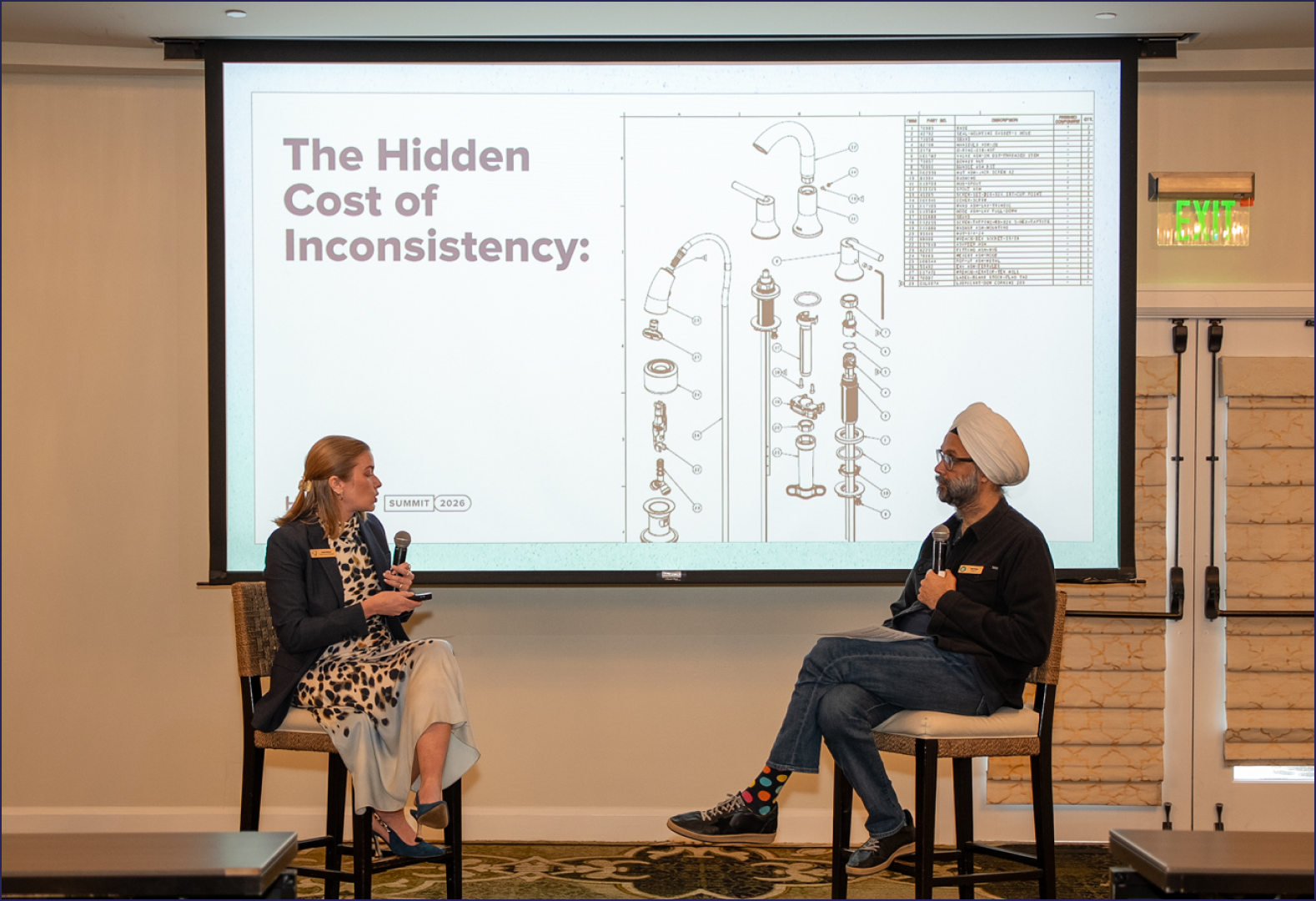
At Happy Summit 2026, one of the most forward-looking sessions tackled a topic that every property management operator knows is broken: procurement. Sukhi Singh, HappyCo's Chief Strategy Officer (CSO), brought over 25 years of industry experience and a founding story from 1999 to the stage — alongside Emily Mohorn from Delta Faucet Company — to paint a vivid picture of where procurement has been, where it stands today, and where agentic AI is taking it next.
This guide captures the key insights, memorable quotes, and actionable frameworks from the session so you can bring them back to your team.
The Problem with Procurement Today
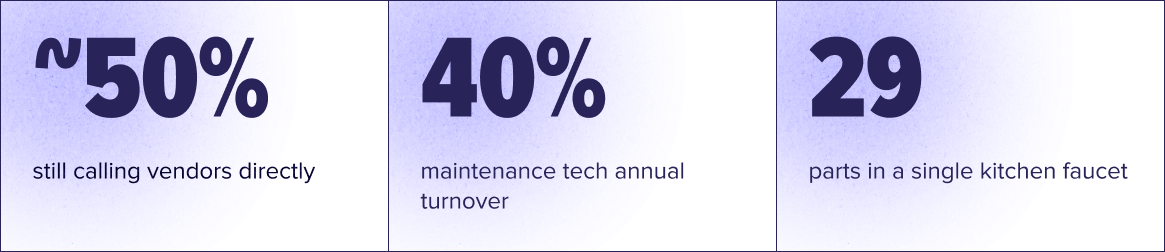
The session opened with a candid audience poll that set the tone immediately: roughly half of attendees are using a formal procurement system, while the other half are still picking up the phone and calling vendors directly. That gap — between the digitized and the manual — is costing operators money, time, and control every single day.
A Snapshot of Today's Broken Workflow
Sukhi outlined the cascade of friction points that every property management operator faces when a work order hits:
- Vendor accounts to manage and purchasing approvals to chase.
- GL coding errors that trigger accounting reclassification across 14 different people.
- No way to tie a purchased part to a specific unit or project.
- Critical information scattered across accounting systems, maintenance logs, binders, and spreadsheets.
- Asset managers and capital planners operating in silos, making decisions no one else can see.
Meet Manny: A Day in the Life
To illustrate the human cost of procurement dysfunction, Delta Faucet played a short video following a maintenance technician named Manny through a single workday. The scenario was painfully familiar to everyone in the room.
Manny's Morning Without Systems
Work order 1: Unknown faucet model → trip to the store.
Work order 2: Parts not on hand → another trip to the store.
Work order 3: Wrong cartridge → third trip to the store.
Three calls in, his day is already half gone.
The video wasn't just a product demo — it was a mirror. Audience members immediately recognized the problem. As Sukhi put it:
“The feeling of having to constantly be caught off guard by what you see when you open the door into a unit... that ability to use that context, I think, is really a challenge.”— Sukhi Singh | CSO, HappyCo
The same video played again at the end of the session — this time with Manny equipped with HappyCo and Delta Faucet's systems. He knew the exact model in the unit, had the part ready in attic stock, and completed every work order without a single trip to the store. The contrast was stark.
The Standardization Imperative
Emily from Delta Faucet brought the vendor's perspective on a problem operators often overlook: the hidden cost of parts proliferation.
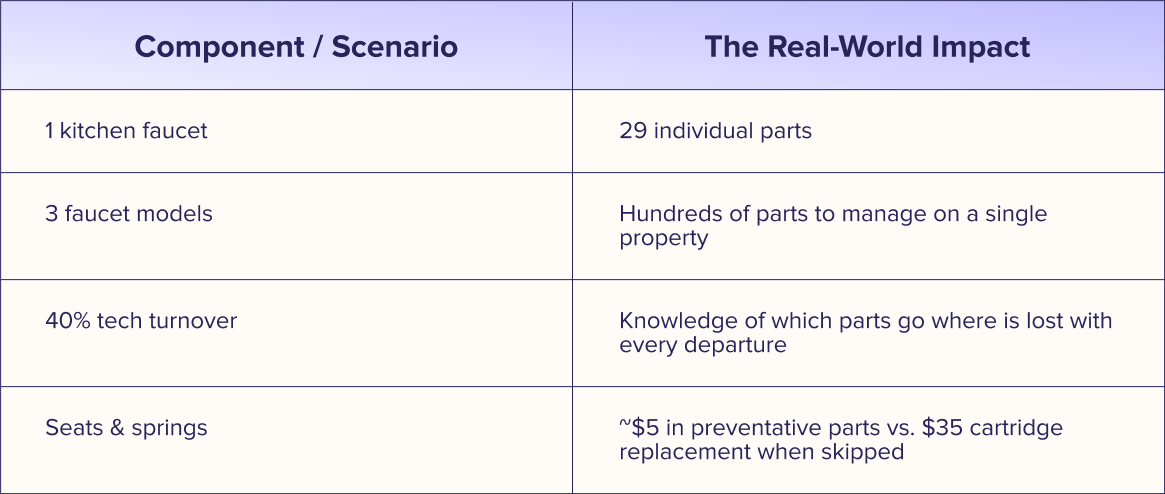
This isn't abstract math. Across a portfolio of hundreds of units, the difference between knowing which $5 part to replace on schedule versus buying a $35 cartridge every time compounds into significant spend.
“You could save so much money, especially incrementally over time, by just knowing these little things that get lost.”— Emily Mohorn | Commercial Project Sales Leader, Delta Faucet
Hidden Value in Your Fixtures
Emily also surfaced something many operators don't consider when making swap decisions: not all products are equal, even when they look the same. Delta Faucet offered two examples of innovations that are invisible to the naked eye:
1 | H2O Kinetic Technology
A proprietary fluidics chip that increases pressure and heat retention while using less water. Residents feel a premium shower — but operators who swap this out unknowingly for a cheaper head are devaluing their asset.
2 | LumaCoat Finish
A transparent, spot-resistant finish that repels mineral buildup and extends fixture life. When renovation time comes, trim still looks new — meaning you may not need to replace it at all.
The takeaway for operators: when you're making swap decisions, you need to know what you're actually replacing — not just the brand on the box.
The Agentic Procurement Framework
This was the heart of the session. Sukhi introduced a three-layer framework that HappyCo is actively building toward — one that reimagines procurement not as a catalog-and-approval workflow, but as an intelligent, autonomous system that gets the job done.
The Unique Advantage
HappyCo has direct access to 50,000–60,000 maintenance technicians using their products daily. That's the frontline data layer that makes agentic procurement possible at scale.
The Three Layers: Context → Skills → Intelligence
Context
The complete situation — not just "kitchen faucet is leaking" but which side (hot or cold?), what happened in this unit 3 weeks ago, what the previous repair attempt found, and even real-time signals from the vendor about a known defect across their product line.
Skills
Software actions taken on that context — not just creating a purchase order for someone else to approve, but completing the entire workflow: multi-step approval chains, vendor negotiations, and SOP compliance checks. Crucially, these skills are customized to YOUR brand's SOPs, not a generic template.
Intelligence
Built on HappyCo's decade of knowledge graph data, spanning three layers: Property → Portfolio → Network. The network layer is where benchmarking and pattern recognition kick in — seeing a wave of refrigerator failures across the ecosystem before any individual operator does.
“The paradigm shift is about actually completing the task in its entirety. It's not about creating the order so somebody else can actually place it.”— Sukhi Singh | CSO, HappyCo
Capabilities in Development
Sukhi walked through a set of concrete capabilities that the framework enables — many already in development, targeted for rollout by end of 2026 or early 2027.
1. Maintenance Technician Superpowers
The vision: a tech walks into a unit knowing not just what the work order says, but everything relevant to that service call — including the resident's personality profile.
“We can distill the intelligence of all that context in a way that the maintenance technician can be well prepared. We're not removing the technician, we're just giving them the superpowers.”— Sukhi Singh | CSO, HappyCo
The analogy Sukhi used is memorable: this is the briefing a manager gives before a sensitive service call — "Sally in 201 has the cat, she's angry from last week, be gentle" — but delivered automatically, at scale, for every single door knock.
2. Automated Preventative Maintenance
Rather than PM schedules set manually based on intuition, the system generates them automatically from knowledge graph signals. If refrigerators of a certain model are failing at elevated rates across the network, the system surfaces that to portfolio managers and generates an inspection run — before the failures compound.
3. Intelligent Sourcing Events
When inspection scores pass a threshold, the system doesn't wait for a human to initiate an RFP. It passes the job to a bidding engine that generates a scope of work from context, goes to market, and solicits competitive bids automatically.
The SOW Reality Check
A show of hands revealed that many operators in the room keep Word docs or binders full of sourcing documents — and many are already using ChatGPT to generate SOWs.
Current workflow: ~10–15 minutes of refinement per SOW. As models are trained on proper context, that drops to 7, then 4 minutes. That time can then be redirected to actually evaluating vendors.
4. Agent-to-Agent Vendor Communication
The most forward-looking capability Sukhi described: your sourcing agent communicating directly with a vendor's agent to negotiate details, resolve pricing discrepancies, and place orders — at effectively zero cost per conversation.
“The sourcing agent is just going to go find the vendor's agent and they're going to have a conversation about exactly what we need. The cost of having that conversation is literally zero.”— Sukhi Singh | CSO, HappyCo
The New Operating Model
Sukhi closed with a clear articulation of what this all adds up to — not just a better procurement tool, but a fundamentally different way of operating.
Time Back
Eliminate manual tasks, vendor phone calls, and store runs. Techs ask the system; the system handles sourcing, pricing, and compliance.
Money Back
Right parts, right pricing, right vendor. No more absorbing exceptions because a catalog file was three months out of date.
Risk Eliminated
Compliance baked into the automated workflow. SOPs don't depend on someone remembering the rules.
Knowledge Compounded
Every repair, every tech, every unit — all logged, all queryable, all contributing to a smarter system. No more knowledge walking out the door with every staff departure.
“Imagine a tech walking into a unit knowing not only what's inside, but the personality of the resident they're about to see, how that resident responded to the last three tickets, and exactly the parts they need already in hand.”— Sukhi Singh | CSO, HappyCo
Already a HappyCo Customer?
Preventive maintenance schedules can be set up today with automatic triggers and photo verification. If you're using Delta Faucet products, HappyCo can already track your inventory, prepare unit-level part lists, and manage workflows. Reach out to your account team to activate these capabilities.
Lauren Seagren is the Content Marketing Specialist at HappyCo, where she leads the company’s content strategy and storytelling across channels. She develops and optimizes campaigns, blogs, case studies, and enablement materials, while building the systems that help content scale and align across teams. Prior to HappyCo, Lauren led content and brand strategy across SaaS startups, creative agencies, and growth-stage companies, bringing more than a decade of experience driving measurable growth across B2B and B2C organizations.


