




A Failure of Visibility, Not Effort
HappyCo's Happy Summit 2026 keynote didn't open with a list of features. It opened with a story every property operator knows by heart.
It starts small: a refrigerator making a strange noise. Then, a nearby outlet keeps tripping. Across the complex, in another building, the same model of fridge starts acting up, too.
On paper, this looks like three separate maintenance tickets. But in reality? It's one systemic failure, silently spreading across an entire portfolio.
No one dropped the ball. The work orders were filed, the tickets were closed, and the teams did their jobs. But the signals were never connected, so the pattern went unnoticed. And when signals stay disconnected, problems don't stay small. They move quietly from unit to unit, property to property, until what started as a minor issue becomes a major capital expense.
This focus on the importance of connection sets up the entire 2026 and beyond product direction. The question isn't how fast can we close a ticket. The question is: "How early can we see the risk, and how do we consistently prevent it?" Because the outcome the industry wants isn't "the leak got fixed," it's "the leak never became a leak in the first place."
“Your buildings are talking to you, but your systems can't connect what they're hearing. So you can't act early, you can only react late.”— Ben Nowacky | President, HappyCo
Why Maintenance Is the Most Strategic Part of Operations
Long before revenue dips, long before expenses spike, long before the financial reports tell you something is wrong — you see it in maintenance. Slow turns. Uneven execution. Frustrated residents. Quietly degrading assets.
Maintenance has historically been treated as a cost center and a reactive function. HappyCo's central argument is that this framing is wrong — and expensive. When you connect the signals, maintenance becomes the earliest controllable driver of success in a portfolio. It's not overhead; it's intelligence.
“Maintenance should and could be the earliest controllable driver of success.” — Ben Nowacky | President, HappyCo
One Platform: Unifying the Property Lifecycle
For several years, HappyCo has been building distinct product lines to solve real problems in specific areas: due diligence, asset management, inventory, maintenance operations, and after-hours call handling. Each product creates value on its own. But what the company learned at scale, after onboarding thousands of customers and millions of units, is that the intelligence operators actually don't live inside any one product. It shows up when all of them are connected.
The 2026 direction is clear: unify these solutions into one platform where data moves automatically, workflows reinforce each other, and intelligence is shared across every team that touches an asset.
The Connected Operations Stack
- Due Diligence: Capture the truth on day one. Site visit data flows directly into asset management — no PDFs, no lost findings, and no broken handoffs.
- Asset Management: CapEx and capital planning with shared visibility. Inventory begins at acquisition and stays connected through operations.
- Maintenance Operations: Work orders, inspections, turns, incident management — the daily workflows your teams actually use.
- Happy Force (24/7 Call Handling): After-hours and all-day call answering and triage. Resident issues resolved before dispatching, or escalated intelligently when it truly matters.
- Procurement: RFP creation to vendor bidding to project tracking — embedded in operations, not siloed in spreadsheets.
- JoyAI: Conversational AI embedded throughout — in property profiles, procurement, call handling, and workflow automation.
What "Connected" Actually Means
The word "connected" gets used loosely in enterprise software. In the HappyCo context it has a specific meaning: data moves forward automatically across the entire property lifecycle. A finding from a due diligence walk doesn't disappear into a PDF, it flows directly into asset management as a structured capital project. That capital project doesn't live in a spreadsheet, it moves into procurement with one click. The awarded vendor doesn't restart from zero, the work flows into operations with full traceability back to the original finding. And as work orders are completed, data flows back up into portfolio intelligence.
No retyping. No rebuilding context. No black boxes. Performance isn't something you assemble at month-end; it's something you see built in real time.
Why This Matters
The gap between systems is where money disappears. It's where residents lose trust. It's where inventory, units, properties, and portfolios quietly get worse. Closing that gap isn't a technology upgrade, it's a fundamental shift in how operations generate intelligence.
Removing Friction in the Field
Before unveiling its major AI features and platform updates, HappyCo highlighted its dedication to perfecting the daily mobile experience for field technicians.
Imagine juggling keys in one hand while completing an inspection on your phone with the other — bouncing between screens to manage multiple properties, all while voice data slips through the cracks or gets entered manually with friction and errors. The result: unreliable, low-quality data that can't power smart decisions.
HappyCo has streamlined this going forward. Directly on the front lines, across the entire portfolio:
2025 Mobile & Field Improvements
- Multi-Property View: Technicians manage across sites without switching screens or losing context between properties.
- Voice Notes & Voice-to-Text: Technicians speak naturally in their native language. The system structures the data automatically. Less tapping, fewer errors, and faster completions.
- Smart Notifications: Residents get one-tap updates on work status. Fewer “Where are you?” calls, fewer missed entries, and fewer duplicate work orders.
- Property Profile: Real-time view of every property's actual performance — maintenance, inspections, and turns — scored against defined standards and rolled up to portfolio level.
- JoyAI in Property Profile: Ask “What's slowing turns?” or “Why are reopens trending up?” right where you already work. Intelligence becomes action, not a report you have to remember to open.
Work Order Types: Small Change, Big Impact
HappyCo is also excited to be launching work order types — a consistent, automatic classification system for every work order in the platform. On the surface it sounds like a minor organizational feature. In practice, it's a foundational shift in how operational intelligence is built.
Every work order now carries a clear category automatically: service request, turns, incident management, preventive maintenance, regulatory, and others. This classification can be selected by the user, inherited from an inspection, or assigned automatically based on who submitted it.
The downstream effects are significant. Technicians can triage work correctly. Supervisors can prioritize with confidence. Reporting becomes far more reliable at property and portfolio level. And the dispatching system can route work intelligently based on technician skills and workload — fewer handoffs, more first-time fixes.
24/7 Call Handling
After-hours maintenance calls are one of the most persistent sources of technician burnout in multifamily operations. The on-call technician receives a Saturday night text about a light bulb. They have to make an immediate judgment call — is this a real emergency? — without any supporting context. And even when the call is legitimate, the ticket often gets created with missing information that triggers three more follow-up calls.
Happy Force was built to solve this. Trained maintenance professionals answer calls and triage requests around the clock — working directly with residents to understand what's actually happening, resolving issues remotely before dispatching, and escalating only when it truly matters.
“Before Happy Force, residents had my number 24/7. Now my emergency calls come straight from Happy Force, or I don't answer. I have more freedom. More peace of mind. More time for the actual emergencies.” — Maintenance Technician, Happy Force User
JoyAI: The End of the Phone Tree
The 2026 upgrade to Happy Force replaces the rigid phone tree with JoyAI — a conversational AI model that lets residents describe their issue in their own words, without navigating menus or guessing which option applies to a dripping pipe.
Here's what that exchange actually looks like in practice:
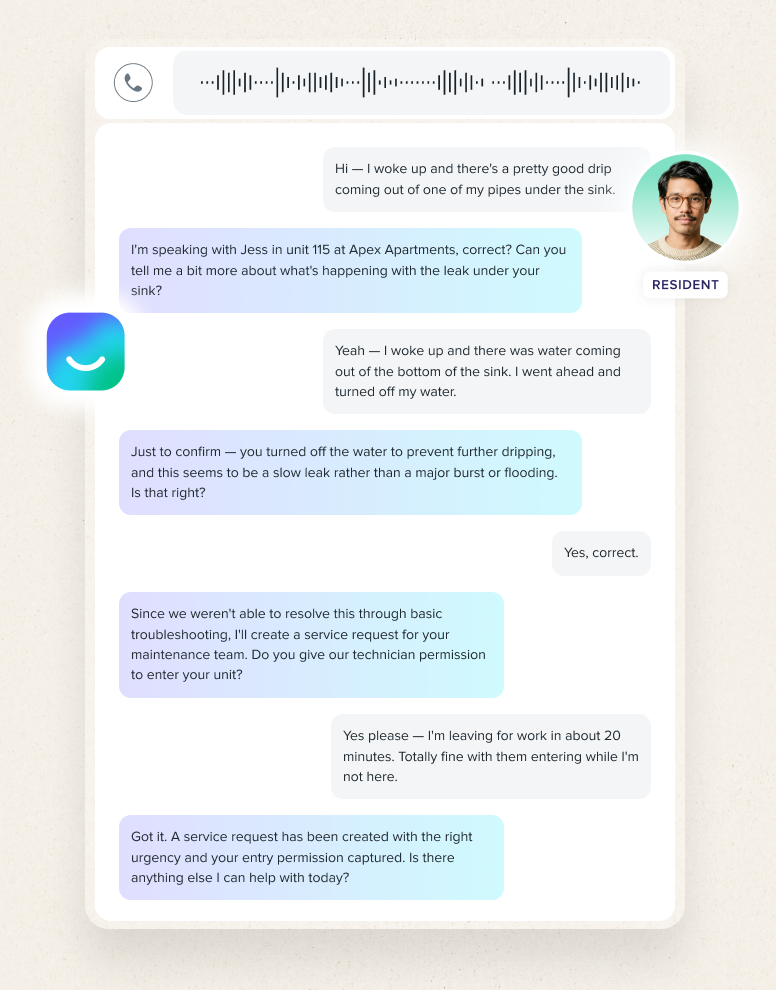
What just happened in that exchange is more significant than it looks. JoyAI identified the resident's identity and unit automatically. It assessed urgency and confirmed it conversationally. It collected entry permission — a detail that normally gets missed or triggers a callback game. And it created a complete, structured, immediately actionable service request with full context.
The on-site team doesn't start from scratch. They have the history. The signals aren't lost. The next decision starts with context, not guesswork.
Agent Instructions: Portfolio-Level Customization
Different portfolios define “urgent” differently. After-hours escalation policies vary. What information you collect on intake varies. Joy's new Agent Instructions feature lets you configure exactly how calls are handled at the property level — the rules, the urgency thresholds, the escalation paths. Every call gets handled the way you intend, not the way a generic phone tree forces you.
And when confidence drops, or when a situation clearly requires a human, the conversation escalates seamlessly. No loops. No dead ends. The AI hands off gracefully and the context travels with it.
The Human-in-the-Loop Model
JoyAI handles routine intake. The moment confidence drops or the situation demands it, a real Happy Force professional takes over. Every interaction — AI or human — is recorded in HappyCo. The team always starts with context, never from scratch.
Procurement Becomes Part of Operations
The first version of procurement inside HappyCo launched in 2025. The full vision — launching in 2026 — is an end-to-end procurement and sourcing stack with JoyAI embedded throughout: RFP creation to vendor bidding to project tracking, flowing into asset management and maintenance operations.
The fundamental shift is this: procurement stops being a separate universe and becomes part of operations. Because if you want to prevent failures, you need visibility into what's being bought, what's being installed, and what's failing. That's how you stop buying liabilities, like a refrigerator model that's failing across two buildings, before it spreads across the entire portfolio.
JoyAI as Procurement Director's Assistant
A typical Procurement Director is managing tens or hundreds of active projects simultaneously. Getting an overview traditionally means logging into a dashboard, scanning a table, jumping into hundreds of records. With JoyAI embedded in procurement, you just ask:
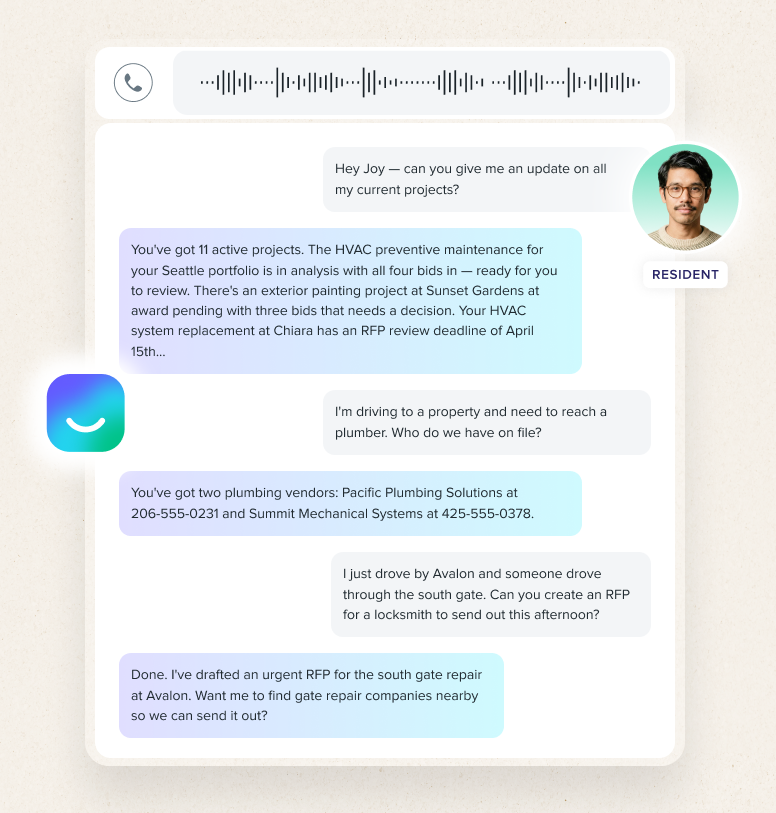
The session summary feature matters as much as the real-time capabilities. When the resident finishes that drive, JoyAI provides a complete summary of the conversation — vendors discussed, projects created, next actions. He picks up exactly where he left off. Data doesn't live in tables you have to search through; it's served up in context when you need it.
The Full Asset Lifecycle Connection
The most ambitious part of the procurement vision is connecting it back to the beginning of the asset lifecycle: due diligence. Today, insights from a property walk before acquisition disappear into PDFs with no structured handoff. There's no connection to asset management. No link to procurement. No tie to daily maintenance.
In the connected platform vision: due diligence findings flow directly into asset management as structured capital projects. Capital plans move into procurement with one click. Awarded projects move into operations as executable work, fully traceable back to the original finding. Completed work orders flow back up into portfolio intelligence.
The chain that currently breaks before performance begins stays intact from acquisition to disposition.
The Plugin Marketplace
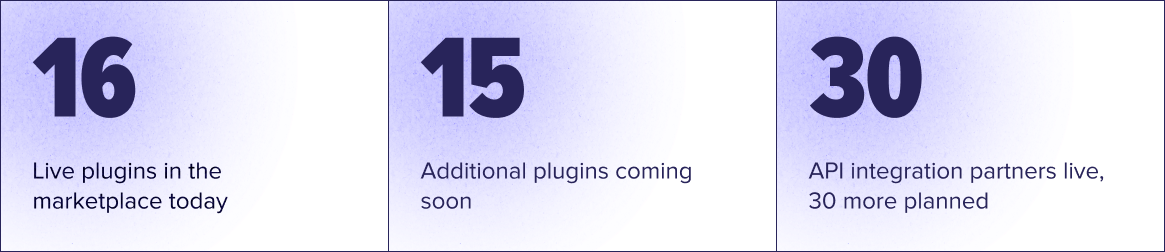
Not everything operators need was built by HappyCo. Every operator works differently, uses different vendors, and has different priorities. The HappyCo plugin marketplace connects the tools operators are already using directly into HappyCo workflows — and vice versa.
Synco: The Case Study in Plugin Value
Mylisa Rostel, CEO at Anchor NW Property Group presented one of the most compelling plugin stories: Synco, a purpose-built property communication platform that centralizes all property-related communication in one place.
The problem Synco solves is one most operators don't recognize as a problem until something goes wrong. Mylisa’s team was using email, text, WhatsApp, and phone calls — completely fragmented. It seemed normal. It was normal. Until a major lawsuit required discovery across all those channels: emails from former employees, texts on phones that had left the company, photos scattered across personal devices.
With Synco integrated into HappyCo, operational events from HappyCo flow automatically into communication threads. A water leak work order triggers a Synco thread that includes the maintenance supervisor, the regional manager, the facilities director, and the vendor — with full history, automatic translation for multilingual teams, and AI thread summarization for executives who need context without reading every message.
The CEO doesn't need to call the Maintenance Director to find out if the vendor has the right insurance certification. Accounting is on the thread. They see it. They handle it.
“When you put HappyCo and Synco together, it takes the operational events and sort of brings them into the communication layer. So it's one seamless whole.”— Jason Griffith | CEO & Co-Founder, Synco
MultiFlow: When AI Moves from Answers to Action
The final, and most forward-looking, announcement of the keynote was MultiFlow: an AI-powered, no-code workflow engine built specifically for multifamily.
The problem it's solving is real and persistent. Even when systems connect and data flows, the workflows that operators actually need still fall outside what standard systems support. Teams improvise with spreadsheets, Asana boards, whiteboards, and manual SOPs. When those disconnected systems proliferate, things start to break.
MultiFlow lets operators build automated workflows on top of the intelligence already flowing through HappyCo — no code, no development, no waiting. The principle is simple: when this happens and these conditions are true, do this sequence of actions automatically.
What Workflow Automation Actually Looks Like
Two examples from the keynote illustrate the range of what's possible:
MultiFlow in Action: Two Scenarios
- Scenario 1: Smart Routing A work order comes in. MultiFlow checks the type and category — HVAC, plumbing, electrical. It automatically assigns the right technician based on skill and workload. No dispatcher judgment required, no guesswork, and consistent results across the portfolio.
- Scenario 2: Water Risk Response A resident submits a work order mentioning 'water on the floor' or 'ceiling leak.' MultiFlow automatically creates a mold remediation project, injects required inspection questions, mandates photo documentation, generates the remediation workflow, adds approval gates, and logs every step for audit. Nobody has to remember the SOP. Nothing gets missed.
The second scenario represents the real shift: AI moving from passive reporting to active intervention. The workflow is the policy. You don't need to rely on a technician remembering the mold remediation SOP under pressure. The system enforces it automatically, consistently, across every property in the portfolio.
JoyAI as a Workflow Recommender
Beyond the no-code builder, JoyAI can observe incoming data patterns and suggest workflows proactively. Operators can accept suggestions with one click or build from scratch. Partners can deploy additional workflows via plugins. The ecosystem expands the capability of the platform without requiring HappyCo to build everything itself.
The Shift MultiFlow Enables
Reactive fixes become preventive maintenance. AI moves from answers to action. Compliance stops relying on memory. This isn't a feature addition — it's the foundation that makes everything else in the platform work together as a system.
The KPIs That Build Connection
The keynote closed with a reframe on what multifamily operators should be measuring. The traditional metrics — work orders closed, response times, cost per unit — are lagging indicators. By the time they move, the damage is already done.
The leading indicators that HappyCo's connected platform is designed to move are different:
Leading Indicators of Operational Health
- First-time fix rate — A proxy for data quality and technician preparation.
- Fewer reopens — Evidence that root causes are being addressed, not symptoms.
- Resident-confirmed resolutions — The resident says it's done, not just the ticket.
- One-star review prevention — Catching problems before they become public.
- Early signal detection — Systemic issues flagged before they become capital expenses.
Maintenance metrics are more than operational data — they're leading indicators of resident trust, retention, and portfolio value. Trust drives retention. Retention drives performance. The chain runs from a technician's voice note all the way to a portfolio intelligence dashboard — but only if the systems are connected enough to carry the signal. With HappyCo, they are.
“Tickets aren't done when they're closed. They're done when trust is restored.”
— Ben Nowacky | President, HappyCo
Lauren Seagren is the Content Marketing Specialist at HappyCo, where she leads the company’s content strategy and storytelling across channels. She develops and optimizes campaigns, blogs, case studies, and enablement materials, while building the systems that help content scale and align across teams. Prior to HappyCo, Lauren led content and brand strategy across SaaS startups, creative agencies, and growth-stage companies, bringing more than a decade of experience driving measurable growth across B2B and B2C organizations.


