




The Paper Problem Nobody Talks About
There’s a version of the property management technology conversation that focuses on enterprise dashboards and portfolio analytics and NOI optimization. That conversation matters. But it tends to skip over something more immediate — the daily friction that property managers and maintenance teams absorb just to keep operations moving.
Pre-move-out inspections. Move-out inspections. General property walkthroughs. For each one: a notepad, a phone for photos, a mental checklist of what to look for — unregistered animals, hallway damage, unit conditions — and then the work of translating all of that into something the rest of the team can actually use. Back at the office. After the fact. From memory and scribbled notes.
It’s not glamorous, and it’s not the kind of inefficiency that shows up cleanly in a report. But it’s real, and it accumulates. Every hour spent transferring notes is an hour not spent on residents. Every miscommunication between leasing and maintenance is a work order that takes longer than it should. Every inspection that lives on paper is a finding that might not make it to the right person in time.
She knew this better than anyone. Which is why she was skeptical when HappyCo came along.
Day One
“We were all scared,” she says. And it’s worth sitting with that for a moment — the honesty of it, and how common that feeling is across the industry. New technology in multifamily doesn’t always have a great track record of fitting the actual shape of the job. Tools that look good in a demo can feel foreign in the field. Teams that have developed their own workarounds over years of experience don’t always welcome being asked to start over.
But day one with HappyCo, something clicked for Sylvia.
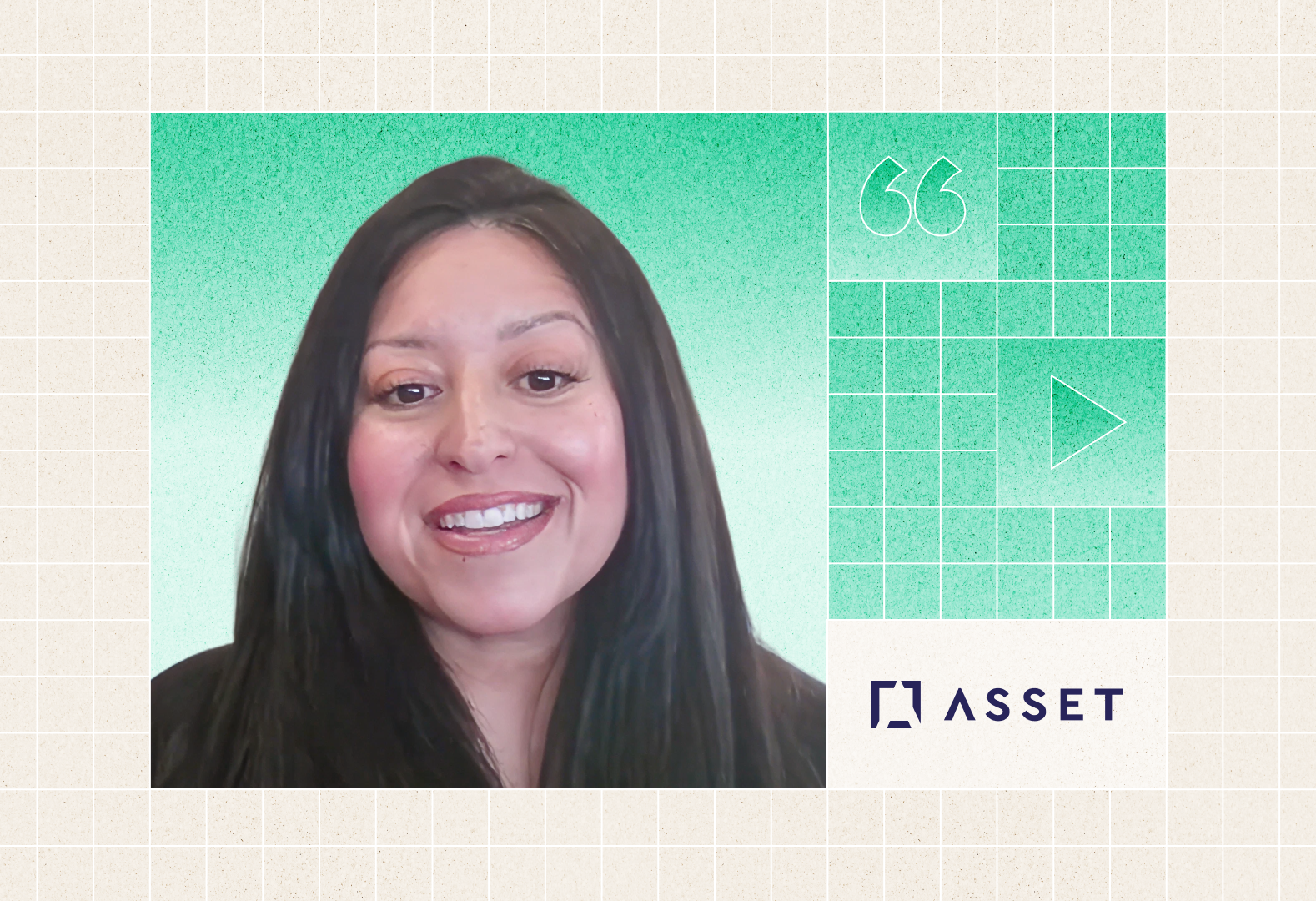
“I’m not a tech-savvy person to start using a new app at all. But day one I was like, I love it. Everybody needs to use it right now and you will love it.”— Sylvia Egea | Community Manager, Asset Living
That reaction — immediate, unguarded, and from a self-professed skeptic — speaks volumes about what HappyCo has built. It’s not another dizzying platform designed to overwhelm you. It’s a platform built for property managers. One that fits the work instead of asking the work to fit it.
One App. Everything In It.
The shift she describes is deceptively simple. Instead of carrying notepads, toggling between a camera and a notes app, and then reporting back to the office, she now walks her properties with a lot less weight — literally.
“I don’t have to carry anything else. I have my phone and my keys and I don’t have a backpack full of papers and notebooks and stuff for all of these apartments.”
Photos go directly into the app. Notes go directly into the app. And when an inspection happens in an occupied unit with a resident present, the workflow doesn’t just get easier — it gets more professional.
“You take the note in the app, you can do everything while still holding a conversation with the person that is residing there. And it’s made it so much faster.”
Work orders are created, assigned, and visible to maintenance in real time — no follow-up texts required.
“Everything is through that app. They see it right away.”
For maintenance, this is significant. One of the most persistent friction points in property operations is the communication gap between the leasing office and the maintenance team — the cascade of texts about emergency work orders, the duplicate messages from the manager and assistant manager, or the uncertainty about what’s been assigned and what hasn’t. HappyCo collapses that gap. When a work order is created, it’s there. When it’s assigned, everyone knows. The texts stop.
“Maintenance isn’t getting several texts from leasing, from manager, from assistant manager. They can see it on the app right away, and sometimes it’s already assigned to them.”
The most meaningful shift for Sylvia, though, wasn’t just speed — it was access. Anyone on the team can now log a work order on the spot, with photos and detailed notes, and get it assigned before they’ve even left the building.
“The most meaningful thing that I’ve seen since using HappyCo has been that anybody on the team can all put work orders in, add pictures and be very descriptive in the notes portion, and assign it to somebody essentially right then and there in the building.”
The effect on the team’s stress levels has been tangible. Maintenance moves faster because they have better information. Leasing spends less time chasing updates. Management has visibility without having to ask for it. And inspections — the part of the job that used to require the most logistical juggling — now generate reports that can be shared in a quick email, complete with photos and notes, the moment the walk is done.
One Thing Nobody Expected: The UI
Sylvia didn’t expect to have opinions about software design. But she does now.
“One thing that surprised me about HappyCo — in a great way — was how easy it was to navigate. It is a lot, I guess, for lack of a better word, cuter than some of the other apps we’ve used. But it’s super easy to navigate.”
That “cuter” observation matters more than it might sound. Intuitive, visually approachable design is the difference between a tool that gets adopted and one that sits unused. When even the least tech-savvy team members can jump in and learn quickly — and actually want to — that’s the product doing its job.
What Residents Are Experiencing
There’s a downstream effect that doesn’t always get enough attention in the technology conversation: what operational improvements actually mean for the people who live in the communities.
When a pre-move-out inspection wraps, Sylvia’s team doesn’t wait to have the follow-up conversation. They send it immediately.
“As soon as we’re done with pre-move-out inspections, we can send it to email and have that conversation with the resident right away — if there’s anything they may be held responsible for prior to move-out.”
When work orders move faster, residents notice too. When the maintenance team can read detailed notes and see photos of an issue before they even arrive at the unit, they show up prepared. Resolutions happen sooner. Fewer follow-up visits are needed. And residents, who often feel like their maintenance requests disappear into a void, suddenly have visibility into what’s happening.
“They can read the notes, they can see the pictures that maintenance has inserted. And they are so appreciative of that.”
That appreciation is not a small thing. In a market where resident retention is one of the most valuable levers a property can pull, the quality of the maintenance experience is often the deciding factor between a renewal and a move-out. Residents who feel informed and prioritized renew. Residents who feel ignored don’t.
HappyCo, in her experience, moves the needle on exactly that.
What It’s Done for the Team
Beyond the operational wins, something else has happened at Sylvia’s community: the team is closer.
“I think it has brought the team a little bit closer together because we’re all learning it together and utilizing it and actually loving it. Maintenance included in that.”
That shared experience — everyone on the same platform, learning together, seeing the same wins — has built a kind of momentum that’s hard to manufacture any other way. It’s not just a software story. It’s a team culture story.
The Bigger Lesson
Although relevant, Sylvia’s story isn’t primarily about technology. It’s about trust — the trust it takes to try something new when you’ve built your own system over years of experience, and the trust that gets built when the thing you tried actually works.
Sylvia came in skeptical. She left a believer. Not because HappyCo promised her a revolution, but because on day one, in the field, with her phone and her keys, it just made sense.
That’s the version of the multifamily technology story worth telling more often. Not the enterprise pitch. Not the ROI deck. The property manager who wasn’t a tech person, who was scared to change, and who discovered that the right tool doesn’t ask you to change who you are — it just makes the job you already do a whole lot better.
“It has made their day so much faster.”
That’s the whole story, really. And it’s enough.
Lauren Seagren is the Content Marketing Specialist at HappyCo, where she leads the company’s content strategy and storytelling across channels. She develops and optimizes campaigns, blogs, case studies, and enablement materials, while building the systems that help content scale and align across teams. Prior to HappyCo, Lauren led content and brand strategy across SaaS startups, creative agencies, and growth-stage companies, bringing more than a decade of experience driving measurable growth across B2B and B2C organizations.


